

Author Archive

Musings on Medicare

Posted: March 21, 2023 by chrisharper in Uncategorized
Tags: ,

By Christopher Harper

As the debate over the future of Medicare hits its stride during the upcoming presidential campaign, policymakers should look at the cost of Medicare Advantage plans as one way to save money.

Advantage plans are those run by private insurers rather than the government providing government payments for hospital care and physician costs. My plan also includes drugs, dental, and eye care.

Private plans have been an option in Medicare since the 1970s, but enrollment in private plans remained relatively low through the 1990s. Aside from changing the name of Medicare private plans from Medicare+Choice to Medicare Advantage (also referred to as Medicare Part C), the Medicare Modernization Act of 2003 made significant changes that propelled enrollment growth. The Affordable Care Act of 2010 also made many changes that enhanced plan enrollment. As a result, about half of all seniors have a Medicare Advantage plan, or 30 million people, up from 11.5 million in 2010.

Unlike the government plan for Medicare, which costs me $170 a month, whether in the program or an Advantage plan, the private insurer puts money in my pocket to join.

The coverage costs me nothing other than the fee for Medicare. But there’s a lot more. My Advantage plan gives me a $25 monthly reduction in my Medicare payment or $300 yearly. The plan pays my YMCA membership of $43.10 monthly or about $500 annually. The program gives me a $500 debit card to use mainly for dental work and eyeglasses, and I get a credit of $25 a month, or $300 a year, for over-the-counter drugs and items like throat lozenges. All told, that’s $1,600 a year for just signing up.

I’m not exactly willing to give up these perks, but it seems the government has been awfully generous to the private insurers if they can entice me with all these goodies.

The government pays private insurers about $12,000 a year for people who sign up for Advantage plans—a number that has risen significantly in recent years. That allowance is where I think the government should reassess whether that’s too much money.

Although I realize my health is better than many seniors, I cost my insurer about $1,200 last year. I’ll bet there are more people like me in my county, which is the geographical area upon which the government payouts are based.

According to the Institute for Health Metrics and Evaluation at the University of Washington, Lycoming County, where I live in central Pennsylvania, has seen better health since the 1980s. However, lung cancer and diabetes have increased somewhat.

I think various changes must be made to save Medicare, but I think a good hard look at Advantage programs and how they operate may be a good start without causing significant hardships to seniors.
The bailout hustle

Posted: March 14, 2023 by chrisharper in Uncategorized
Tags: ,

By Christopher Harper

Silicon Valley and New York City bankers got a good deal: a bailout worth billions of dollars in exchange for millions in campaign funds for Democrats.

But the cozy relationship between bankers and Democrats is a fairly recent development.

My father was a banker in the Midwest and a diehard Republican. He condemned FDR’s spending policies, loved Ronald Reagan, and wanted the government to balance the budget and stay away from his paycheck.

In fact, I thought for years that you had to join the Republican Party to become a banker. As a boomer, I thought my father was a bit off his rocker in his politics, and I wish I had told him just how right he was.

Today’s bankers remind me of the commodities traders I reported on in the 1970s. They’ll bet on almost anything.

Silicon Valley Bank bet on almost every tech idea that came through the doors.

But Andy Kessler of The Wall Street Journal goes beyond the gambling. “Management screwed up interest rates, underestimated customer withdrawals, hired the wrong people, and failed to sell equity. You’re really only allowed one mistake; more proved fatal. Was management hubristic, delusional, or incompetent? Sometimes there’s no difference,” he wrote.

Signature Bank of New York added political wokeness to the combination. The bank refused to do business with Donald Trump, scolding him for the events of January 6, 2021.

Despite all this nonsense, Biden & Co. will bail out the banks even though the White House says it’s not a bailout, providing funds to depositors who recklessly kept more than $250,000 in the banks. Federal bank insurance would not have covered that money until Biden waived the limit.

But the math doesn’t work. Silicon Valley Bank had $173 billion in total deposits, including $152 billion not covered by the Federal Deposit Insurance Corporation. Also, the FDIC did not cover $79 billion of the $88 billion in deposits at Signature Bank.

That’s nearly double the amount at the FDIC to cover all the depositors over $250,000.

Treasury officials said any losses to the DIF would be repaid in full by raising fees on the system’s banks. If the FDIC charges banks higher fees to cover the extra money, those costs will probably be passed onto the consumer through higher costs, such as increased ATM charges and overdraft fees.

So we will end up paying much of the bill for the bailout!

At least there’s a silver lining to all these shenanigans: no one will ever take Jim Cramer seriously, who told people to buy Silicon Valley Bank stock.

The mauling of malls

Posted: March 7, 2023 by chrisharper in Uncategorized

By Christopher Harper

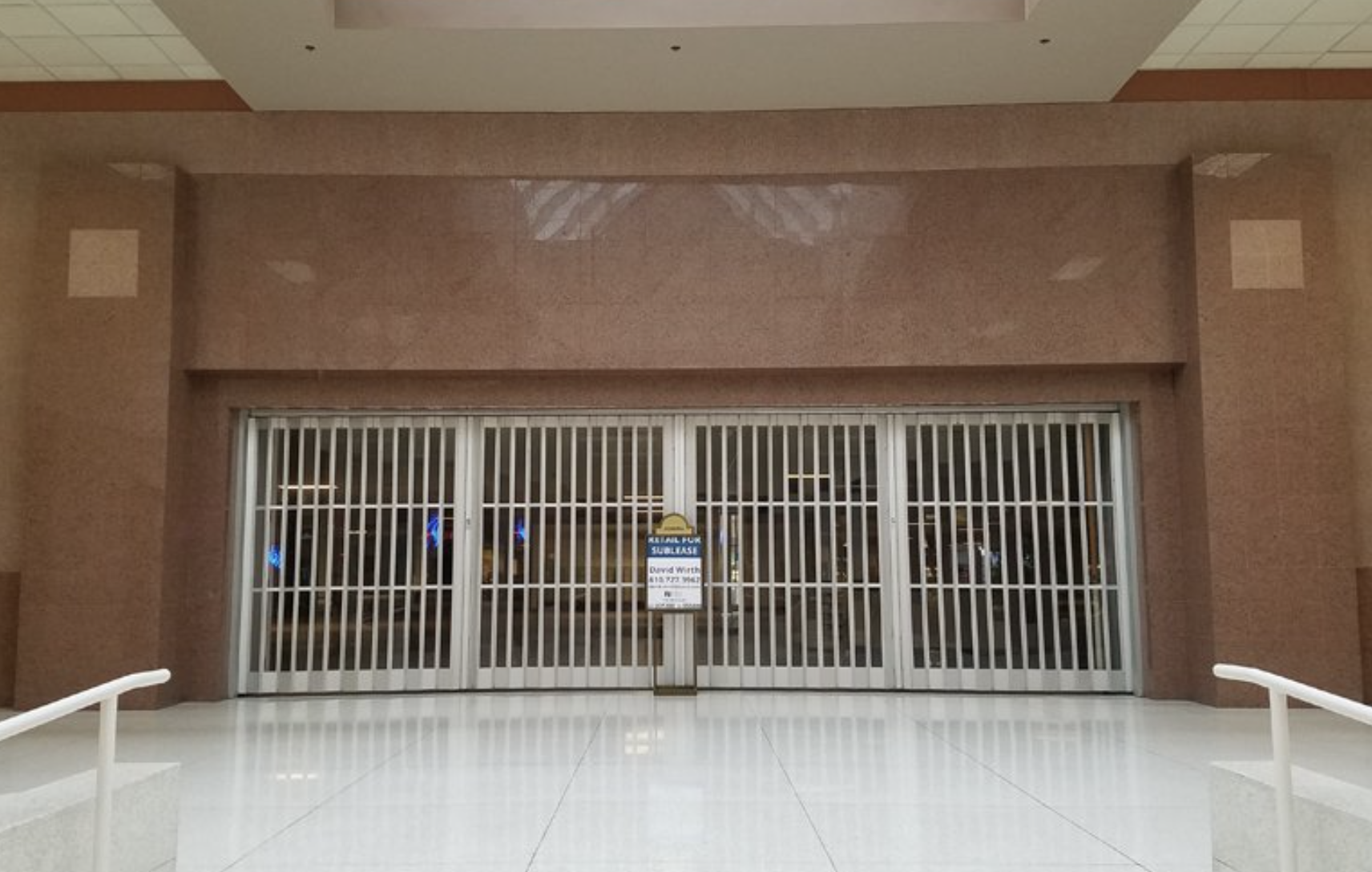
Just up the road from our home in Muncy, Pennsylvania, sits the skeleton of the former Lycoming Mall, which recently locked its doors after nearly 45 years in business.

The mall, which opened in 1978, had more than 80 outlets. Many now defunct stores were once located there: Hess’s, Woolworth, Deb, KB Toys, Bon-Ton, Baker’s Shoes, Christopher & Banks, and others.

The issues that led to the closure of the Lycoming Mall plague many malls throughout the country: the impact of Covid and online buying.

While the country’s most popular malls continue to perform relatively well, with steady foot traffic and occupancy, hundreds of others are grappling with significant vacancies, fewer visitors, and uncertain futures.

American malls are a story of haves and have-nots. The real estate analytics firm Green Street estimates that at the 1,000 U.S. malls it tracks, there are about 750 vacant anchor boxes — vast spaces that once housed chains like Sears, Nordstrom, and Macy’s. Those are difficult to fill in regular times, but the past few years have made it extraordinarily tough.

A slew of bankruptcies, including J.C. Penney and Brooks Brothers, fueled closures. Some retailers decided to shutter their least-profitable stores, causing another exodus. More than 12,000 stores announced closures in 2020, according to CoStar Group, a data provider for the real estate industry.

Many people have a deep nostalgia for their local mall. It was often a place for teens to hang out after school, a source for back-to-school clothing, or the locale of a first job.

One of the local news sites collected stories from people about the Lycoming Mall.

“I got my Cabbage Patch doll there. I took classes in the community room to teach me how to walk in heels and put on makeup. I performed in the hole that was in the center of the mall at one time (baton twirling). I got belly button rings from Spencer’s. I got books for my daughter from the bookstore and took her to Boardwalk for fun. I have chased my grandkids around in that mall. So many memories,” said Bobbimarie Allen.

Fortunately, a group of local developers plans to create a mixed residential and shopping area in the Lycoming Mall, so the vast area won’t be an eyesore in a few years!

By Christopher Harper

Jim Abourezk, the South Dakota politician who died last weekend at 92, was among the most interesting and engaging people I’ve ever met.

We crossed paths in Wounded Knee during the American Indian Movement takeover in 1973 and later when he tried to get the United States and Cuba to resume diplomatic relations. But I spent a lot of time with him in Iran during the hostage crisis when he represented the Palestinian leadership, who were friendly with the ayatollah.

Later, while researching a book about South Dakota, I’d join him at his daily lunchtime gathering at his wife’s restaurant in downtown Sioux Falls. He even wrote a glowing review of the book.

Abourezk was the first Arab American to serve in the House of Representatives from 1970 to 1973 and then in the U. S. Senate from 1973 to 1979. He decided not to run again, mainly because of family reasons and a difficult campaign he always faced in South Dakota, which usually elected Republicans. Abourezk and his fellow senator, George McGovern, were the exceptions as populist Democrats.

In his 1989 memoir, Advise and Dissent, Abourezk wrote of the Senate: “Where else are your doors opened for you, is your travel all over the world provided free of charge, can you meet with world leaders who would otherwise never let you into their countries, have your bad jokes laughed at and your boring speeches applauded? It’s the ultimate place to have one’s ego massaged, over and over.”

A wonderful storyteller, Abourezk would regale people with stories of his colorful past.

He grew up on the Rosebud Indian Reservation in South Dakota, where his Lebanese father ran a general store.

Abourezk served four years in the U.S. Navy following World War II. He worked a series of jobs, including as a rancher, blackjack dealer, and judo instructor, and then earned a degree in civil engineering from the South Dakota School of Mines.

His job as a civil engineer took him to California, then back to South Dakota, where he worked on the Minuteman missile silos in the western part of the state. He attended law school and opened a solo practice in Rapid City.

Abourezk ran for South Dakota attorney general in 1968 and lost. But he remained undeterred from entering politics and narrowly won a U.S. House seat in 1970. Two years later, he jumped to the Senate. During his term there, he was a seatmate to both former Sens. Joe Biden and Edward Kennedy.

In the Senate, he opposed U.S. policy in the Middle East, which favored Israel then, and pushed legislation to help Native Americans.

During the vote to give control of the Panama Canal to Panama, the Carter administration barely won the day. In fact, Abourezk joked about how he held back his vote until the administration promised him millions of dollars in aid for South Dakota.

After leaving the Senate, he created the American-Arab Anti-Discrimination Committee and had law offices in Washington and Sioux Falls, where he focused on legal matters for Native Americans.

For those of us who had the pleasure of knowing Jim, his presence at his lunchtime get-togethers will be sorely missed.