
Archive for the ‘Uncomfortable Truths’ Category

The creation of media bias

Posted: June 9, 2020 by chrisharper in Uncomfortable Truths
Tags: ,

By Christopher Harper

While taking an online course created by the University of Texas and the Knight Foundation, I hoped to learn more about reporting on the Covid-19 crisis.

Instead, I got an informative look at the creation and propagation of media bias throughout the world.

Had the class involved only a few students, the result would have been a small group of individuals subjected to an anti-Trump bias. Instead, nearly 10,000 people from countries throughout the world received examples of how NOT to report.

The instructor, science reporter Maryn McKenna, barely cloaked her bias throughout the four-week class.

In the first week, the class got the bias of writer Sonia Shah.

“[W]hat really surprised me about the way this pandemic is unfolding is the huge political failure in the United States. I think that really was not expected. You know, I think we’ve all been kind of confused about the U.S. response and, you know, the political moment we’re in where we have all of these right-wing populist leaders around the world,” she opined.

That would run counter to recent studies that found the U.S. lockdown may have saved 60 million Americans from contracting the disease.

In the second week, the class read one of the instructor’s articles in The New Republic, an avowedly leftist publication, entitled “The Plague Years: How the rise of right-wing nationalism is jeopardizing the world’s health.” 

“Nationalism, xenophobia, the new right-wing populism in Europe and the United States, are raising our risk,” said Ronald Klain, who was the White House Ebola response coordinator for President Barack Obama, told her. 

The article is a classic example of confirmation bias, where she sought out sources to confirm her beliefs.

In the third week, the instructor blamed President Trump and Fox News for saying hydroxychloroquine might help people to recover from Covid-19. Her criticism was based on a study that has been subsequently found to have had numerous errors. See https://www.nytimes.com/2020/06/04/health/coronavirus-hydroxychloroquine.html

McKenna also highlighted an obvious piece of propaganda from a student from China:

“China’s President Xi Jinping…pledged to make any potential vaccine developed by China a ‘global public good’ once it was put into use. This move would be China’s contribution to achieving accessibility and affordability of a vaccine in developing countries as well.”

Moreover, the instructor makes a particular point to forecast that it would take 10 to 15 years to discover a vaccine.

Then the coup de grace in the final week. In rapid succession, the instructor interviewed the head of the CDC under Obama, who criticized the current U.S. policies. But, ahem, she failed to ask him about Obama’s and his failures during the H1N1 pandemic.

Then, you can’t make this stuff up, came fiction writer Annalee Newitz.

“We’re seeing our political institutions become more unstable. We’re seeing environmental problems exacerbated as regulations over environmental waste. We’re seeing more problems around climate change because environmental regulations are being relaxed during these difficult times. … We’re facing starvation in California, even though we have plenty of food, but lots of people are now undernourished and malnourished and aren’t able to eat,” Newitz told the instructor, who didn’t question this nonsense.

Famine?

I repeatedly tried to contact the instructor, who apparently ignored my emails.

One of the organizers, University of Texas professor Rosental Alves, responded to my complaints.  

Alves said: “This is the only complaint I have received from anyone among the nearly 9,000 people registered in this MOOC. It’s also the first time I’ve received a political bias complaint since I started our distance learning program for journalists 17 years ago. I will look into it.” 

I’ve heard nothing more.

I declined my certificate of completion of the class on reporting about Covid-19. Instead, I might ask for a certificate in watching media bias unfold to nearly 10,000 people, who, unlike me, may have limited backgrounds in assessing how the media can suborn the truth and propagate the false. 

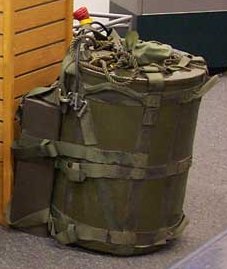
The Davy Crockett Nuclear Munition, from Wikipedia

Amid the chaos in the news was an announcement that President Putin signed an updated nuclear deterrent policy for Russia, which expanded the use of nuclear weapons as a response against conventional attacks on Russia’s critical government and military infrastructure.

I haven’t found a translated copy yet (the original Russian is linked in this article), but if you were to ask me if this is a surprise…its not. We need to view this through Russia’s eyes and see what nuclear weapons mean to them, why they would change policy now, and what is their desired end state.

First, when we talk nuclear weapons, realize that Russia has always had a pretty wide range of weapons. When we hear nuclear, we think giant missiles with multiple warheads, and for the current U.S. stockpile, that’s pretty true. But we forget that the U.S. had an interest in tactical nuclear weapons, right down to the man portable “Davy Crockett,” a man-portable nuclear bazooka that you can still see on display in the Army Ordnance Museum. Russia has never lost its taste for tactical nuclear weapons, even going so far as to look at suitcase (really, backpack sized, ~70 pound) warheads that could be smuggled and detonated inside the U.S. Russia’s Navy has always viewed nuclear weapons as a viable option in naval warfare against U.S. Carrier Strike Groups.

A Special Atomic Demolition Munition with a W54 warhead…essentially, a backpack nuke.
Image from Wikipedia

For Russia, using tactical nuclear weapons doesn’t mean we will go to full-on nuclear conflict. It’s not in Russia’s best interest to have a full nuclear exchange with the U.S. or NATO. Think about it. Russia loses in a full exchange: they have less people, less ability to rebuild, and will likely lose all military forces (and thus ability to defend) in any full exchange. Russia doesn’t want to own the whole world, but to simply dominate the parts that were the former USSR.

Because the U.S. views nuclear exchange as an “all or nothing” game, Russia uses this to its advantage. It’s always viewed theater war as a limited exchange that could allow tactical nuclear weapons to be used without escalation, so long as they achieved a specific objective. In this sense, Russia is OK with an “escalate to deescalate” policy with nuclear weapons.

So given that, why the policy change now? It’s part technology, part negotiation. On the technology side, conventional weapons are becoming incredibly accurate and more lethal. Russia fears a decapitating strike by the U.S. using advanced weapons like the Tomahawk cruise missile. Russia has watched the U.S. strike country after country with these weapons to great effect. Nuclear policy, specifically Mutually Assured Destruction (MAD), was written before conventional weapons were this accurate. Does MAD work when I can hit decision makers in under an hour (like the program Prompt Global Strike was pursuing)? Doubtful. The technology has simply changed too much.

It’s also a negotiating move. Withdrawing from the INF treaty means the last nuclear treaty is the START treaty, set to expire in February 2021. Russia can’t afford an arms race with the U.S. The Russian economy is tanking due to COVID-19 and sanctions. If European nations stay in NATO and allied with the U.S., this situation is unlikely to change. Plus, Russia is shrinking as its population gets older and more sick due to the poor healthcare in the country. If START doesn’t get re-upped, Russia is in trouble, as it can’t compete with U.S. and European manufacturing of nuclear weapons.

So, as Russians are fond of doing, its striking hard. It’s trying to get people scared that it might pull a “Crazy Ivan.” That’s a possibility, but an unlikely one. Its big hope is for the U.S. to blink and negotiate on their terms. Given the current administration, that’s unlikely too. In fact, the DoD is practicing against just such a thing, much to Russia’s ire.

In the next six months, expect the Russian’s to run drills and emphasize their use of tactical nuclear weapons. Russia could even find a way to test a nuclear weapon underground as part of these drills. RT and Sputnik news will play this up, bringing in images of the Cold War, with kids under their desks and mushroom clouds in the background. We’ll probably “find” a nuclear-like device in the U.S., or uncover a plot to transport one. All this is to get the U.S. to give them the nuclear deal that they want.

All this will be done with the hope of persuading the American people and sitting President to negotiate. Whether it works will depend on how willing we are to look past the fluff.

This post represents the views of the author and not those of the Department of Defense, Department of the Navy, or any other government agency.

At 3 PM EST DaTechguy’s no frills livestream podcast is on and the topics are all George Floyd related.

  1. 4 Questions for the left/BLM/Media
  2. why I blame Da Media/Left for the riots
  3. William Bainbridge and I will not submit

You can watch the livestream here

Feel free to join the chat and like or dislike what you hear. You have a right to your opinion. But if you like what you hear consider subscribing & sharing it and if you REALLY like it consider hitting DaTipJar

By Christopher Harper

The world economy is set to undergo a significant and perhaps unnecessary restructuring based on new standards, such as social distancing, that have little or contradictory scientific underpinning.

For example, take the six-foot rule. Because the virus can travel on liquid droplets breathed or coughed out by infected people, health authorities recommend staying away from crowds and maintaining physical separation from others. That’s why restaurants, bars, and other locales where people mingle closely have faced such economically devastating restrictions. The U.S. Centers for Disease Control and Prevention specifically recommends the six-foot buffer.

But it’s difficult to find where the six-foot rule actually comes from. The basic outline comes from a 1930s study and a more recent one after SARS. But the studies do not specify four feet, six feet, or 20 feet. In fact, the World Health Organization recommended until recently that three feet were enough.

More important, these studies did not look at the use of masks together with social distancing. Therefore, masks might eliminate the need for social distancing for the most part.

Think about all the money being spent and the money lost for restaurants, bars, sporting events, places of worship, and other venues where people gather.

Moreover, there are no specific guidelines for interior versus exterior locations. WHO recently recommended, for example, that masks should ONLY be used INDOORS when helping or being exposed to someone with Covid-19.

Remember that it wasn’t too long ago that nearly all scientists said masks were unnecessary? Remember when the scientists told us that 2.2 million people would die in the United States alone?

It’s been a difficult time, but we know a lot more about who’s in grave danger from Covid-19, and social distancing and masks may do little for these groups.

It is evident from the mounting statistics about the pandemic that older people, minorities, and a few other groups, particularly with underlying conditions, such as diabetes, must be the focus in the coming weeks of the pandemic before a vaccine.

Nursing homes and long-term care facilities became breeding grounds for the virus, amounting to more than half the deaths in my home state of Pennsylvania.

A Wall Street Journal tally of state data from around the U.S. shows more than 42,000 Covid-19-associated deaths in long-term care facilities, including nursing homes and assisted-living sites, along with more than 200,000 cases. This tally probably undercounts the full impact of the outbreak because of incomplete information from some states.

That’s nearly half of all deaths in the United States.

Perhaps it’s time to take a harder look at the economic and social changes being planned as a result of the unverified “science” before creating unnecessary burdens and costs that will transform the way we live and work.