

Posts Tagged ‘navy’

From Breitbart Media

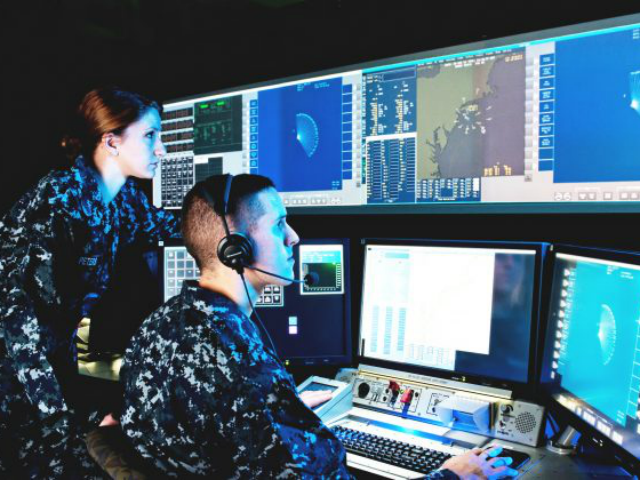
It seems plenty of people want the entire United States to telework and stay at home until a COVID-19 vaccine is created. To be fair to those people, many jobs that we once thought weren’t telework capable are suddenly finding a way to overcome those barriers. But for government workers, especially those in the Navy, telework doesn’t remain a viable option, and we need to stop lying about its viability.

Let’s start with what should be an obvious point: many military members work with classified information. Information gets classified for a variety of reasons: it keeps ship movements safe, protects how sensitive intelligence is made, or where we’ve made breakthroughs in military technology. We spend a lot of taxpayer money to build systems with advantages over our enemies, and protecting the information from our enemies so we can maintain that advantage is important. Or put another way, we throw away taxpayer dollars when we give up classified information.

To protect this information, we make people work in secure facilities. More sensitive information merits more secure facilities. These facilities don’t include your living room couch. Or your home office. Or the Dunkin’ Donuts coffee shop. Worse still, we have some mobile technology, but its normally reserved for higher ranking members in the military.

So we’re put in a quandary. Navy leadership at the high level can work from home to some degree. The Sailors doing the work cannot. This inevitably leads to the desire to “talk around” information, or find ways of getting work done that put our information at risk. Remember to keep in mind this information costs money, so putting it at unnecessary risk is the equivalent of throwing money away to our enemies.

A second less obvious point is that the Navy has a lot of equipment that we don’t just lock up and store. Ships require maintenance. Submarine nuclear reactors always have someone at a panel. Without Sailors onboard, these vessels cease to be useful. We can’t drive them into a warehouse, turn on the dehumidifier, shut and lock the door and wait for a vaccine.

So your government, especially your Navy, can’t telework forever. We put information and systems, which are expensive, at risk. Just like the rest of America, we need to get back to work.

This post represents the views of the author and not those of the Department of Defense, Department of the Navy, or any other government agency.

The USS THEODORE ROOSEVELT, from Task and Purpose

As more details emerge concerning CAPT Crozier of the USS THEODORE ROOSEVELT, its becoming clear he has a distinct possibility of being reinstated as commanding officer. Given his circumstances, people have asked me if the Navy learned any lessons from this.

My answer is, no.

The Navy is in the middle of grappling with information warfare, and its not doing a great job, mostly because there is a significant age (and thus cultural) problem in its senior officers. The average age of an admiral hovers around the 50’s, meaning most were born in the late 1960s (or earlier!) and spent their childhood without internet. They entered the Navy in an era when information could legitimately be controlled while underway. Censoring mail and family grams was normal. When bad things happened, the first response is to close off the news, solve the problem, and then tell everyone what happened, and during that process, it was (in the past) totally OK to hide details and be opaque. In general, these officers grew up in a time when information could be totally controlled.

The environment is very different now, and these old responses don’t work. CAPT Crozier would have grown up with some internet access, and he is probably more savvy online than most of his senior officers. When his boss tried to clamp down on information flow, CAPT Crozier easily worked around it. It was an ugly black eye to have a video showing him leaving to cheering Sailors, and it likely wasn’t an accident that this happened. In warfare terms, CAPT Crozier was flying an F-18 against an opponent using a biplane. It wasn’t a fair fight.

Despite this really ugly fight, the Navy is unlikely to learn anything. Contrary to popular myth, the Navy isn’t inherently a learning organization. It learns through death and injury. When Sailors die, or when ships get sunk, the Navy learns really fast, mainly through firing people and changing operating procedures. But its unlikely anyone will lose their job over this incident, and the Navy won’t put out any additional guidance on how to handle these circumstances. We’ll only learn as flag officers start coming from people that grew up in an age when information had to be managed, not controlled.

This also explains why Navy isn’t good at information warfare. Do you see Navy countering misinformation well? Not really. At best, Navy commanders engage on social media via their public affairs officers. But posting on the command’s Facebook page isn’t enough to go viral and get your message out. And yet you see commanders claim, time and time again, that because they posted articles and gave the occasional interview, they “maneuvered” in the information environment. Meanwhile, Russia and China run rings around the Navy, easily maneuvering against their stories and constantly pushing their own agenda.

While we don’t want to admit it, in the information realm, we are flying the biplane, and our adversaries are flying jet aircraft. It’s not a fair fight, and won’t be for sometime to come.

This post (clearly) represents the views of the author and not those of the Department of Defense, Department of the Navy, or any other government agency.

This post was edited on 4/27/20 because I mistakenly listed the HARRY TRUMAN instead of the ROOSEVELT. That was an honest mistake, I had been working on something else and swapped the two carriers.

From military.com

I wrote about the CAPT Crozier/SECNAV Modly affair last week, and couldn’t have been more wrong. I was disgusted to get information from others that pointed to a lack of a plan and a lack of care by many in the chain of command for the well being of the Sailors aboard THEODORE ROOSEVELT. What should have been a good news story of the Navy tackling the COVID-19 virus turned into a complete shit show, resulting in Acting SECNAV Modly resigning, a lot of hurt feelings on all sides, and a huge loss in confidence in senior Navy leadership. The only good thing we got out of it was no more “Vector” emails. Despite tons of good news stories for the Navy right now, especially the USNS COMFORT and USNS MERCY, the Navy headlines will be more bad than good.

So yes, I got it wrong. I was fooled by a good media performance early on, then watched everything descend into chaos. I do hope, if CAPT Crozier is found innocent, they put him back in charge.

Going forward, our Navy is in trouble in terms of leadership. To start with the situation, we have a Navy too small for what we ask of it. We’ve killed the Navy’s one saving point, mobility, by demanding presence per a Global Force Management schedule that doesn’t take ship maintenance into account. Yet we pay an astronomical amount of money for the Navy we have, mainly because our shipyards can’t produce a ship on budget or on time. Worse still, while the Army and Air Force had free reign of Overseas Contingency money, and a chance to recapitalize hardware, Navy still has old ships that are increasing in maintenance cost.

We need a strong SECNAV to get the Navy bureaucracy back on track, and yet to Congress, the Navy is somewhere on the bottom tier right now. Nobody cares enough to approve the President’s SECNAV choice, or to suggest someone else. Nobody cares enough to either build more ships or demand we scale back our overseas commitments. So this puts us lacking equipment and leadership.

But soon it’ll be worse, because we’ll be lacking people. When we put the Blended Retirement System in place, it was to make the system more “fair,” which for Congress means “cost less money.” The negative effect is that we’ll need more recruiting more often, because more people will leave earlier. Since it started in 2018, you’ll start seeing drastic changes in 2023 as Sailors that entered in 2018 leave in greater-than-anticipated numbers. For officers, who already have large incentives to leave after their 5 year initial contract, we’ll either have to throw huge bonuses at them to stay or live with gaps, keeping in mind in many cases, we’re already maxing out bonuses in many cases. If you’re an O-3 in 2023, would you stay in a Navy full of old ships, a declining retirement system and leaders that set poor standards, or would you jump ship for a civilian job?

The Navy’s approaching a crisis point. We’ll soon be lacking in equipment, leadership and people. Without some drastic rudder, the Navy will struggle to weather the upcoming storms.

This post represents the views of the author and not those of the Department of Defense, Department of the Navy, or any other government agency.

200321-N-TL141-1039 PHILLIPINE SEA (March 21, 2020) An MH-60R Sea Hawk assigned to the “Wolf Pack” Helicopter Maritime Strike Squadron (HSM) 75, takes off from the flight deck of the aircraft carrier USS Theodore Roosevelt (CVN 71) March 21, 2020. The Theodore Roosevelt Carrier Strike Group is on a scheduled deployment to the Indo-Pacific. (U.S. Navy photo by Mass Communication Specialist Seaman Dylan Lavin)

The Navy is in the news a lot. On one coast, the USS THEODORE ROOSEVELT, named after the iconic President, is in the news in a bad way. Her Commanding Officer, CAPT Crozier, was removed by the Secretary of the Navy because of a letter he wrote (and didn’t safeguard adequately) where he argued to evacuate most of his crew due to a COVID-19 outbreak because “Sailors do not need to die.” Reading the letter on its own (available here), without any other context makes CAPT Crozier look like a selfless hero, amplified when he was removed from command by Acting Secretary Modly and then cheered by his own crew.

Obviously, very concerned about the virus spreading, just look at that social distancing!

Like most stories, the surface belies the true nature of the medium. The largest fallacy comes from thinking the Navy wasn’t already acting to help the THEODORE ROOSEVELT. The Navy was moving, quickly, to find a suitable plan for ROOSEVELT. It had already secured 3,000 beds in Guam, which if you’ve ever been to the tiny island, you’ll realize is quite an achievement. Secretary Modly was in contact with CAPT Crozier personally, on multiple occasions before the letter was sent.

Before you sign a petition supporting CAPT Crozier, or think the Navy is some evil, vile organization that hates its Sailors, try watching Secretary Modly’s full press conference. I can guarantee it is not boring:

The Navy balances Sailor morale and welfare with the mission assigned to it. Contrary to CAPT Crozier’s letter, where he asserts we “…we are not at war, and therefore cannot allow a single Sailor to perish…”, that’s simply not true. The Navy executes dangerous “peacetime” missions every day. We fly planes, drive submarines, spy on enemies, rescue mariners in distress, ride out rough weather, and provide humanitarian assistance and disaster relief to areas that have multiple infectious diseases. Every day we engage in these activities, which occasionally kill Sailors, and while we balance our risk, the risk is never zero, because the American people expect their Navy to be ready for war, and readiness is never achieved with zero risk.

CAPT Crozier’s actions smell of grand standing. You can’t simply shutdown a nuclear aircraft carrier and park it like some cheap rental car. You always have Sailors onboard to monitor the reactor plants and maintain critical gear. CAPT Crozier even acknowledges that he has to keep at least 10% of the crew onboard. If he had proposed a rotation plan to maintain THEODORE ROOSEVELT while the virus burned itself out, he would probably still be in command.

On the other coast is another Roosevelt. DDG-80, the USS ROOSEVELT, is preparing for a deployment to Europe and a homeport shift to Rota, Spain. No doubt her Sailors are worried about COVID-19, as are their families. Instead of inspiring doubt and fear, her Commanding Officer is finishing deployment preparations, in a quiet and professional manner.

From https://www.dvidshub.net/news/365634/uss-roosevelt-prepares-homeport-shift-rota

Emotions run high when things are uncertain. Emotions feel good, and can even make you popular. But emotions cause you to make mistakes in war. Emotions, and emotional responses, sap your reasoning and break down your training. In war, when time and training matter, emotions get you killed.

If we’re being emotional now dealing with a virus with a mortality rate of 2%, and likely less than that for young people, how are we going to deal with a Great Power Competitor that has a higher death rate? Will we write letters to the press about the Sailors we lost in missile exchanges? Will we complain about driving into harm’s way?

When the going gets tough, do you want to be lead by someone ruled by their emotions, or someone who chooses to rule them?

This post represents the views of the author and not those of the Department of Defense, Department of the Navy, or any other government agency.