While debates continue to rage online about what the true death toll of COVID-19 is, one thing is for certain: Russia and China’s numbers are 100% false. As of this morning, the John Hopkins COVID dashboard is recording 2,537 deaths for Russia and 4,637 deaths in China. If you trust those numbers in countries with 144 million and 1.44 billion, then I’d hate to see your investment strategy.
All of this is made worse by a crumbling hospital infrastructure. While Russian health care is universal and government funded, it suffers from a high level of bureaucracy and lack of funding. Worse still, because of the high concentration of the countries wealth in Moscow verses the rest of the nation. This causes health care to decline significantly the farther away you get from Moscow, causing places like Siberia to suffer considerably more. If you needed a place that resembles The Hunger Games, Russia would be a great fit.
We won’t get the true COVID-19 numbers from Russia, as the government will clamp down on them considerably. But given their setup, be ready for true devastation. Personally I would watch satellite pictures of light intensity, because I would expect areas, especially remote ones, to become uninhabited.
This post represents the views of the author and not those of the Department of Defense, Department of the Navy, or any other government agency.
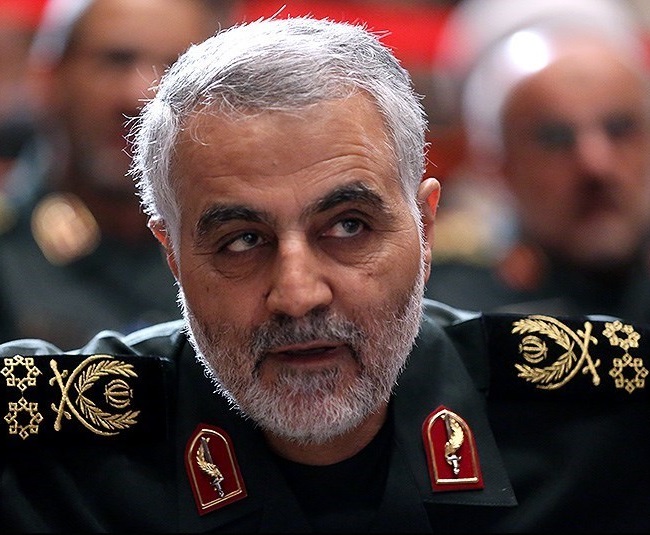
Qasem Soleimani, Commander of Quds Forces during National AGIR commanders conference, from Wikipedia
There is much to-do about President Trump’s veto (that was not overridden) of the Iran war powers resolution. On its face, a bill that says President Trump can’t just declare war on Iran seems to be a good thing, given the crazy number of places we have committed our Armed Forces to so far. I was curious what the bill actually said, so I did a bit of digging. At first, it was difficult to get the right bill because there have been multiple bills introduced by various members trying to restrict war with Iran. The one that was recently vetoed was S.J. Res. 68. You can read the PDF version here.
It’s a pretty short bill, so let’s dive into it! We’ll skip the fancy header stuff and get into the meat of it:
Congress makes the following findings: (1) Congress has the sole power to declare war under article I, section 8, clause 11 of the United States Constitution.
Well, no issue there. In case you only read the amendments to the Constitution, this is squarely in Article I.
(2) The President has a constitutional responsibility to take actions to defend the United States, its territories, possessions, citizens, service members, and diplomats from attack.
Sounds about right.
(3) Congress has not yet declared war upon, nor enacted a specific statutory authorization for use of military force against, the Islamic Republic of Iran. The 2001 Authorization for Use of Military Force (Public Law 107-40; 50 U.S.C. 1541 note) against the perpetrators of the 9/11 attack and the Authorization for Use of Military Force Against Iraq Resolution of 2002 (Public Law 107-243; 50 U.S.C. 1541 note) do not serve as a specific statutory authorization for the use of force against Iran.
Sure… but how does this apply if you’re a terrorist funded by Iran? Iran is running a proxy war against the United States, and the U.S. has responded in kind. Both nations are fighting each other in the shadows, but hesitating to attack each other directly, although there have been the occasionalassassination attempt. Essentially, this says you can’t use these two pieces of legislation to justify war with Iran.
(4) The conflict between the United States and the Islamic Republic of Iran constitutes, within the meaning of section 4(a) of the War Powers Resolution (50 U.S.C. 1543(a)), either hostilities or a situation where imminent involvement in hostilities is clearly indicated by the circumstances into which United States Armed Forces have been introduced.
That is correct, see the USC text here. Then again, you could say this applies every time we conduct a Freedom of Navigation transit. It’s pretty vague. A U.S. Carrier Strike Group would be always “equipped for combat,” so anytime it goes anywhere its meeting this criteria.
(5) Members of the United States Armed Forces and intelligence community, and all those involved in the planning of the January 2, 2020, strike on Qasem Soleimani, including President Donald J. Trump, should be commended for their efforts in a successful mission.
Yay, I guess? Did they just give a shout-out to the President? Who snuck that in?
Even Democrats give me credit!
(6) Section 5(c) of the War Powers Resolution (50 U.S.C. 1544(c)) states that “at any time that United States Armed Forces are engaged in hostilities outside the territory of the United States, its possessions and territories without a declaration of war or specific statutory authorization, such forces shall be removed by the President if the Congress so directs”.
True, but missing a section. The previous portion, 5(b), allows the President to essentially deploy the military for up to 60 days before he has to remove them. Kind of important. Should read the whole text, available here.
(7) More than 100 members of the United States Armed Forces sustained traumatic brain injuries in the Iranian retaliatory attack on the Ain al-Assad air base in Iraq despite initial reports that no casualties were sustained in the attack.
And initial reports are normally wrong, so the point here is what? Iran shot a bunch of missiles at us and nobody died? Some people get a Purple Heart and a VA disability bump? Sure, its just a statement of fact, but to what end?
I’m not downplaying the damage here, it sucks that people got injured. My bigger point is that it doesn’t matter to this bill in the slightest.
(8) Section 8(c) of the War Powers Resolution (50 U.S.C. 1547(c)) defines the introduction of the United States Armed Forces to include “the assignment of members of such armed forces to command, coordinate, participate in the movement of, or accompany the regular or irregular forces of any foreign country or government when such military forces are engaged, or there exists an imminent threat that such forces will become engaged in, hostilities”.
(9) The United States Armed Forces have been introduced into hostilities, as defined by the War Powers Resolution, against Iran.
Introduced? Against Iran? Here’s where you can lawyer-away. The troops were in IRAQ. They were attacked in IRAQ. President Trump authorized a strike on General Soleimani in IRAQ. Not Iranian soil, Iraqi soil. He even notified the Iraqis. The troops in Iraq are in no way sufficient to invade Iran. We’re not even shooting across the border…General Soleimani was killed in Baghdad, which is over 200 km from the Iranian border.
Maybe I’m wrong, but this simply sentence seems like its reaching a bit. Troops that were already there (not introduced) and are helping Iraq (not fighting Iran) are somehow now engaged in hostilities against Iran? Please, if a lawyer wants to drop a comment to explain this, I’m all ears. I just don’t see it.
(10) The question of whether United States forces should be engaged in hostilities against Iran should be answered following a full briefing to Congress and the American public of the issues at stake, a public debate in Congress, and a congressional vote as contemplated by the Constitution.
Sure, couldn’t agree more. Congress hasn’t lost the ability to declare war or turn off the military funding tap, neither of which it has decided to do. And, to be fair, President Trump hasn’t put military forces in Iran, nor is he massing troops on the border to do so.
(11) Section 1013 of the Department of State Authorization Act, Fiscal Years 1984 and 1985 (50 U.S.C. 1546a) provides that any joint resolution or bill to require the removal of United States Armed Forces engaged in hostilities without a declaration of war or specific statutory authorization shall be considered in accordance with the expedited procedures of section 601(b) of the International Security and Arms Export Control Act of 1976.
Yup, but again, the soldiers involved were all already in IRAQ, and there to help the Iraqi Army.
SEC. 2. TERMINATION OF THE USE OF UNITED STATES FORCES FOR HOSTILITIES AGAINST THE ISLAMIC REPUBLIC OF IRAN.
(a) Termination.–Pursuant to section 1013 of the Department of State Authorization Act, Fiscal Years 1984 and 1985 (50 U.S.C. 1546a), and in accordance with the provisions of section 601(b) of the International Security Assistance and Arms Export Control Act of 1976, Congress hereby directs the President to terminate the use of United States Armed Forces for hostilities against the Islamic Republic of Iran or any part of its government or military, unless explicitly authorized by a declaration of war or specific authorization for use of military force against Iran.
OK. So, pray tell, what hostilities? Did we shoot missiles into Iran? Did we invade some piece of Iranian territory? I’d like to know.
(b) Rule of Construction.–Nothing in this section shall be construed to prevent the United States from defending itself from imminent attack.
Well that’s good to know!
So I’m not seeing the big deal with this bill, besides that its a bunch of grandstanding. It’s a lot of fluff and it’s accusing the President of conducting operations against Iran, without saying WHAT operations he’s engaging in. It also is attempting to link soldiers that are already in IRAQ as somehow having something to do with IRAN. I get it, the countries are only one letter apart…but seriously.
How this piece of legislation feels
I’ve had a few people quote President Trump’s tweets about “raining fire down on Iran” if they attack our Navy vessels. OK, I’ll bite. For starters, imminent attack and self defense are still protected, so President Trump threatening to use them is a giant nothing-burger. Did he threaten to invade Qeshm Island? If so, I’d be all onboard saying that’s a really bad idea without a war declaration.
That’s not what is happening. Essentially, we have a President that is totally fine making bombastic claims when another country threatens him. It’s his personal style and likely part of his negotiating strategy. We can argue about whether this is effective, and I think there is plenty of room for debate on that. I personally think it isn’t always the best strategy to use with our allies, for example. I’m not the President, so I don’t get to make those choices, and for people that really don’t like that style, there is the voting box come November.
To accuse President Trump of engaging in hostile acts directly against Iran, but then not being able to name them, and trying to disguise it as an attempt to reign in a President that is trampling on Congressional rights is nothing more than stupid grand standing. We continue to be promised World War III with President Trump, and it continues to not happen.
This post represents the views of the author and not those of the Department of Defense, Department of the Navy, or any other government agency.
Everyone wants to talk about President Trump. Even when the President isn’t focusing the media attention on himself (which is pretty rare), people want to discuss what he’s doing or not doing. If you wander onto social media, the overwhelming number of political posts are about President Trump, followed by Nancy Pelosi and Joe Biden.
Given all that focus, you would think that the President has an outsized influence in our daily lives. But unless you work in the federal government, that’s not really true. In fact, your local judges and politicians have a far greater impact on your daily life, and yet most people can’t name but a handful of them.
The COVID-19 responses in your state are mostly controlled by the governor. While Michigan and New York have capitalized on media coverage, the reality is that most governors seem to have done OK. I’m not a fan of our governor, but his response to COVID-19 and the restrictions he put in place made sense. I can still shop and get take-out from restaurants, without getting pulled over by the police and having my trunk checked for essential items.
The rules in place get funded and reinforced by the state legislature, and yet I struggle to find people who know anything, even the name, of their state representative. These people have a huge influence on your daily life, and people actually get to choose them every few years, and yet most have no idea who they are.
Schools are even worse. School board elections are so mundane, and yet most people figured out that despite the administrative costs paid by your property taxes, most schools couldn’t build a distance education plan to save their lives. I’m having to teach my kids math and science because the math and science teachers aren’t allowed to lecture more than an hour a week because of the school administration. After having that stupid rule explained to me, I’ve taken a larger interest in school board elections.
The COVID-19 pandemic was a chance for many people to reevaluate portions of their life. Could you spend long periods of time at home? Could you stay connected with others when you couldn’t travel? But perhaps most importantly, it exposed most of us to how well or not well our local elected officials run our government. That experience should drive your vote this year.
This post represents the views of the author and not those of the Department of Defense, Department of the Navy, or any other government agency.
As more details emerge concerning CAPT Crozier of the USS THEODORE ROOSEVELT, its becoming clear he has a distinct possibility of being reinstated as commanding officer. Given his circumstances, people have asked me if the Navy learned any lessons from this.
My answer is, no.
The Navy is in the middle of grappling with information warfare, and its not doing a great job, mostly because there is a significant age (and thus cultural) problem in its senior officers. The average age of an admiral hovers around the 50’s, meaning most were born in the late 1960s (or earlier!) and spent their childhood without internet. They entered the Navy in an era when information could legitimately be controlled while underway. Censoring mail and family grams was normal. When bad things happened, the first response is to close off the news, solve the problem, and then tell everyone what happened, and during that process, it was (in the past) totally OK to hide details and be opaque. In general, these officers grew up in a time when information could be totally controlled.
The environment is very different now, and these old responses don’t work. CAPT Crozier would have grown up with some internet access, and he is probably more savvy online than most of his senior officers. When his boss tried to clamp down on information flow, CAPT Crozier easily worked around it. It was an ugly black eye to have a video showing him leaving to cheering Sailors, and it likely wasn’t an accident that this happened. In warfare terms, CAPT Crozier was flying an F-18 against an opponent using a biplane. It wasn’t a fair fight.
Despite this really ugly fight, the Navy is unlikely to learn anything. Contrary to popular myth, the Navy isn’t inherently a learning organization. It learns through death and injury. When Sailors die, or when ships get sunk, the Navy learns really fast, mainly through firing people and changing operating procedures. But its unlikely anyone will lose their job over this incident, and the Navy won’t put out any additional guidance on how to handle these circumstances. We’ll only learn as flag officers start coming from people that grew up in an age when information had to be managed, not controlled.
This also explains why Navy isn’t good at information warfare. Do you see Navy countering misinformation well? Not really. At best, Navy commanders engage on social media via their public affairs officers. But posting on the command’s Facebook page isn’t enough to go viral and get your message out. And yet you see commanders claim, time and time again, that because they posted articles and gave the occasional interview, they “maneuvered” in the information environment. Meanwhile, Russia and China run rings around the Navy, easily maneuvering against their stories and constantly pushing their own agenda.
While we don’t want to admit it, in the information realm, we are flying the biplane, and our adversaries are flying jet aircraft. It’s not a fair fight, and won’t be for sometime to come.
This post (clearly) represents the views of the author and not those of the Department of Defense, Department of the Navy, or any other government agency.
This post was edited on 4/27/20 because I mistakenly listed the HARRY TRUMAN instead of the ROOSEVELT. That was an honest mistake, I had been working on something else and swapped the two carriers.






 Da Techguy's (no longer backup) Blog