
Archive for the ‘education’ Category

If you’re not familiar with the education website BrainPop, then I’m guessing you don’t have any school age children. BrainPop is a website with a collection of short educational videos. It’s pretty popular in middle schools, and its had a fairly solid reputation among educators. So when my daughter said she was concerned about a BrainPop video she watched, I was a bit surprised.

So I watched the video on Jim Crow, and for the most part, it was pretty good. It discussed Plessy vs Ferguson, Truman’s desegregation of the military, the NAACP lawsuits and the events that lead up to Brown vs Board of Education. It handles the events pretty well, not sugar coating details over what is a difficult subject to discuss.

Sadly, the video fell apart for me right at the beginning and at the end. The video opens with the protagonists stuck in traffic due to a protest. But that is OK, we’re told, because the protestors are protesting for a good cause. Never mind that impeding traffic is a violation of the law, and the protestors could have easily protested without blocking traffic. But hey, its a good cause, whatever that means, and I say that because we don’t ever really know what the protestors stand for. Rather, its presented as a “protesting for more rights” sort of thing. Remember that point, its important later.

At the end of the video, we get a taste of progressive BrainPop. We’re told that all sorts of groups are protesting for their rights. What do these groups look like, you may ask?

Image capture from BrainPop Jim Crow video

My, that’s a pretty diverse set of protestors! Seems to be mostly from one side of a political aisle. But I have some questions. Why not include protestors from the pro-life movement? Why no reference to other discrimination, such as the rampant discrimination against Irish Catholics? And what exactly are immigrant rights? I thought rights belonged to citizens, or maybe I read that part of the Constitution wrong.
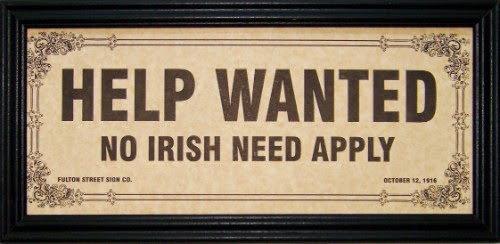
Apparently we forgot about this very real discrimination in American history

I guess I shouldn’t be surprised. There were indications BrainPop would get a bit more, progressive, dating back to 2016. It looks like I’m not the only one to notice this either. What’s sad is that you can already see this won’t end well. Once you pick sides, or appear to do so, you immediately turn a situation into “us vs them.” When I search for LGBT on BrainPop, I get 4 results, including one for Harvey Milk, but no results for abortion, pro-life or other related terms. Is BrainPop choosing sides? It sure appears so.

I wrote the following email to my daughters teacher. My hope is that he can perhaps put some of this material into more context, and given his past record, I think there’s a chance for that. I also think many teachers aren’t aware of the creeping progressive themes in BrainPop and other educational materials that used to just focus on delivering good content instead of pushing an agenda. If your kids use BrainPop, and had to watch the Jim Crow episode, I’d encourage you to send an email like mine below.

Dear Mr. (name),
I’m a fan of open discussion about American History, both the good and the bad. My daughter Cecilia recently watched a BrainPop video on Jim Crow, and for the most part, the video was pretty accurate. I especially liked the reference to Plessy vs Ferguson, which is important to establish the proper way that the Supreme Court can correct past wrong decisions.

However, there are two disturbing points in the video I feel must be addressed. The video opens with the two protagonists stopped in traffic due to a protest. The one protagonist, a non-speaking robot, gets visibly angry at the disturbance, but the other protagonist, a young white male, tells him to calm down because the protestors have a “good reason to protest.”

This portion of the video is absurd because it overlooks key portions of the Constitution and settled law. The First Amendment of the Constitution allows the “right of the people peaceably to assemble, and to petition the Government for a redress of grievances.” This right, like all rights, is subject to restrictions such as noise ordinances and safety concerns. While the Supreme Court has struck down attempts at vague restrictions, such as the attempt to shut down “annoying” protests in Coates vs City of Cincinnati, it has upheld arrests of people who engage in violent behavior and who block traffic.

To use a close to home example, there was a scheduled protest down (nearby road) in the summer of 2020. The protestors obtained a permit and had police protection during their protest. Traffic was restricted to one side of (road), which allowed for proper flow of normal and emergency vehicles during this time. This is a great example of what is supposed to happen. 

The video, however, is OK with an illegal blocking of traffic, which begs many questions. Are the protagonists OK with workers losing pay because they arrived to work late? What would they say to the loved ones of someone who died because their ambulance was stuck in unexpected traffic interruptions? What about someone who inadvertently injured a protestor because they weren’t aware of the protests because it wasn’t scheduled? These aren’t hypothetical questions, as each has happened in real life, yet the video glazes over these points like they don’t matter.

The other disturbing section was near the end, which implied that groups of different Americans needed to have “their rights” secured. It’s disturbing because it presents rights as something unequally distributed based on color, gender, sexual orientation, or a variety of other ways we can divide people into different blocks.

Rights exist for all Americans. Abolishing Jim Crow laws was done to allow black Americans to exercise their American rights. Rights aren’t given based on people’s beliefs or how active their melanocytes happen to be in their skin. Rights are given because we are people. That’s the part about “all men are created equal” in the Declaration of Independence, or in the Fourteenth Amendment, which declares “No State shall make or enforce any law which shall abridge the privileges or immunities of citizens of the United States.” It’s pretty heady and exciting stuff when you think about it, and something we should be proud of, because it’s not present in many parts of the world, even today. 

When we separate rights into blocks based on arbitrary divisions of human beings, we put ourselves into an “us vs them” scenario. This implies there are winners and losers, and encourages people to fight those that don’t look like them. I can’t imagine a more cynical and cunning way you could destroy unity than this. The ending of the video encourages people to lump themselves into categories and fight for rights for “their side,” rather than fighting to ensure all Americans have the same exercise of American rights.

I apologize for the length of this email, but I think it’s important to point out where misinformation is hurting our education. We should be encouraging students to study US History, including the parts that aren’t the most flattering. But that study doesn’t mean we overlook laws, and it certainly doesn’t demand dividing us into different, competing blocks of people. We’re better than that. I hope you can provide a counter to this messaging that encourages our children to both learn from the past and create a better future for America.

From my email to our daughters teacher

This post represents the views of the author and not those of the Department of Defense, Department of the Navy, or any other government agency.

By Christopher Harper

Instead of readying college students for the rough-and-tumble world of work, it appears that a growing number of professors want to enhance the coddling of this generation.

In an article in the faculty union newsletter at Temple University, where I teach, Amy Lynch of the College of Public Health argued for an emphasis on “trauma-informed teaching.”

Following is some of the pablum she preaches:

–Do not have any penalization for students who feel unsafe attending a class in person.

–When possible, have students sitting in a large circle or square, with no one’s back facing another individual.

–Offer choices to students concerning assignments. “You can complete this assignment as a written paper of 2,500 words, or you can submit a flipgrid with at least 4,000 words.”

Note: I had never heard of a flipgrid until now. Here is a definition: Flipgrid is a website that allows teachers to create “grids” to facilitate video discussions. Each grid is like a message board where teachers can pose questions, called “topics,” and their students can post video responses that appear in a tiled grid display.

–Show unconditional positive support for students, directly to students, and in conversations with colleagues about students. 

–Actively acknowledge and discuss when current events trigger emotions related to systematic oppression….

–Educators can promote student resilience.. [by] celebration of “missed successes,” [and] with warm compassion-based “social autopsy,” growing together with the discovery of what went wrong…. 

Note: I had never heard of a social autopsy. Here is a description: A social autopsy is a problem-solving strategy designed to support social skills. Students with difficulties understanding social interactions can use a social autopsy to analyze the social errors they made. Examples of where social autopsies may be used include:

–Ignoring others’ greetings
–Asking a question in a class without raising a hand
–Continuing to talk on the same topic
–Sneezing without covering one’s mouth

For more information, see https://buildingmomentuminschools.blog/2016/02/05/social-autopsy-and-other-social-teaching-tools/

If my colleagues and I follow this plan, Professor Lynch argues, “the seeds of trauma-informed education are planted with the hopes of a full forest of trauma-informed education stakeholders soon to emerge.”

If a student has difficulties, I always want to help. But I am not a psychologist; I am a teacher. I make suggestions to students on how they can seek help outside of the classroom for difficulties they might have.

For the 26 years I have been teaching, I always encouraged students to get outside of their comfort zones. That was the best way to prepare oneself for the tough job a journalist had to do. Now it appears I’m supposed to make students feel more comfortable.

Simply put, It’s unlikely that graduates will enter a “trauma-informed” workplace once they leave the comfort of college. 

By John Ruberry

I’d like to add my thoughts to Christopher F. Rufo’s superb piece in City Journal that attacks critical race theory. First an explanation of what that is. In short, critical race theory is the belief that America is systematically racist. Yes, you’ve heard that term before, systemic racism. White Americans created this nation, according to critical race theory, primarily to perpetuate white supremacy and they are doing so today.

Wrong on so many counts. 

While many of the Founding Fathers were slave holders some were abolitionists. A Civil War–two of my ancestors fought for the Union by the way–was fought to end slavery. But since the Civil Rights Act of 1964, the Voting Rights Act of 1965, and the Fair Housing Act of 1968 became law, it’s hard to argue that America is systemically racist. Yes, there is still racism among Americans but most of us live, work, and interact with people of other races without incident–even better, many think nothing of it.

When I was a child intermarriage among the races was rare. While Americans still are much more likely to marry within their own race, in 1967, when the US Supreme Court ruled that laws in some states that banned inter-racial marriage as unconstitutional, only three percent of Americans married someone outside their race. By 2015 those numbers had risen to 15 percent.

There is much progress to be made–there should be no racism. 

If America is truly “rigged” or “fixed” for the white man, then why is our southern border being overwhelmed by migrants from Mexico and Central America? Why do immigrants from Asia or Africa continue to settle in the United States?

Critical race theory, which is an offshoot of Marxism, is being taught at our schools. While there is some pushback against this indoctrination but there needs to be more, especially since the Biden administration supports critical race theory. Opponents who speak out against this toxicity should be prepared to be called racist if they are white–or naive fools if they are not. The use of kneejerk false accusations against those with other ideas is one of the many weapons of the left.

One goal of the practicioners of critical race theory is to divide us into oppressors (white) and oppressed (minority). Divide and rule is an ancient tactic of totalitarians. The next step for these self-righteous ones is to divide people into even more groups, making rule by one person, or one idealogy, an easier task. Those other groups could be rural, urban, suburban, southern, western, and more.

Left-handers versus right-handers, anyone?

The use of such tactics ironically mirrors who the “woke” persistently vilifies, the colonizers.

Speaking of the genocide in Rwanda in the 1990s on NPR yesterday, former UN senior adviser Elizabeth Nyamayaro said, “And a lot of that also had to do with lots of colonial policies that – you know, I grew up in Zimbabwe, and we were colonized by Britain. And one of the devices that was used to control the massive population was to split us – you know, split us into different groups, give us different rights so that whilst we fought amongst ourselves, you know, those in power would continue to rule over all of us.”

Supposedly in the fifteen century, Louis XI of France said, “To reign, divide.” In the workplace I’ve had a few psychotic bosses who “managed” this way.

Is this the American we want to live in? Us versus them? You versus me?

Never forget, you are not automatically a racist if you oppose critical race theory. You simply are against that divisive poison.

John Ruberry regularly blogs at Marathon Pundit.

On the left U of Wisconsin students on the right a black slave

We seem to have a difference of opinion on whether or not Abraham Lincoln was “anti black”.

On one side you have the highly educated Student government of the University of Wisconsin, a prestigious organization at a prestigious University full of students who have paid tens of thousands of dollars to be educated with the knowledge of the ages.

We previously discussed the effort at the University of Wisconsin-Madison to have the famous statue of Abraham Lincoln removed as racist.  The student government has now voted unanimously in favor of a resolution that calls for the removal of the Abraham Lincoln statue on campus. The students declared that the president who signed the Emancipation Proclamation, advocated for the 13th Amendment, and led the war against the South and slavery was “not pro-Black”

Well that certainly sounds definite! After all you have a bunch of highly educated people voting on this an not only voting on it agreeing with complete unanimity. And what kind of argument do we have against?

Leaving their squalid houses and their tar-paper shacks, an impenetrable cordon of newly freed blacks followed Lincoln down the rubble-strewn streets, starting with a handful and swelling into a thousand. “Bless the Lord!” they shouted. “The great Messiah! I knowed him as soon as I seed him. He’s in my heart four long years. Come to free his children from bondage. Glory hallelujah.” And Lincoln replied, “You are free. Free as air.” “I know I am free,” answered one old woman, “for I have seen Father Abraham and felt him.”

One of Lincoln’s aides asked the mass to step aside and allow the president to proceed, but to no avail. “After being so many years in the desert without water,” a man said happily, “it is mighty pleasant to be looking at las’ on our spring of life.” Weeping for joy, they strained to touch his hand; dizzy with exultation, they brushed his clothing to see that he was real; fearing that it was only a dream, they wiped their tears to make sure they were in fact looking out upon his face. Moved, Lincoln ignored his bodyguards and waded deeper into the thickening flock.

One black man, overcome by emotion, dropped to his knees, prompting the president to conduct a curbside colloquium on the meaning of emancipation. “Don’t kneel to me,” said the president. “That is not right. You must kneel to God only, and thank Him for the liberty you will enjoy hereafter.”

Well there you have it. Take a good look at that extract. Do you expect to take the opinion of a bunch of uneducated people living in “squalid houses and their tar-paper shacks” living near “rubble strewed streets” who can’t even speak proper English over college educated scholars? Cripes even Lincoln himself notes that he doesn’t deserve any credit saying: “You must kneel to God only and thank Him for the liberty you will enjoy hereafter”

I mean really those college students have the sum of human knowledge at their fingertip while those slaves only knew what they saw in front of them. They didn’t even have phones let alone the internet and we’re supposed to trust their opinion into account on if Lincoln was anti black over these elites just because they happen to be there?

The very idea!

Update: I just remember this clip from Ken Burns Classic The Civil War

That’s how crazy it has gotten. The opinion of the Woke student government of the University of Wisconsin on Abraham Lincoln has no converged with the opinion of Nathan Bedford Forest on Abraham Lincoln whose family didn’t like Lincoln’s name mentioned with one of the early leaders of the KKK.

And people actually mortgaged houses to pay to have their kids taught this.