Lost in the media’s fake news was a very disturbing report of a clash between India and China, the world’s two most populated nuclear-enabled countries, in the Galwan Valley. If you don’t know where that is, its a north-eastern section that divides China from India. India and China fought a war in 1962 over this and other regions, which China won. Ever since then, the Chinese have been encroaching on the area, and small flare ups have happened now and then, including this latest fight.
What’s different is that India probably learned lessons from last time and was better prepared. Previously China tended to have the upper hand in conflict, but based on the downplay from both sides on the most recent conflict, I’m guessing it was much more of a draw. India’s military has upgraded much, including training, so it was more of an equal fight, especially because that area makes it more difficult for more advanced weapons to be brought to play.
The big lesson to learn here is that China is only going to respect power when it comes to border disputes. If you don’t punch back twice as hard, expect China to simply continue to take. It’s become more apparent that China is like Hitler’s Germany, never quite satisfied with whatever land was given up to satiate Hitler’s desires. China will find excuses to lay claim to the Galwan Valley, Tawang, Taiwan, Hong Kong, Siberia, Hawaii, and whatever else it can get away with.
This also opens up huge opportunities for US-India relations. India has traditionally used Russian weapons and equipment, but as China rolls out more upgraded gear, better equipment and training is needed to stand up to them. Given the U.S. experience in Afghanistan, especially for special warfare personnel, the border disputes give an opportunity for enhanced US-India military training. Even better, from a strategic standpoint, having an open conflict on China’s western border would be a way to temper Chinese ambitions in other areas. China can take on Japan, Taiwan or South China Sea claimants one by one, but if they combine and also face a land war on their western border, its a bit much to handle.
This post represents the views of the author and not those of the Department of Defense, Department of the Navy, or any other government agency.
I haven’t found a translated copy yet (the original Russian is linked in this article), but if you were to ask me if this is a surprise…its not. We need to view this through Russia’s eyes and see what nuclear weapons mean to them, why they would change policy now, and what is their desired end state.
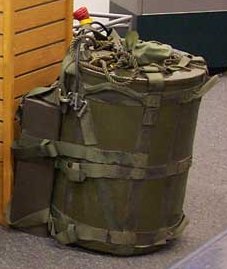
First, when we talk nuclear weapons, realize that Russia has always had a pretty wide range of weapons. When we hear nuclear, we think giant missiles with multiple warheads, and for the current U.S. stockpile, that’s pretty true. But we forget that the U.S. had an interest in tactical nuclear weapons, right down to the man portable “Davy Crockett,” a man-portable nuclear bazooka that you can still see on display in the Army Ordnance Museum. Russia has never lost its taste for tactical nuclear weapons, even going so far as to look at suitcase (really, backpack sized, ~70 pound) warheads that could be smuggled and detonated inside the U.S. Russia’s Navy has always viewed nuclear weapons as a viable option in naval warfare against U.S. Carrier Strike Groups.
For Russia, using tactical nuclear weapons doesn’t mean we will go to full-on nuclear conflict. It’s not in Russia’s best interest to have a full nuclear exchange with the U.S. or NATO. Think about it. Russia loses in a full exchange: they have less people, less ability to rebuild, and will likely lose all military forces (and thus ability to defend) in any full exchange. Russia doesn’t want to own the whole world, but to simply dominate the parts that were the former USSR.
Because the U.S. views nuclear exchange as an “all or nothing” game, Russia uses this to its advantage. It’s always viewed theater war as a limited exchange that could allow tactical nuclear weapons to be used without escalation, so long as they achieved a specific objective. In this sense, Russia is OK with an “escalate to deescalate” policy with nuclear weapons.
So given that, why the policy change now? It’s part technology, part negotiation. On the technology side, conventional weapons are becoming incredibly accurate and more lethal. Russia fears a decapitating strike by the U.S. using advanced weapons like the Tomahawk cruise missile. Russia has watched the U.S. strike country after country with these weapons to great effect. Nuclear policy, specifically Mutually Assured Destruction (MAD), was written before conventional weapons were this accurate. Does MAD work when I can hit decision makers in under an hour (like the program Prompt Global Strike was pursuing)? Doubtful. The technology has simply changed too much.
It’s also a negotiating move. Withdrawing from the INF treaty means the last nuclear treaty is the START treaty, set to expire in February 2021. Russia can’t afford an arms race with the U.S. The Russian economy is tanking due to COVID-19 and sanctions. If European nations stay in NATO and allied with the U.S., this situation is unlikely to change. Plus, Russia is shrinking as its population gets older and more sick due to the poor healthcare in the country. If START doesn’t get re-upped, Russia is in trouble, as it can’t compete with U.S. and European manufacturing of nuclear weapons.
So, as Russians are fond of doing, its striking hard. It’s trying to get people scared that it might pull a “Crazy Ivan.” That’s a possibility, but an unlikely one. Its big hope is for the U.S. to blink and negotiate on their terms. Given the current administration, that’s unlikely too. In fact, the DoD is practicing against just such a thing, much to Russia’s ire.
In the next six months, expect the Russian’s to run drills and emphasize their use of tactical nuclear weapons. Russia could even find a way to test a nuclear weapon underground as part of these drills. RT and Sputnik news will play this up, bringing in images of the Cold War, with kids under their desks and mushroom clouds in the background. We’ll probably “find” a nuclear-like device in the U.S., or uncover a plot to transport one. All this is to get the U.S. to give them the nuclear deal that they want.
All this will be done with the hope of persuading the American people and sitting President to negotiate. Whether it works will depend on how willing we are to look past the fluff.
This post represents the views of the author and not those of the Department of Defense, Department of the Navy, or any other government agency.
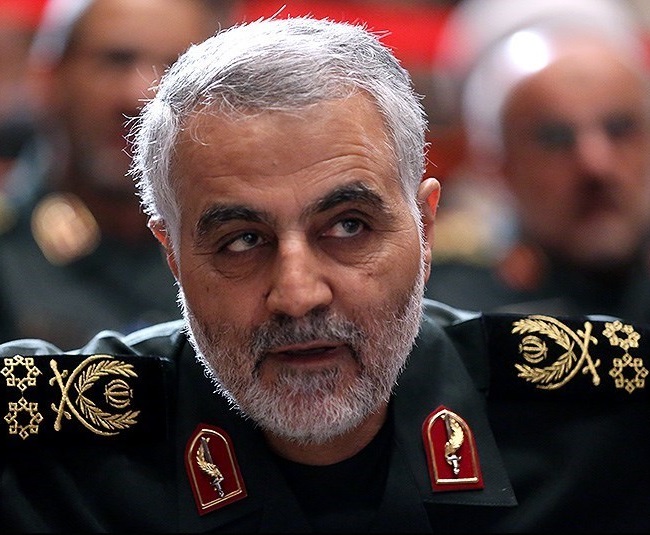
Qasem Soleimani, Commander of Quds Forces during National AGIR commanders conference, from Wikipedia
There is much to-do about President Trump’s veto (that was not overridden) of the Iran war powers resolution. On its face, a bill that says President Trump can’t just declare war on Iran seems to be a good thing, given the crazy number of places we have committed our Armed Forces to so far. I was curious what the bill actually said, so I did a bit of digging. At first, it was difficult to get the right bill because there have been multiple bills introduced by various members trying to restrict war with Iran. The one that was recently vetoed was S.J. Res. 68. You can read the PDF version here.
It’s a pretty short bill, so let’s dive into it! We’ll skip the fancy header stuff and get into the meat of it:
Congress makes the following findings: (1) Congress has the sole power to declare war under article I, section 8, clause 11 of the United States Constitution.
Well, no issue there. In case you only read the amendments to the Constitution, this is squarely in Article I.
(2) The President has a constitutional responsibility to take actions to defend the United States, its territories, possessions, citizens, service members, and diplomats from attack.
Sounds about right.
(3) Congress has not yet declared war upon, nor enacted a specific statutory authorization for use of military force against, the Islamic Republic of Iran. The 2001 Authorization for Use of Military Force (Public Law 107-40; 50 U.S.C. 1541 note) against the perpetrators of the 9/11 attack and the Authorization for Use of Military Force Against Iraq Resolution of 2002 (Public Law 107-243; 50 U.S.C. 1541 note) do not serve as a specific statutory authorization for the use of force against Iran.
Sure… but how does this apply if you’re a terrorist funded by Iran? Iran is running a proxy war against the United States, and the U.S. has responded in kind. Both nations are fighting each other in the shadows, but hesitating to attack each other directly, although there have been the occasionalassassination attempt. Essentially, this says you can’t use these two pieces of legislation to justify war with Iran.
(4) The conflict between the United States and the Islamic Republic of Iran constitutes, within the meaning of section 4(a) of the War Powers Resolution (50 U.S.C. 1543(a)), either hostilities or a situation where imminent involvement in hostilities is clearly indicated by the circumstances into which United States Armed Forces have been introduced.
That is correct, see the USC text here. Then again, you could say this applies every time we conduct a Freedom of Navigation transit. It’s pretty vague. A U.S. Carrier Strike Group would be always “equipped for combat,” so anytime it goes anywhere its meeting this criteria.
(5) Members of the United States Armed Forces and intelligence community, and all those involved in the planning of the January 2, 2020, strike on Qasem Soleimani, including President Donald J. Trump, should be commended for their efforts in a successful mission.
Yay, I guess? Did they just give a shout-out to the President? Who snuck that in?
Even Democrats give me credit!
(6) Section 5(c) of the War Powers Resolution (50 U.S.C. 1544(c)) states that “at any time that United States Armed Forces are engaged in hostilities outside the territory of the United States, its possessions and territories without a declaration of war or specific statutory authorization, such forces shall be removed by the President if the Congress so directs”.
True, but missing a section. The previous portion, 5(b), allows the President to essentially deploy the military for up to 60 days before he has to remove them. Kind of important. Should read the whole text, available here.
(7) More than 100 members of the United States Armed Forces sustained traumatic brain injuries in the Iranian retaliatory attack on the Ain al-Assad air base in Iraq despite initial reports that no casualties were sustained in the attack.
And initial reports are normally wrong, so the point here is what? Iran shot a bunch of missiles at us and nobody died? Some people get a Purple Heart and a VA disability bump? Sure, its just a statement of fact, but to what end?
I’m not downplaying the damage here, it sucks that people got injured. My bigger point is that it doesn’t matter to this bill in the slightest.
(8) Section 8(c) of the War Powers Resolution (50 U.S.C. 1547(c)) defines the introduction of the United States Armed Forces to include “the assignment of members of such armed forces to command, coordinate, participate in the movement of, or accompany the regular or irregular forces of any foreign country or government when such military forces are engaged, or there exists an imminent threat that such forces will become engaged in, hostilities”.
(9) The United States Armed Forces have been introduced into hostilities, as defined by the War Powers Resolution, against Iran.
Introduced? Against Iran? Here’s where you can lawyer-away. The troops were in IRAQ. They were attacked in IRAQ. President Trump authorized a strike on General Soleimani in IRAQ. Not Iranian soil, Iraqi soil. He even notified the Iraqis. The troops in Iraq are in no way sufficient to invade Iran. We’re not even shooting across the border…General Soleimani was killed in Baghdad, which is over 200 km from the Iranian border.
Maybe I’m wrong, but this simply sentence seems like its reaching a bit. Troops that were already there (not introduced) and are helping Iraq (not fighting Iran) are somehow now engaged in hostilities against Iran? Please, if a lawyer wants to drop a comment to explain this, I’m all ears. I just don’t see it.
(10) The question of whether United States forces should be engaged in hostilities against Iran should be answered following a full briefing to Congress and the American public of the issues at stake, a public debate in Congress, and a congressional vote as contemplated by the Constitution.
Sure, couldn’t agree more. Congress hasn’t lost the ability to declare war or turn off the military funding tap, neither of which it has decided to do. And, to be fair, President Trump hasn’t put military forces in Iran, nor is he massing troops on the border to do so.
(11) Section 1013 of the Department of State Authorization Act, Fiscal Years 1984 and 1985 (50 U.S.C. 1546a) provides that any joint resolution or bill to require the removal of United States Armed Forces engaged in hostilities without a declaration of war or specific statutory authorization shall be considered in accordance with the expedited procedures of section 601(b) of the International Security and Arms Export Control Act of 1976.
Yup, but again, the soldiers involved were all already in IRAQ, and there to help the Iraqi Army.
SEC. 2. TERMINATION OF THE USE OF UNITED STATES FORCES FOR HOSTILITIES AGAINST THE ISLAMIC REPUBLIC OF IRAN.
(a) Termination.–Pursuant to section 1013 of the Department of State Authorization Act, Fiscal Years 1984 and 1985 (50 U.S.C. 1546a), and in accordance with the provisions of section 601(b) of the International Security Assistance and Arms Export Control Act of 1976, Congress hereby directs the President to terminate the use of United States Armed Forces for hostilities against the Islamic Republic of Iran or any part of its government or military, unless explicitly authorized by a declaration of war or specific authorization for use of military force against Iran.
OK. So, pray tell, what hostilities? Did we shoot missiles into Iran? Did we invade some piece of Iranian territory? I’d like to know.
(b) Rule of Construction.–Nothing in this section shall be construed to prevent the United States from defending itself from imminent attack.
Well that’s good to know!
So I’m not seeing the big deal with this bill, besides that its a bunch of grandstanding. It’s a lot of fluff and it’s accusing the President of conducting operations against Iran, without saying WHAT operations he’s engaging in. It also is attempting to link soldiers that are already in IRAQ as somehow having something to do with IRAN. I get it, the countries are only one letter apart…but seriously.
How this piece of legislation feels
I’ve had a few people quote President Trump’s tweets about “raining fire down on Iran” if they attack our Navy vessels. OK, I’ll bite. For starters, imminent attack and self defense are still protected, so President Trump threatening to use them is a giant nothing-burger. Did he threaten to invade Qeshm Island? If so, I’d be all onboard saying that’s a really bad idea without a war declaration.
That’s not what is happening. Essentially, we have a President that is totally fine making bombastic claims when another country threatens him. It’s his personal style and likely part of his negotiating strategy. We can argue about whether this is effective, and I think there is plenty of room for debate on that. I personally think it isn’t always the best strategy to use with our allies, for example. I’m not the President, so I don’t get to make those choices, and for people that really don’t like that style, there is the voting box come November.
To accuse President Trump of engaging in hostile acts directly against Iran, but then not being able to name them, and trying to disguise it as an attempt to reign in a President that is trampling on Congressional rights is nothing more than stupid grand standing. We continue to be promised World War III with President Trump, and it continues to not happen.
This post represents the views of the author and not those of the Department of Defense, Department of the Navy, or any other government agency.
The Pentagon says a supposed intelligence report cited by ABC News on an emerging COVID-19 pandemic doesn’t exist.
ABC said the report was issued in November by the National Center for Medical Intelligence, an arm of the Defense Intelligence Agency (DIA). It supposedly warned of a pandemic of what would be later named COVID-19.
Relying on sources who said they saw the report, ABC News said the warning was briefed “multiple times” to the DIA, the staff of the Joint Chiefs of Staff and the Trump White House. (…)
Col. R. Shane Day, a physician who heads the medical intelligence unit, issued a flat denial.
“As a matter of practice, the National Center for Medical Intelligence does not comment publicly on specific intelligence matters,” Col. Day said. “However, in the interest of transparency during this current public health crisis, we can confirm that media reporting about the existence/release of a National Center for Medical Intelligence Coronavirus-related product/assessment in November of 2019 is not correct. No such NCMI product exists.”
CBS News said an “an editing mistake” led to the network airing footage of an Italian hospital during a segment on New York’s coronavirus crisis in a statement to the Daily Caller on Monday.
“CBS This Morning” discussed Democratic New York Gov. Andrew Cuomo’s allegation that the Federal Emergency Management Agency (FEMA) only gave the state 400 ventilators when they needed 30,000 on March 25. The network aired footage of a crowded Italian hospital room that was reported by Sky News on March 22 during a segment on hospitals in the country.
There are dozen — hundreds — of examples which long precede the headline dominance of the Wuhan Plague. But ADD is much a more virulent virus, if not as deadly. Usually.
Many of you are still oblivious to this pattern, but now you have a lot more time to pay attention. Seize that time.
Just trying to assist you for the next Big Media “mistake.”






 Da Techguy's (no longer backup) Blog