


Posts Tagged ‘Navy Grade 36’

Pearl Monument torn down, from Wikipedia

Not that long ago, the military sent me to Bahrain to work a particular mission. While I was there, I learned about the political differences between the King of Bahrain (a Sunni) and the majority Shia population on the small island nation. Protests against the King were somewhat common, and I would get text notifications if one flared up. The protests weren’t aimed at America (a nice change), but we were always advised to stay away from them because the mob mentality might make us a target of convenience.

Mobs make people stupid by allowing people to offload their decision making, and thus responsibility, onto the mob. The danger is that someone with a strong personality will use the mob’s power towards their own end. What starts as a peaceful demonstration can end in violence. That’s what happened in Bahrain, climaxing in 2011 with the demonstration near the Pearl Monument and its subsequent destruction by the government.

The scary part about mobs is that the people pulling the strings typically don’t have a peaceful end state. President Trump understands this and pointed it out in 2017 that tearing down statues to appease the mob isn’t going to work. Plenty of people ridiculed him, including Slate:

“So Trump’s comparison there is dumb. It doesn’t really even make any sense. And the notion that there’s some slippery slope is dumb.”

-Slate article, 2017

Doesn’t look so dumb now. It’s one thing for a city government to remove a Confederate statue or the federal government to rename a base. I’d be happy renaming Fort Gordon to something else, since General John Gordon seemed more capable of getting shot than being an effective general, and was probably a KKK member. There’s a system for doing that, so we should use that. We don’t need a mob for these things.

Worse, this mob mentality isn’t going to end anytime soon. We’re now seeing Catholic churches targeted in California. My wife alerted me to an FSSP parish in San Diego, where the address was being posted in order to mobilize a protest. The right to peacefully protest is a good thing. It allows things like praying outside a Planned Parenthood abortion clinic. But it should be fairly obvious from the above Instagram picture, which makes plenty of assumptions on the church members, that the point isn’t to be peaceful, but rather intimidate people from attending church. Think about it, would YOU walk through a throng of angry protestors to attend Mass?

Mob leaders want people to submit to mob control. Worse still, when mob leadership adheres to Antifa ideaology, it will violently attack any authority that opposes it. This includes Church authority, especially Catholic teachings.

Prediction: we’re going to see attempts by the mob to link Catholicism to slavery, Trump, COVID-19, and whatever else comes to mind in order to justify defacing and tearing buildings down. This, despite a decent Church history of opposing slavery, even having a Pope that was a former slave. Remember that actual history doesn’t matter to the mob.

The question we have to start asking Catholics now is: are you prepared to wade through a mob to attend Mass? Will you tolerate a mob defacing or tearing down your Church? Because the mob is coming for Jesus. Which side will you be on when it arrives?

This post represents the views of the author and not those of the Department of Defense, Department of the Navy, or any other government agency.

India standing up to China

Posted: June 20, 2020 by ng36b in News/opinion, war
Tags: , , ,

Lost in the media’s fake news was a very disturbing report of a clash between India and China, the world’s two most populated nuclear-enabled countries, in the Galwan Valley. If you don’t know where that is, its a north-eastern section that divides China from India. India and China fought a war in 1962 over this and other regions, which China won. Ever since then, the Chinese have been encroaching on the area, and small flare ups have happened now and then, including this latest fight.

What’s different is that India probably learned lessons from last time and was better prepared. Previously China tended to have the upper hand in conflict, but based on the downplay from both sides on the most recent conflict, I’m guessing it was much more of a draw. India’s military has upgraded much, including training, so it was more of an equal fight, especially because that area makes it more difficult for more advanced weapons to be brought to play.

The big lesson to learn here is that China is only going to respect power when it comes to border disputes. If you don’t punch back twice as hard, expect China to simply continue to take. It’s become more apparent that China is like Hitler’s Germany, never quite satisfied with whatever land was given up to satiate Hitler’s desires. China will find excuses to lay claim to the Galwan Valley, Tawang, Taiwan, Hong Kong, Siberia, Hawaii, and whatever else it can get away with.

This also opens up huge opportunities for US-India relations. India has traditionally used Russian weapons and equipment, but as China rolls out more upgraded gear, better equipment and training is needed to stand up to them. Given the U.S. experience in Afghanistan, especially for special warfare personnel, the border disputes give an opportunity for enhanced US-India military training. Even better, from a strategic standpoint, having an open conflict on China’s western border would be a way to temper Chinese ambitions in other areas. China can take on Japan, Taiwan or South China Sea claimants one by one, but if they combine and also face a land war on their western border, its a bit much to handle.

This post represents the views of the author and not those of the Department of Defense, Department of the Navy, or any other government agency.

COVID-19 is exacerbating many things, but one that is flying under the radar right now is a pending, unprecedented wealth transfer from old to young. The transfer of wealth from the Boomer generation to Millenials was already being discussed in 2014 due to its shear size (somewhere between 30 and 60 trillion dollars). While some people predicted it wouldn’t be as large because of rising health care and long-term care costs, those will be cut short by the disease.

This is important for a few reasons. First, COVID-19 wiped out any senior care center it touched. These centers all too often make their money by sucking the benefits from their members, to the point they have no wealth left to transfer to heirs. Now that many of the members have died, there will be a transfer of funds surviving family members, likely to spur a bit of the economy. Because COVID-19 hit the older population much more so than younger, it’s not a surprise that the economy can bounce back faster than expected.

Given the poor performance of senior centers, I would expect many people to be hesitant to trust them with aging boomer parents in the future. Once the full truth comes out, especially about how places like Michigan and New York knowingly put COVID-positive seniors back in homes, it will become the scandal of 2020. I’d expect to see a rise in senior centers that boast a better cleaning and isolation regiment, as well as people adding mother-in-law suites to provide for parents in the future.

Lastly, COVID-19 is likely to spur quick changes on Medicare. Medicare as a program has never been setup for long-term success. Taxing the working people to pay for seniors only works if you have a large, growing population and a relatively short lifespan. Given that people live longer and have less children, those economic don’t work when health care costs rise. But COVID-19 exposed medical treatment costs as perhaps more driven by red tape than anything else. Regardless, the lack of taxpayer funds due to unemployment will likely bring in some much needed change to the system.

This post represents the views of the author and not those of the Department of Defense, Department of the Navy, or any other government agency.

The Davy Crockett Nuclear Munition, from Wikipedia

Amid the chaos in the news was an announcement that President Putin signed an updated nuclear deterrent policy for Russia, which expanded the use of nuclear weapons as a response against conventional attacks on Russia’s critical government and military infrastructure.

I haven’t found a translated copy yet (the original Russian is linked in this article), but if you were to ask me if this is a surprise…its not. We need to view this through Russia’s eyes and see what nuclear weapons mean to them, why they would change policy now, and what is their desired end state.

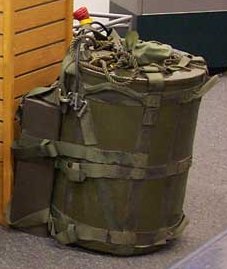
First, when we talk nuclear weapons, realize that Russia has always had a pretty wide range of weapons. When we hear nuclear, we think giant missiles with multiple warheads, and for the current U.S. stockpile, that’s pretty true. But we forget that the U.S. had an interest in tactical nuclear weapons, right down to the man portable “Davy Crockett,” a man-portable nuclear bazooka that you can still see on display in the Army Ordnance Museum. Russia has never lost its taste for tactical nuclear weapons, even going so far as to look at suitcase (really, backpack sized, ~70 pound) warheads that could be smuggled and detonated inside the U.S. Russia’s Navy has always viewed nuclear weapons as a viable option in naval warfare against U.S. Carrier Strike Groups.

A Special Atomic Demolition Munition with a W54 warhead…essentially, a backpack nuke.
Image from Wikipedia

For Russia, using tactical nuclear weapons doesn’t mean we will go to full-on nuclear conflict. It’s not in Russia’s best interest to have a full nuclear exchange with the U.S. or NATO. Think about it. Russia loses in a full exchange: they have less people, less ability to rebuild, and will likely lose all military forces (and thus ability to defend) in any full exchange. Russia doesn’t want to own the whole world, but to simply dominate the parts that were the former USSR.

Because the U.S. views nuclear exchange as an “all or nothing” game, Russia uses this to its advantage. It’s always viewed theater war as a limited exchange that could allow tactical nuclear weapons to be used without escalation, so long as they achieved a specific objective. In this sense, Russia is OK with an “escalate to deescalate” policy with nuclear weapons.

So given that, why the policy change now? It’s part technology, part negotiation. On the technology side, conventional weapons are becoming incredibly accurate and more lethal. Russia fears a decapitating strike by the U.S. using advanced weapons like the Tomahawk cruise missile. Russia has watched the U.S. strike country after country with these weapons to great effect. Nuclear policy, specifically Mutually Assured Destruction (MAD), was written before conventional weapons were this accurate. Does MAD work when I can hit decision makers in under an hour (like the program Prompt Global Strike was pursuing)? Doubtful. The technology has simply changed too much.

It’s also a negotiating move. Withdrawing from the INF treaty means the last nuclear treaty is the START treaty, set to expire in February 2021. Russia can’t afford an arms race with the U.S. The Russian economy is tanking due to COVID-19 and sanctions. If European nations stay in NATO and allied with the U.S., this situation is unlikely to change. Plus, Russia is shrinking as its population gets older and more sick due to the poor healthcare in the country. If START doesn’t get re-upped, Russia is in trouble, as it can’t compete with U.S. and European manufacturing of nuclear weapons.

So, as Russians are fond of doing, its striking hard. It’s trying to get people scared that it might pull a “Crazy Ivan.” That’s a possibility, but an unlikely one. Its big hope is for the U.S. to blink and negotiate on their terms. Given the current administration, that’s unlikely too. In fact, the DoD is practicing against just such a thing, much to Russia’s ire.

In the next six months, expect the Russian’s to run drills and emphasize their use of tactical nuclear weapons. Russia could even find a way to test a nuclear weapon underground as part of these drills. RT and Sputnik news will play this up, bringing in images of the Cold War, with kids under their desks and mushroom clouds in the background. We’ll probably “find” a nuclear-like device in the U.S., or uncover a plot to transport one. All this is to get the U.S. to give them the nuclear deal that they want.

All this will be done with the hope of persuading the American people and sitting President to negotiate. Whether it works will depend on how willing we are to look past the fluff.

This post represents the views of the author and not those of the Department of Defense, Department of the Navy, or any other government agency.