COVID-19 is exacerbating many things, but one that is flying under the radar right now is a pending, unprecedented wealth transfer from old to young. The transfer of wealth from the Boomer generation to Millenials was already being discussed in 2014 due to its shear size (somewhere between 30 and 60 trillion dollars). While some people predicted it wouldn’t be as large because of rising health care and long-term care costs, those will be cut short by the disease.
This is important for a few reasons. First, COVID-19 wiped out any senior care center it touched. These centers all too often make their money by sucking the benefits from their members, to the point they have no wealth left to transfer to heirs. Now that many of the members have died, there will be a transfer of funds surviving family members, likely to spur a bit of the economy. Because COVID-19 hit the older population much more so than younger, it’s not a surprise that the economy can bounce back faster than expected.
Given the poor performance of senior centers, I would expect many people to be hesitant to trust them with aging boomer parents in the future. Once the full truth comes out, especially about how places like Michigan and New York knowingly put COVID-positive seniors back in homes, it will become the scandal of 2020. I’d expect to see a rise in senior centers that boast a better cleaning and isolation regiment, as well as people adding mother-in-law suites to provide for parents in the future.
Lastly, COVID-19 is likely to spur quick changes on Medicare. Medicare as a program has never been setup for long-term success. Taxing the working people to pay for seniors only works if you have a large, growing population and a relatively short lifespan. Given that people live longer and have less children, those economic don’t work when health care costs rise. But COVID-19 exposed medical treatment costs as perhaps more driven by red tape than anything else. Regardless, the lack of taxpayer funds due to unemployment will likely bring in some much needed change to the system.
This post represents the views of the author and not those of the Department of Defense, Department of the Navy, or any other government agency.
I haven’t found a translated copy yet (the original Russian is linked in this article), but if you were to ask me if this is a surprise…its not. We need to view this through Russia’s eyes and see what nuclear weapons mean to them, why they would change policy now, and what is their desired end state.
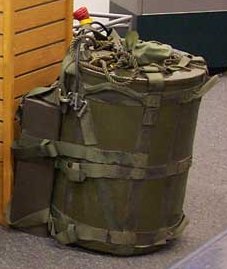
First, when we talk nuclear weapons, realize that Russia has always had a pretty wide range of weapons. When we hear nuclear, we think giant missiles with multiple warheads, and for the current U.S. stockpile, that’s pretty true. But we forget that the U.S. had an interest in tactical nuclear weapons, right down to the man portable “Davy Crockett,” a man-portable nuclear bazooka that you can still see on display in the Army Ordnance Museum. Russia has never lost its taste for tactical nuclear weapons, even going so far as to look at suitcase (really, backpack sized, ~70 pound) warheads that could be smuggled and detonated inside the U.S. Russia’s Navy has always viewed nuclear weapons as a viable option in naval warfare against U.S. Carrier Strike Groups.
For Russia, using tactical nuclear weapons doesn’t mean we will go to full-on nuclear conflict. It’s not in Russia’s best interest to have a full nuclear exchange with the U.S. or NATO. Think about it. Russia loses in a full exchange: they have less people, less ability to rebuild, and will likely lose all military forces (and thus ability to defend) in any full exchange. Russia doesn’t want to own the whole world, but to simply dominate the parts that were the former USSR.
Because the U.S. views nuclear exchange as an “all or nothing” game, Russia uses this to its advantage. It’s always viewed theater war as a limited exchange that could allow tactical nuclear weapons to be used without escalation, so long as they achieved a specific objective. In this sense, Russia is OK with an “escalate to deescalate” policy with nuclear weapons.
So given that, why the policy change now? It’s part technology, part negotiation. On the technology side, conventional weapons are becoming incredibly accurate and more lethal. Russia fears a decapitating strike by the U.S. using advanced weapons like the Tomahawk cruise missile. Russia has watched the U.S. strike country after country with these weapons to great effect. Nuclear policy, specifically Mutually Assured Destruction (MAD), was written before conventional weapons were this accurate. Does MAD work when I can hit decision makers in under an hour (like the program Prompt Global Strike was pursuing)? Doubtful. The technology has simply changed too much.
It’s also a negotiating move. Withdrawing from the INF treaty means the last nuclear treaty is the START treaty, set to expire in February 2021. Russia can’t afford an arms race with the U.S. The Russian economy is tanking due to COVID-19 and sanctions. If European nations stay in NATO and allied with the U.S., this situation is unlikely to change. Plus, Russia is shrinking as its population gets older and more sick due to the poor healthcare in the country. If START doesn’t get re-upped, Russia is in trouble, as it can’t compete with U.S. and European manufacturing of nuclear weapons.
So, as Russians are fond of doing, its striking hard. It’s trying to get people scared that it might pull a “Crazy Ivan.” That’s a possibility, but an unlikely one. Its big hope is for the U.S. to blink and negotiate on their terms. Given the current administration, that’s unlikely too. In fact, the DoD is practicing against just such a thing, much to Russia’s ire.
In the next six months, expect the Russian’s to run drills and emphasize their use of tactical nuclear weapons. Russia could even find a way to test a nuclear weapon underground as part of these drills. RT and Sputnik news will play this up, bringing in images of the Cold War, with kids under their desks and mushroom clouds in the background. We’ll probably “find” a nuclear-like device in the U.S., or uncover a plot to transport one. All this is to get the U.S. to give them the nuclear deal that they want.
All this will be done with the hope of persuading the American people and sitting President to negotiate. Whether it works will depend on how willing we are to look past the fluff.
This post represents the views of the author and not those of the Department of Defense, Department of the Navy, or any other government agency.
The COVID-19 shutdown has had many changes, with a notable one being more time spent at home. For couples, this had lead to more…alone time, if you know what I mean. More alone time means that 40 weeks from the start of pandemic in the United States (so around Christmas time) means we might be seeing a surge in births.
While definitely under-reported in America, other countries are reporting signs that we might see a large increase in babies. Indonesia saw a 10% decrease in birth control use, and in countries like Nepal, which already don’t have good transportation, family planning is out the window. India, already set to overtake China by 2050 in population, is likely seeing a surge too. Even in Ireland, pregnancy test purchases are spiking in some cities. It seems everyone is using COVID-19 as a bad pickup line to get it on.
What does this mean long term? First, a surge should help stave off economic downturn. World War II saw a decline in population of almost 2.5% worldwide, but a surge in the birth rate after contributed to the regrowth of the population and economy to boot. With better health care and schooling, a jump in birth rate means more workers to produce more , which long term should raise GDP.
From Reddit
Second, the population will change dramatically where it is located at. China, already on decline, will likely decline more, falling behind India faster than 2050. That may put pressure on China to consolidate gains made by the One-Belt-One-Road Initiative and territoriality in places like the South China Sea. Russia faces a significant loss in manpower and may struggle to maintain control over its vast territory, which could lead to civil war. African nations like Nigeria and Ethiopia, with relatively democratic governments, could become huge markets for goods and the new source of manufacturing for companies escaping China.
Lastly, COVID-19 exposed that how we manage the elderly, especially in America, is a borderline death trap. Nursing homes, already struggling to keep workers, are the single largest source of COVID deaths in America. But longer life spans and the tendency of nursing homes to suck every penny out of retirement funds means that people will be likely outraged and desire to move aging parents into safer facilities. Expect to see a focus on cleanliness at nursing homes plus a boom in new homes being built with mother-in-law suites for aging parents.
This post represents the views of the author and not those of the Department of Defense, Department of the Navy, or any other government agency.
The OC-135, the (very old) airplane the US uses for OPEN SKIES flights, from Wikipedia
Recently President Trump pulled the United States out of the Open Skies Treaties, continuing his push of leaving treaties he feels aren’t useful. Given that we’ve pulled out of the INF Treaty, redone NAFTA, and scrapped a few other treaties (like the JCPOA), are we closer to war, and what treaty is next on the chopping block?
Trump renegotiating deals, and in some cases leaving them altogether, isn’t a surprise. A quick read of his book The Art of the Deal, or a study of his real estate deals, or just watching a few episodes of The Apprentice, would tell you that Trump is all about big deals. He doesn’t nibble at the edges of a small deal. He goes in for the big deal, or nothing at all.
A big reason for that is waiting for the big deal typically maximizes the leverage he has. If you give something away first, and the other side doesn’t reciprocate, you lost a portion of your negotiating power. It’s like giving your kids dessert before dinner on the promise they’ll eat both. Sure, it could happen, but if the dinner isn’t finished, you can’t threaten to withhold dessert.
President Trump always looks to maximize leverage, which means pressing on points that do something while ignoring those that don’t mean anything. For example, very early on he called out a number of NATO countries and threatened to withhold US defense money. A critical media made it out to look like he was threatening to leave NATO. Ironically, this worked completely in his favor. The chances of Trump leaving NATO were pretty slim, because it wouldn’t gain much (by the way, the only country to have done so was France when it left the military portion of NATO). But with the media making it look like he would, and a re-surging Russia acting like it wants to re-establish the Soviet Union, many NATO nations upped their funding. Trump won pretty “bigly” in that case.
If you think the whole “negotiating” piece is a sham, you shouldn’t. In fact, Trump has said on many occasions exactly what he’s doing. Here’s a NYT piece from 2016, where Trump was being interviewed by David Sanger and discussing missile defense and Japan:
TRUMP: Or, if we cannot make the right deal, to take on the burden themselves. You said it wrong because you said or — or if we cannot make the right deal for proper reimbursement to take on the burden themselves. Yes. Now, Hillary Clinton said: “I will never leave Japan. I will never leave Japan. Will never leave any of our ——” Well now, once you say that, guess what happens? What happens?
HABERMAN: You’re stuck.
TRUMP: You can’t negotiate.
HABERMAN: Right.
TRUMP: In a deal, you always have to be prepared to walk. Hillary Clinton has said, “We will never, ever walk.” That’s a wonderful phrase, but unfortunately, if I were on Saudi Arabia’s side, Germany, Japan, South Korea and others, I would say, “Oh, they’re never leaving, so what do we have to pay them for?” Does that make sense to you, David?
It’s crystal clear: President Trump will threaten to leave, and then ACTUALLY leave a deal, if it’s not to his liking. That gives him the most leverage to get the other side to comply.
Open Skies is no different. The deal was first brought up in 1955, but was only recently ratified in 2002. It’s supposed to allow unfettered access to anywhere in the signatories countries. The US upholds that end, and as a military member, I’ve been notified before when the Russians plan to fly over an installation I’m working at. Russia began denying access to key areas, including exercise areas and parts of Georgia.
From President Trumps point of view, Russia gets a good deal and the US is slowly losing any advantage for the deal, so he pulled out. Both sides can pull other intelligence assets to make up the loss, but Russia will take a harder economic hit to do that than the US. This gives the US an advantage, and makes a subsequent deal easier. But the next Open Skies deal, if it was to happen, wouldn’t look like the old one. Trump will drive a hard bargain. I wouldn’t be surprised if he demands something completely absurd, like a drawdown of Russian forces from Kaliningrad and the Arctic, with verification flights to ensure compliance.
Now the Open Skies is going away, what’s next? My first thought was Nuclear Test Ban, since the US never ratified it, but the President already beat me to it. Expect the media to really blow this one up, which again plays right into the President’s hand. I would expect him to use this as leverage over China, because he could:
Threaten to arm Japan and/or Taiwan with nuclear weapons
Threaten nuclear weapons on hypersonic missiles
Change US policy and bring back tactical nuclear weapons
Negotiate a better nuclear deal with India, to include selling them nuclear submarine technology. Not only would that make China angry, but it would strip Russia of arms sales!
Another deal on the chopping block is the Outer Space Treaty. Trump already announced moon mining. I’d expect him to be looking for partner nations to mine the moon and asteroids. It’s a good chance to bring in non-traditional partners like Brazil, India and Japan that have this technology, but also places like Indonesia and parts of Africa where geography makes launching satellites easier.
The last one I’d expect to see go away is our treaties on drugs. This goes beyond legalizing marijuana. The drug enforcement cost in America is massive and yet is not particularly effective. Legalizing and taxing the drug trade could not only take money away from cartels, but also increase the safety for drug users. I’m actually surprised it hasn’t come up yet, but it wouldn’t surprise me if Trump proposed big changes to drug control.
This post represents the views of the author and not those of the Department of Defense, Department of the Navy, or any other government agency.







 Da Techguy's (no longer backup) Blog