

Posts Tagged ‘country music’

By John Ruberry

The Byrds are deservedly one of the most acclaimed rock bands. However, despite their lasting fame and their membership in the Rock and Roll Hall of Fame, there are several misconceptions about them.

Formed in 1964, the original members were Chicago native Jim McGuinn (lead guitar and vocals)–he later changed his first name to Roger–Gene Clark (tambourine and vocals), David Crosby (rhythm guitar and vocals), Chis Hillman (bass and vocals), and Michael Clarke (drums).

All but Clarke were songwriters.

This is the “classic” lineup. Gene Clark, arguably the band’s principal songwriter in the early days, left the act in 1966, rejoining in 1967, and then he left for good, that is, until he joined the others for the disappointing reunion album, Byrds, in 1973.

Also in 1967, Clark quit again, and Crosby was fired. The latter gained superstar status after co-founding Crosby, Stills, and Nash–later joined by Neil Young. 

In 2018’s Sweetheart of the Rodeo Live, recorded with Marty Stuart and his Fabulous Superlatives, Hillman remarked that by the time The Notorious Byrd Brothers was finished, he and McGuinn “were the only two Byrds flying around at that time.”

In 1968, a series of members joined, and sometimes left, the Byrds. They are Gram Parsons, Gene Parsons (no relation), John York, Clarence White, and Skip Battin. 

Gram Parsons was the most noteworthy new Byrd, contributing two songs to Sweetheart of the Rodeo, and co-writing with McGuinn, “Drug Store Truck Drivin’ Man,” which appeared on Dr. Byrds and Mr. Hyde in 1969. By that time, Parsons and Hillman had left the Byrds, forming the pioneering country rock band the Flying Burrito Brothers. Over the years, Battin, Gene Parsons, and Michael Clarke later became members of the Flying Burrito Brothers.

Parsons, who died in 1973, released two groundbreaking solo albums after leaving the band he cofounded. 

The Byrds arguably created not only created the folk rock, but also country rock, and with The Band, they birthed the Americana music genre.

While it was true in the post-Sweetheart era, another misconception is that the Byrds were primarily a McGuinn project. Actually, like the Beatles, in the early days each member, except for Clarke, wrote and sang leads on songs. McGuinn, on the other hand, sang lead on the band’s two biggest hit singles, “Mr. Tambourine Man,” a Bob Dylan song, and “Turn! Turn! Turn! (To Everything There Is a Season),” a Pete Seeger cover.

McGuinn’s mastery of the 12-string guitar established the Byrds’ trademark sound. 

As for Dylan, another misconception is that the Byrds’ creative output, outside of their Dylan covers, was negligible. 

That’s absolutely not true.

So here are the rankings of the Byrds 12 studio albums.

12) Byrdmaniax (1971): Terry Melcher, who worked with the Byrds earlier in their career, was behind the boards for this over-produced mess. The Byrds had a hectic touring schedule at the time, the songs don’t have much feeling. Among the better tracks are “”I Wanna Grow Up to Be a Politician,” “Citizen Kane,” and the oft-covered spiritual “Glory, Glory.”

11) Farther Along (1971): The Byrds chose to self-produce this album and the sound is stripped down. Like Byrdmaniax, the best song is an old spiritual, the title track. “Bugler” and the Vaudeville-esque “”America’s Great National Pastime” standout.

10) (Untitled) (1970): This is a very strange collection. A double album, (Untitled) is half a live LP–the other half our studio tracks. Side two is an insufferable 16-minute long “Eight Miles High.” The studio songs are week, but “Chestnut Mare” is outstanding, it is the only Byrds song from the 1970s that can stand up to their earlier classics.

9) Ballad of Easy Rider (1969): Lots of people probably purchased this album, the top-selling album of the Byrds’ later career, believing it was the soundtrack to the enormously popular Easy Rider film. An acoustic version of the title song appeared on the actual movie soundtrack, sung by McGuinn, and the band’s version is also strong. Three covers, Woody Guthrie’s “Deportee (Plane Wreck at Los Gatos),” Dylan’s “It’s All Over Now, Baby Blue,” and “Jesus Is Just Alright,” which was recorded by the Doobie Brothers in 1972, are memorable.

8) Byrds (1973): The year prior, Creedence Clearwater Revival released its last album, the loathsome Mardi Gras. Dubbed “John Fogerty’s Revenge,” the two other members of the band–John’s brother Tom quit the year before–Fogerty turned the band into a democracy. The far-less talented other members, who has long objected to Fogerty’s dominance, sank CCR’s swan song. Byrds was a reunion of the band’s classic lineup, and this collection could be called David Crosby’s revenge. CSNY was on hiatus and Byrds was produced by Crosby, who believed that his 1960s Byrds’ compositions weren’t given enough respect. Only one of his songs, “Lady Friend,” was released as an A-side single during his first go-around in the band. Byrds, not surprisingly, sounds like a CSNY album. Although McGuinn denies it, the other members of the band, except for Gene Clark, were accused of saving their better compositions for their solo efforts. Crosby’s “Long Live the King” is a stellar track, but it belongs on a CSNY album. Clark’s “Full Circle” is terrific, it’s the opening cut, but it’s downhill from there

7) Dr. Byrds and Mr. Hyde (1969): With McGuinn being the only founding member of the Byrds left, it was a smart move to have Roger since lead vocals on every track, for continuity. Besides the aforementioned “Drug Store Truck Drivin’ Man,” the best cuts are the folk song, “Old Blue,” and a cover of “This Wheel’s on Fire,” which was co-written by Dylan and The Band’s Rick Danko. The original appears on The Band’s Music from Big Pink.

6) Fifth Dimension (1966): From here on in, the output is much more impressive. Shortly after recording of Fifth Dimension began, Clark left the Byrds for the first time. While he’s missed on this effort, there’s some dazzling stuff here, particularly the psychedelic hit “Eight Miles High,” which was written by Clark, Crosby, and McGuinn. The former had a terrible fear of flying. “Mr. Spaceman,” a McGuinn country rock tune, as well as a cover of “Hey Joe,” are the highlights of Fifth Dimension.

5) Younger than Yesterday (1967): McGuinn and Hillman stepped up for this album. The duo co-wrote the often covered single “So You Want to Be a Rock ‘n’ Roll Star.” Hillman’s “Have You Seen Your Face” and Dylan’s “My Back Pages” were deservedly given much deserved attention after they were released as singles.

4) Turn! Turn! Turn! (1965): The Byrds’ second album leads off with the soaring title track. There are two Dylan compositions, “The Times They Are a-Changin” and “Lay Down Your Weary Tune.” A cover of an old Porter Wagoner hit, “Satisfied Mind,” presages the Byrds’ later work.

3) Mr. Tambourine Man (1965): The title track on the Byrds’ debut album was a groundbreaking recording, and like “Turn! Turn! Turn! (To Everything There Is a Season),” it reached number 1 on the Billboard Hot 100 singles chart. There are three other Dylan covers here, including “Chimes of Freedom.” A Clark song, “I’ll Feel a Whole Lot Better” sent word that the Byrds weren’t just a covers band.

2) Sweetheart of the Rodeo (1968): Although it didn’t sell well initially, Sweetheart is one of the most influential albums ever. There are only two tracks written by a Byrd, both by Gram Parsons, “One Hundred Years from Now” and “Hickory Wind” (co-written by Bob Buchanan). There are two Dylan covers here, including the opening cut, “You Ain’t Going Nowhere.” Some of the cuts are obscure, such as Cindy Walker’s “Blue Canadian Rockies.” Every song is fantastic.

And now, number 1) The Notorious Byrd Brothers (1967): One of only two early Byrds albums without a Dylan cover, the songwriting brilliance of the McGuinn, Hillman, and Crosby is on full display on The Notorious Byrds Brothers with such songs such as “Old John Robertson” and “Draft Morning.” However, the Byrds weren’t afraid to look elsewhere for great songs. “Goin’ Back” and “Wasn’t Born to Follow” are Carole King and Gerry Goffin compositions. The latter tune figured prominently in Easy Rider.

Time has not been kind to most of the members of the Byrds. Of the many performers who played with the Byrds, only McGuinn, Hillman, Gene Parsons, and John York survive. Some, such as Gene Clark, Michael Clarke, Gram Parsons, succumbed to the rock and roll lifestyle. Crosby, a notorious substance abuser, lived until he was 81. COVID claimed him in 2023.

Albums by the Byrds can be found on Amazon.com and can be downloaded on iTunes.

John Ruberry regularly blogs at Marathon Pundit.
By John Ruberry

Father’s Day is next Sunday, June 16. 

And today’s is a good day to get a jump start on great songs about dad. Some of these will be familiar to you, others not, and it’s that last category that will make things interesting, I hope.

Leader of the Band: Dan Fogelberg.

One of two Illinois musicians on my list, the other is Steve Goodman, Dan Fogelberg wrote this song about his father, a musician and band leader.

Hold Me My Daddy: XTC.

Most popular music songs are about relationships. You know, boy meets girl or girl loses boy. XTC, well, not so much. But they recorded some such tunes. XTC’s principal songwriter, Andy Partridge, had a troubled relationship with his mother, but less so with his father. Still, there also was conflict between the male Partridges.  He sings here, “This civil war, why are we in it?” Musically, “Hold Me My Daddy” is also a successful leap out of XTC’s comfort zone, it incorporates an Afro Pop style.

A Boy Named Sue: Johnny Cash.

The Man is Black’s relationship with his father, Ray, was portrayed in a harsh light in the movie Walk the Line. But the truth between the two is murky. For his Live at San Quentin album, Johnny Cash crooned of a dysfunctional father meeting his son in the Shel Silverstein-penned song, “A Boy Named Sue.” 

Dear Dad: Chuck Berry.

Often sons–and daughters–seek out their mothers when they need guidance. But automobiles are a dad thing, which is why Chuck Berry speaks to his father about getting a new car. Released in 1965, “Dear Dad” was Berry’s last charting American single until the immature and silly “My Ding-a-Ling,” a number one hit for the legend, seven years later.

Lullabye (Goodnight, My Angel): Billy Joel.

Because he has a nasty history of car accidents, Billy Joel is not the type of dad to ask for advice on automobiles, unless, of course, it involves filing an insurance claim. “Lullabye (Goodnight, My Angel)” was written for his daughter, Alexa Ray, for his 1993 album, River of Dreams, his last collection of new material in the pop music genre.

My Three Sons: Elvis Costello and the Imposters.

Absentee fathers–because musicians usually travel a lot–are a common topic in dad songs. “My Three Sons” is Elvis Costello’s take on not being there. 

Coal Miner’s Daughter: Loretta Lynn.

The best parents make the most out of a challenging situation. Loretta Lynn tells the story about her dad here. And of course, this song was the title of the Hollywood movie about her storied life.

The Rest of the Dream: John Hiatt:

John Hiatt is yet another one of those artists who hasn’t gotten the support he deserves. “The Rest of the Dream” covers fatherhood, childhood, marriage, and fatherhood again. It’s a multi-generational epic that clocks in under five minutes.

And When I Die: Blood, Sweat & Tears.

Arguably, this is a Mother’s Day song, because “And When I Die” was written by a woman, Laura Nyro. But the best-known version is by Blood, Sweat & Tears. David Clayton-Thomas sings lead here, and the western-movie style instrumentation puts this song on high on my list. Yee-hah! Coincidentally, in 1963, Johnny Cash released an album titled Blood, Sweat, and Tears.

My Old Man: Steve Goodman.

Steve Goodman, best known for his “City of New Orleans,” wrote many other memorable songs. Obviously, “My Old Man” is about his father, a World War II veteran, who died at 58. Sadly, Goodman passed away at a much younger age–he was 36 when cancer claimed him.

Take a peek at these moving lyrics:

I miss my old man tonight
And I wish he was here with me
With his corny jokes and his cheap cigars
He could look you in the eye and sell you a car
That’s not an easy thing to do
But no one ever knew a more charming creature
On this earth than my old man.

Father and Son: Cat Stevens.

Three months ago, here at Da Tech Guy I compiled another musical collection, 13 Great Songs about Getting Old. Cat Stevens, who decades ago changed his name to Yusuf Islam, wrote and sings the only tune that made both of my lists, “Father and Son.” Sometimes the ultimate show of love for a parent is to let a child go.

Cat’s in the Cradle: Harry Chapin.

From Cat Stevens to another Cat. One of music’s all-time great storytellers, Harry Chapin sings about the typical father of the Baby Boom era. A great provider, yes, but many dads then were too busy for their children. Tragically, Chapin never found out if his son would have “grown up just like me,” that is, not having time for him years later. Chapin, like Goodman, died young, at 38, in an automobile accident.

Did I miss a favorite of yours? Probably. Let me know in the comments.

John Ruberry regularly blogs at Marathon Pundit.

By John Ruberry

Another company, this time the CMT Network, finds itself in trouble by angering its base by going woke. Now both are facing boycotts. The Bud Light one has been devastating for what until recently was America’s best-selling beer.

Last week, CMT, whose core audience comprises of country music listeners, pulled the video for Jason Aldean’s “Try That in a Small Town.” The song, which was released in May with no controversy, decries the pro-criminal sentiments celebrated in big cities, like New York City, where CMT is headquartered, and it shows BLM and Antifa riot news clips as Aldean croons.

That was too much for CMT. 

Country music fans lean right. I am one of them, although I favor the Americana genre over mainstream country. Country listeners are likely to be the men and women who repair your car, service your air conditioner, or build your home. They may not have Ivy League degrees like Bud Light’s vice president of marketing, the on-leave Alissa Heinerscheid, but these “deplorables” are not dopes. And they aren’t Manhattan-style know-it-alls. 

I imagine, until the Heinerschied-led marketing debacle with trans influencer Dylan Mulvaney, many country music fans drank Bud Light. 

As of this writing on the evening of July 23, Aldean’s “Try That in a Small Town” is the number one song on iTunes and it has been viewed 15 million times on YouTube. 

For Friday’s CMT Music 12 Pack Countdown, Aldean’s massive hit was not among the dozens of songs nominated for the final cut. 

Clearly, CMT is as out of touch with its consumers as much as Anheuser-Busch and Bud Light are.

CMT has Nashville offices but as I mentioned earlier, it is based in New York. Anheuser-Busch has its headquarters where it was founded 171 years ago, in St. Louis, although it is now owned by Belgian firm InBev. 

But Anheueser-Busch’s marketing offices are in Manhattan, where Heinersheid lives.

Would things be different now for Anheuser-Busch if Heinerscheid and her marketing geniuses were instead based in St. Louis? And while no one is coming forward from CMT claiming credit for pushing the “kill” button on Aldean’s video, my guess is that the decision came from someone at their New York headquarters. 

The anger that brought forth the Bud Light and CMT boycotts are byproducts of elites who are isolated from the consumers they are supposed to be experts on. 

Can these brilliant minds do their jobs from places like St. Louis? Nashville? Of course, they can. As they can in Cincinnati, Billings, and Oklahoma City. You know, medium-sized cities. To be sure, they’re not Aldean-favored small towns, but these other cities are filled with less sophisticated types than the “betters” that you find in New York City.

Oh, there are telephones, computer lines in those smaller cities. And there is this thing called Zoom.

However, Bud Light did farm out the Mulvaney campaign to an advertising agency thousands of miles from Manhattan.

It was to a firm based in suburban San Francisco.

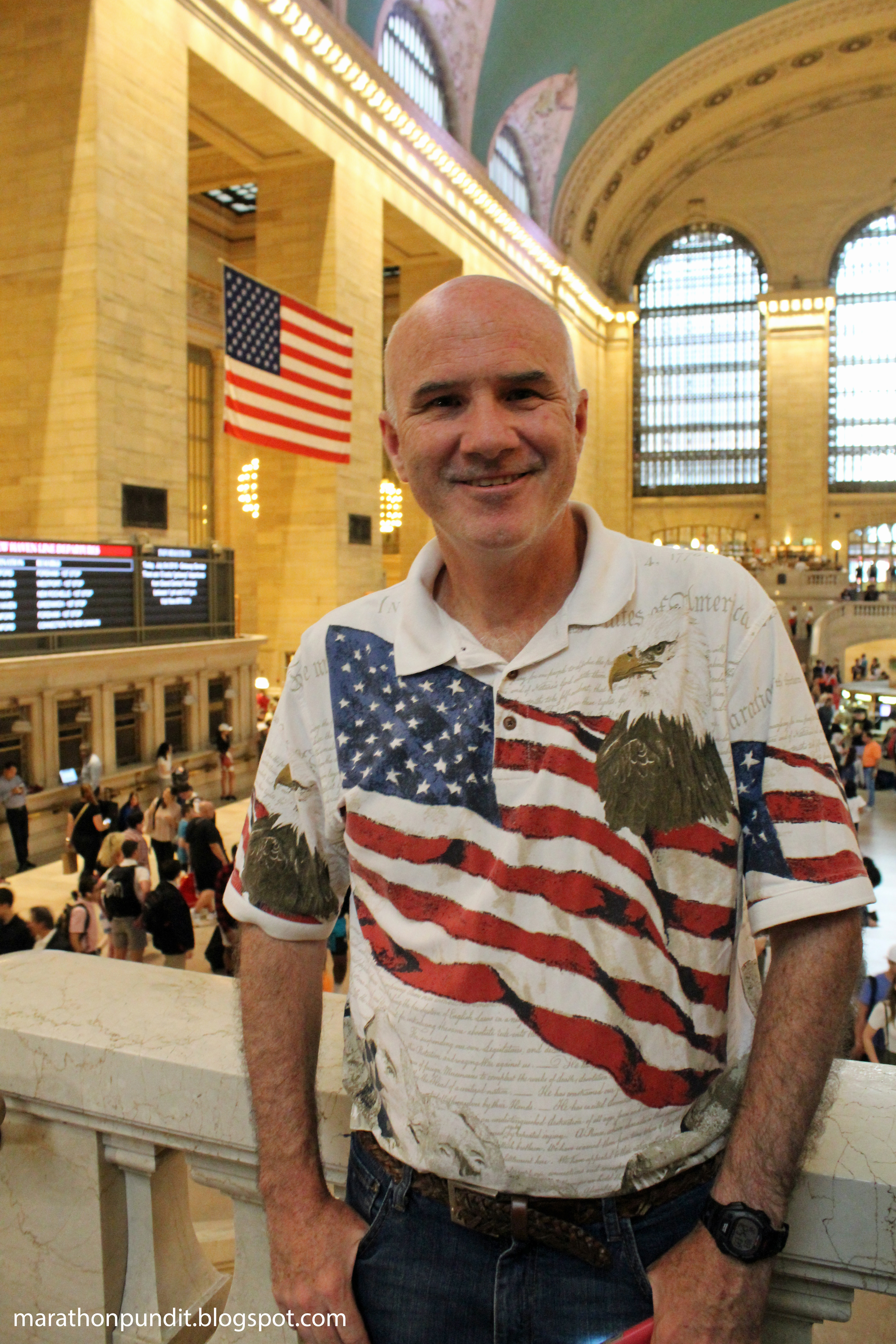
John Ruberry, who regularly blogs at Marathon Pundit, was a bachelor’s degree in advertising from the University of Illinois at Urbana-Champaign. He’s pictured here at Penn Station (correction Grand Central Station) in New York.

By John Ruberry

Up until a few weeks ago the country trio Lady Antebellum barely registered on my radar. While I do enjoy country music my interest is mostly focused on the Americana genre. As for the country music you hear on most FM radio stations, most of it is formulaic garbage, mediocre pop tunes delivered with a drawl. And that is the type of drivel Lady Antebellum delivers. And it’s not just me who feels that way. In 2010–that year will come back soon in this story–a sub-headline on Slate named Lady Antebellum “the world’s dullest band.”

But their name caught my attention. Even before wokeness became a political movement I thought “Lady Antebellum” was an odd choice of a moniker, as it refers to what some Lost Cause of the Confederacy propagandists viewed as the good old days of the pre-Civil War South. On those infrequent occasions when word came up, until very recently, it referred to plantation manor homes, which of course were staffed by slaves and were financed by agricultural goods produced by slaves. Those good old says weren’t good at all.

According to the band they decided on Lady Antebellum after a photo shoot at one of those mansions.

But after the killing of George Floyd and the protests, some of them of violent, Lady Antebellum announced they were now Lady A.

But as you probably heard there is already a Lady A, Seattle blues artist Anita White, who has been using the name for decades. But she isn’t a superstar or even a star. When White spoke up–that should have been the coda of the new name for the artists-formerly-known-as-Lady Antebellum. Their wokeness compelled the name change. They are white and Anita White is black. Their wokeness should have compelled them to brainstorm for yet another name. Now the former Lady Antebellum is suing White to prevent her performing as Lady A.

There was briefly an informal co-existence agreement between the two Lady As after the group’s name change. But that’s not working out. If you type “Lady A” into the search box on iTunes and Spotify, it’s the new Lady A who appears, not the blue singer. The same result comes at at YouTube.

White now wants $10 million from the Lady A trio–with half going to Black Lives Matter and some charities. The ex-Lady Antebellum calls that demand “exorbitant.” The band has possessed the trademark for “Lady A” since 2010. While I’m not going to pretend, as a non-lawyer, to completely understand the legal side of this dispute, the law appears to favor the band.

Even if the law didn’t, the band has significant financial resources that White doesn’t. For her part, she told Entertainment Weekly that she offered a compromise, “I had suggested on the Zoom call [between the band and her] that they go by the Band Lady A, or Lady A the Band, and I could be Lady A the Artist, but they didn’t want to do that.”

There are a number of lessons in this story that exemplify why our society is so messed up.

There has not been heavy coverage of this suit outside of the entertainment media and Seattle news sources despite the race angle. Conservative websites have been reporting on this story. Now imagine if Lady A the Band were conservative Republicans. This battle would be the lead story on CNN and MSNBC. There would be a constant drumbeat of stories from them–and of course the New York Times and the rest of the legacy media, which of course takes its cue from the Times.

Lady A the Artist told Rolling Stone, “They claim to be allies and that they wanted to change their name out of the racist connotation, and then they sue a black woman for the new name.”

So here is more proof for you that the mainstream media is not interested so much in reporting the news but instead advancing their narrative that America is systemically racist–and conservative Republicans even more so.

Let’s talk common sense. Just because something is legal that doesn’t make it moral. Charles Dickens’ character Mr. Bumble phrased it best in Oliver Twist, “If the law supposes that, the law is a ass–a idiot.” Well maybe that’s an overreach, but there are three idiots in Band Lady A.

I support Peter Sagal’s idea. He hosts NPR’s quiz show Wait…Wait…Don’t Tell Me! “There is a simple solution to this problem, though,” he said. “Lady A the Band should just go by Lady A-Hole.”

That works for me.

I just typed “Lady A-Hole” into the iTunes search box. Nothing relevant comes up.

Go for it.

John Ruberry regularly blogs at Marathon Pundit.