

Posts Tagged ‘marketing’

By John Ruberry

It was six months ago today–April Fool’s Day no less–when Dylan Mulvaney, to cap off his 365 Days of Girlhood series, did his first of two social media posts hawking Bud Light. Previously, in the words of Alissa Heinerscheid, who was in charge of marketing the brew, it was a “fratty” beer. The effect on Bud Light sales was immediate–a consistent and sustained 30-percent sales drop.

Immediately, the “experts” in the business world and the media, who are in fact narrative-driven morons with crisp, broadcast-friendly speaking voices, immediately ran to defend InBev, the parent company of Anheuser-Bush, with a consistent refrain, as if they were reading the same script, declaring “Boycotts don’t work.”

While that’s generally correct, the sales drop for Bud Light, a brew that tastes the same as Coor Light and Miller Lite, was in fact a walkaway. “Joe Sixpack,” the typical Bud Light drinker who believes that men are men and women are women–despite mutilation surgeries and hormone injections–found a way to scream “F*ck you” to the elites who say otherwise. 

Bill Maher said on his HBO show that the average American is furious because “they’ve had an agenda shoved down their throat.” When one of his guests, US Rep. Katie Porter (D-CA) objected to Maher’s truth, he struck back, “You have to accept everything they say or you’re a bigot.”

So true. 

The plummet in Bud Light sales is a major victory for conservatives, as well as the majority of Americans who have known the difference between males and females since they were two years old.

And gender, despite the claims of now former Meet the Press host Chuck Todd, is not “a spectrum.”

Mulvaney, whose ditzy faux female social media posts are about as pleasant as loud audio feedback, as well as the rest of the Anheueser-Busch marketing staff, did what was deemed impossible: killing a cash cow. I had a couple of marketing classes in college. Cash cows were revered by my professors, they are product lines that sell well with minimal advertising support. Heinz Ketchup, Ivory Soap, and Kellog’s Corn Flakes come to mind. The bountiful profits from cash cows are “milked” to support struggling brands. It’s a marketing circle of life.

One of those professors, in a lecture decried the use of celebrity endorsements in advertising, calling it “lazy marketing,” He also warned that celebrities, particularly those from the entertainment world, are known to do things morally objectionable, or get involved with unpopular political causes.

Now Anheuser-Busch is now spending a lot of money on its Bud Light “Easy to Sunday” campaign tied to the NFL as well as producing, again, commemorative cans, but this time with the logos of popular NCAA football programs, instead of a one-off Mulvaney can that was not sold to the public.

Too little too late. 

As sales continue to lag for Bud Light, it’s likely that scarce shelf space in supermarkets and liquor stores will soon be allocated to better selling brews. Modelo Especial this summer surpassed Bud Light as America’s bestselling beer.

The Bud Light cash cow has gone dry.

As I predicted here at Da Tech Guy months ago, using transgendered people to hawk mainstream products, while not completely dead, is now close to it. 

We have witnessed six months that shook the marketing world. 

John Ruberry regularly blogs at Marathon Pundit.
By John Ruberry

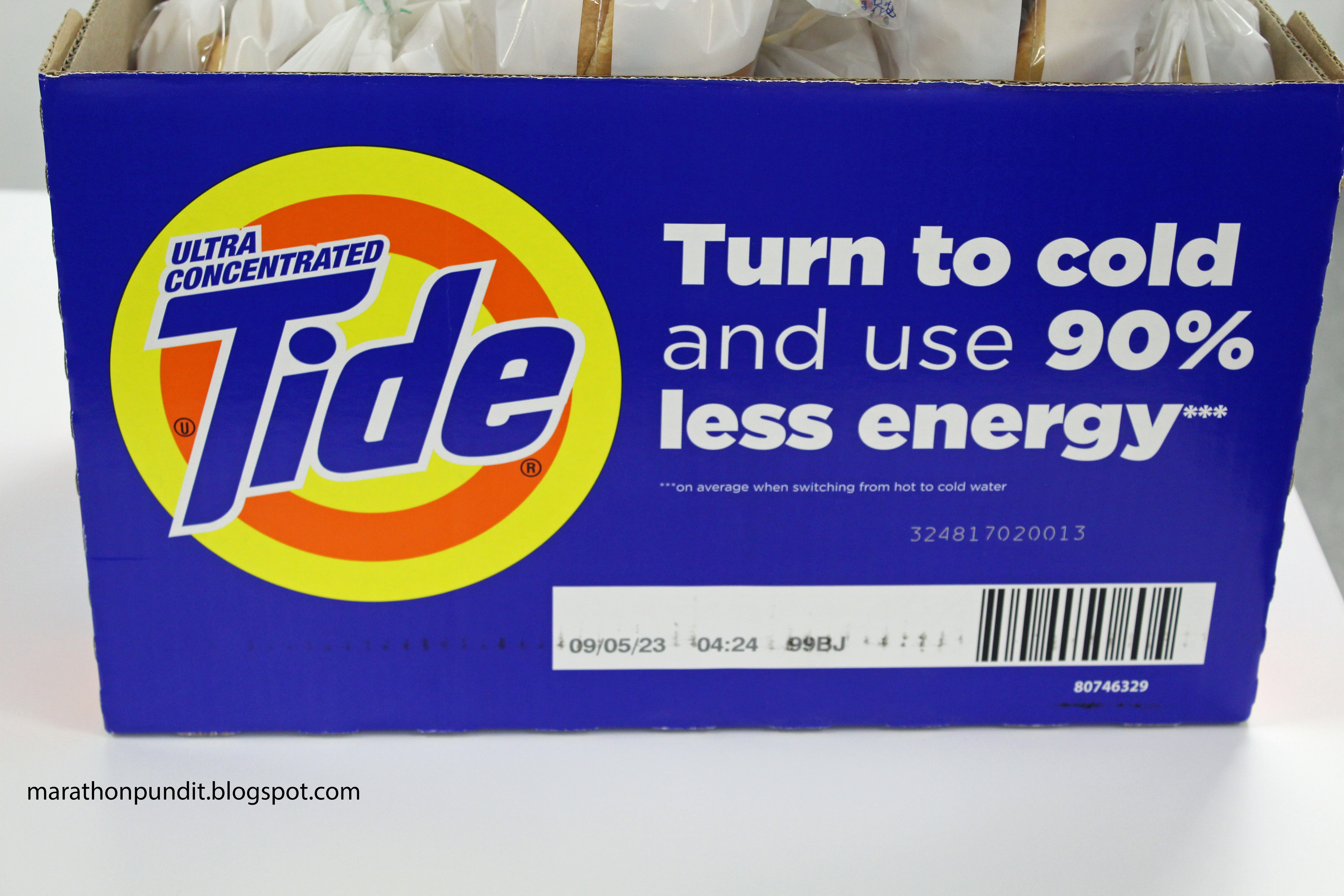
After years of calling out the outrages and absurdities of political correctness and its successor, wokeness, I still manage to be regularly shocked. Yesterday I stumbled across a box while grocery shopping that boasted, “Ultra concentrated Tide–turn to cold to use 90 percent less energy***.”

Yes, even laundry detergent has gone woke. 

Okay, who wants to save money?

Pretty much everyone. 

However, when you look at the triple asterisks–you mean one isn’t enough?–you learn about the cold water claim, according to Tide, it occurs “on average when switching from hot to cold water.”

What if you mostly use warm water laundry washes?

Tide’s propagandistic green marketing push goes back to 2021. The ultimate goal of Tide, which is owned by Proctor & Gamble, is to “save the planet.”

Of course, it is.

When Mrs. Marathon Pundit and I purchase detergent, we look for fair prices, which means we don’t buy overpriced Tide, but more importantly, we want soap that cleans our clothes without damaging them. 

That’s all. We are modest folks.

The Marathon Pundit household is confident that the fate of Earth is not connected to our choice of laundry detergent.

As for Tide, it has a sustainability page on its website, where among other things, Tide claims people washing their clothes can “get great results, no matter the water temperature. Tide is specially designed to give you the best clean in every wash, even in cold water. Tide even cleans better in cold water than the bargain brand does in warm.”

Sorry I don’t believe it.

I have reasons to be skeptical of overreaching claims, as I am old enough to remember being told that carbon emissions would lead to a new ice age. That is, until I was lectured by my “betters” that carbon emissions would lead to global warming and the melting of the polar ice caps, as soon as the last decade. Al Gore predicted that last one. Yes, he did–don’t believe the lying fact-checkers.

Not only am I skeptical of leftist claims, but I am also doubly so of marketers’ claims.

As a liberated 21st century male, I do a lot of our family’s laundry. Unless a fabric is super-delicate, most of what I wash is–sorry Tide–done in warm water. Our clothes come out cleaner and there is no soap residue, as is usually the case when, against my better judgement, I wash clothes in cold. With whites I use the hot water cycle.

But Tide tells us cold water is better.

Hogwash.

Oh, my guess is that the marketing geniuses with Tide are out-of-touch rich slobs who have hired help handling their laundry chores.

If you are squeamish, you may want to skip the next three paragraphs.

I’m a runner and I run about 40 miles a week. Athletes’ foot and jock itch, usually caused by the ringworm fungus, is something I have to cope with every summer. The best way to eliminate this pernicious fungus is to wash infected garments in hot water. You hear that, Tide? Color garments might get damaged by hot water, yes, but apple cider vinegar soaking for infected color garments is great way to kill fungus.

Let’s stick with white socks. And if you had any doubts, now you know why athletes wear white socks.

Not only is cooler water, both cold and warm, ineffective in killing fungus, washing in such temperatures runs the risk of spreading the fungus to other garments. Oh, if you have a significant other who you share a bed with and you are infected with a fungus skin rash, and then your partner pulls a sheet from you as you are sleeping, guess who might acquire that rash? Even after your bedsheets go through a full cycle of a cold or warm water wash.

Oh, I’ve unknowingly put on infected clothes months after a failed wash, and guess what happened?

Let’s just say fungi are survivors.

Once again, Tide, I buy laundry detergent to clean our clothes. My way. Without wokeness, haughtiness, and without soap stains and the spread of fungus.

Back to bed sheets: Hot water washes, not cold or warm, kill bed bugs.

And finally, I don’t believe Tide’s claim that using cold water while washing clothes and bed sheets consumes “90 percent less energy.” I’ve been lied to way too many times.

Use Tide detergent. Save the planet. Get bitten by bed bugs. Spread fungal infections.

John Ruberry regularly blogs at Marathon Pundit.
By John Ruberry

Another company, this time the CMT Network, finds itself in trouble by angering its base by going woke. Now both are facing boycotts. The Bud Light one has been devastating for what until recently was America’s best-selling beer.

Last week, CMT, whose core audience comprises of country music listeners, pulled the video for Jason Aldean’s “Try That in a Small Town.” The song, which was released in May with no controversy, decries the pro-criminal sentiments celebrated in big cities, like New York City, where CMT is headquartered, and it shows BLM and Antifa riot news clips as Aldean croons.

That was too much for CMT. 

Country music fans lean right. I am one of them, although I favor the Americana genre over mainstream country. Country listeners are likely to be the men and women who repair your car, service your air conditioner, or build your home. They may not have Ivy League degrees like Bud Light’s vice president of marketing, the on-leave Alissa Heinerscheid, but these “deplorables” are not dopes. And they aren’t Manhattan-style know-it-alls. 

I imagine, until the Heinerschied-led marketing debacle with trans influencer Dylan Mulvaney, many country music fans drank Bud Light. 

As of this writing on the evening of July 23, Aldean’s “Try That in a Small Town” is the number one song on iTunes and it has been viewed 15 million times on YouTube. 

For Friday’s CMT Music 12 Pack Countdown, Aldean’s massive hit was not among the dozens of songs nominated for the final cut. 

Clearly, CMT is as out of touch with its consumers as much as Anheuser-Busch and Bud Light are.

CMT has Nashville offices but as I mentioned earlier, it is based in New York. Anheuser-Busch has its headquarters where it was founded 171 years ago, in St. Louis, although it is now owned by Belgian firm InBev. 

But Anheueser-Busch’s marketing offices are in Manhattan, where Heinersheid lives.

Would things be different now for Anheuser-Busch if Heinerscheid and her marketing geniuses were instead based in St. Louis? And while no one is coming forward from CMT claiming credit for pushing the “kill” button on Aldean’s video, my guess is that the decision came from someone at their New York headquarters. 

The anger that brought forth the Bud Light and CMT boycotts are byproducts of elites who are isolated from the consumers they are supposed to be experts on. 

Can these brilliant minds do their jobs from places like St. Louis? Nashville? Of course, they can. As they can in Cincinnati, Billings, and Oklahoma City. You know, medium-sized cities. To be sure, they’re not Aldean-favored small towns, but these other cities are filled with less sophisticated types than the “betters” that you find in New York City.

Oh, there are telephones, computer lines in those smaller cities. And there is this thing called Zoom.

However, Bud Light did farm out the Mulvaney campaign to an advertising agency thousands of miles from Manhattan.

It was to a firm based in suburban San Francisco.

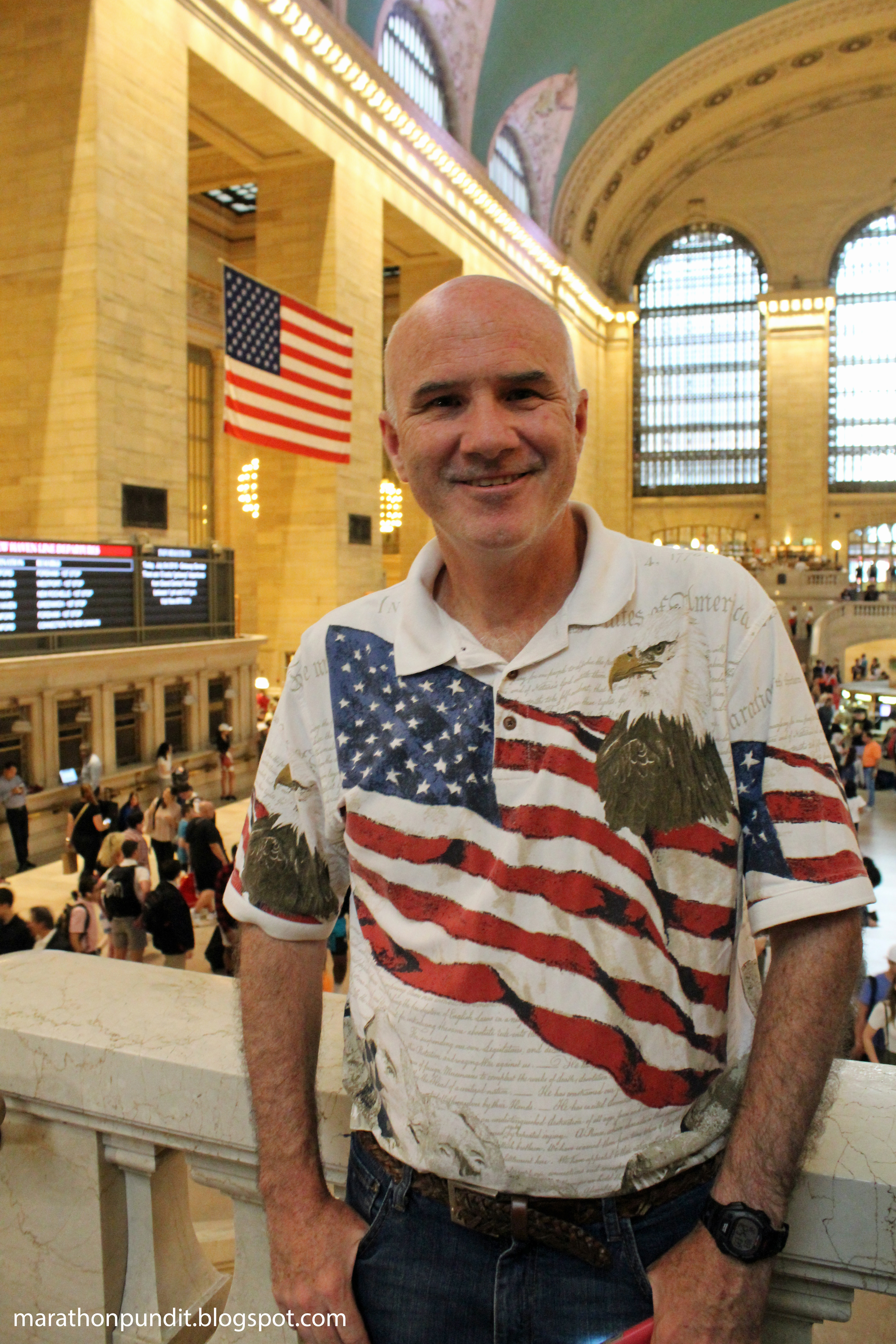
John Ruberry, who regularly blogs at Marathon Pundit, was a bachelor’s degree in advertising from the University of Illinois at Urbana-Champaign. He’s pictured here at Penn Station (correction Grand Central Station) in New York.

By John Ruberry

We’re approaching the two-month mark of the Bud Light boycott, which of course began when transgender social media, utilizing his–yes his–goofy 1950s-sitcom ditz schtick to recklessly promote Bud Light beer

Immediately, I was confident that this boycott had staying power, despite the increasingly irrelevant mainstream media telling its dwindling audience it did not. As Da Tech Guy himself explained, Anheuser-Busch’s problem is that Bud Light is too easy to boycott. Coors Light, Miller Lite, which taste similar–assuming that light beers have a distinguishable taste–are usually available in the same liquor stores, supermarkets, bars, and restaurants. And they are all priced about the same. 

American megabrewers are selling image and personality. Beer? Not so much. And in a few days, Bud Light, after partnering with Mulvaney, torched its macho brand-building work of four decades in just a few days. “Fratty” is the word used by the now-on-leave marketing head for Bud Light, Alissa Heinerscheid. Anheuser-Busch’s non-apology from its CEO only fanned the flames. 

Bud Light’s slogan is, “Easy to drink, easy to enjoy.” And it’s easy to boycott.

I have to reach back to Monty Python’s Flying Circus to find a worse marketing campaign. 

Boss (John Cleese character): Now, let’s have a look at the sales chart (indicates a plummeting sales graph). When you took over this account, Frog (Eric Idle character), Conquistador was a brand leader. Here you introduced your first campaign, “Conquistador Coffee brings a new meaning to the word vomit.” Here you made your special introductory offer of a free dead dog with every jar, and this followed your second campaign “the tingling fresh coffee which brings you exciting new cholera, mange, dropsy, the clap, hard pad, and athlete’s head. From the House of Conquistador.”

Yeah, I know, Bud Light’s Mulvaney campaign hasn’t been, so far, as awful for Anheuser-Busch as it was for the fictional Monty Python coffee brand. But sales of the beer continue to slide. Last week, by way of a $15 mail-in rebate, A-B started giving the beer away, because, unlike wine and hard liquor, beer has a brief shelf-life. 

So, yes, boycotts can be effective. 

But we were told by the mainstream media that boycotts don’t work.

Here a few examples of that wrongness:

Six weeks ago, ABC News’ Max Zahn and Kiara Alfonseca cautioned us about boycotts, “However, the campaigns rarely succeed in hurting a company’s sales or influencing its decision making.”

Around that same time, Patrick Coffee (no relation to Python’s Conquistador Coffee) of the Wall Street Journal, while citing other experts, opined that about the Bud Light boycott that “such campaigns often have failed to deliver a meaningful blow.” (Paid subscription might be required to access the link.)

Citing “research,” and of course falling back on “experts,” Becky Sullivan of NPR warned us “that other social media-fueled boycotts were short-lived.”

So where are the finger-waving fact-checkers? Why haven’t these articles been revised?

Meanwhile, Target is facing a boycott over its prominent promotions of “tuck-friendly,” that is, male-genitilia-hiding, swimsuits, as well as arguably promoting the trans agenda to children. It has lost $10 billion in market valuation since a boycott began against Target. 

Such a move is now called “Bud Lighting.”

This won’t be the last time that I say, when you get woke you go broke.

And it won’t be the last time I point out instances where the mainstream media was wrong.

John Ruberry regularly blogs at Marathon Pundit.