The COVID-19 shutdown has had many changes, with a notable one being more time spent at home. For couples, this had lead to more…alone time, if you know what I mean. More alone time means that 40 weeks from the start of pandemic in the United States (so around Christmas time) means we might be seeing a surge in births.
While definitely under-reported in America, other countries are reporting signs that we might see a large increase in babies. Indonesia saw a 10% decrease in birth control use, and in countries like Nepal, which already don’t have good transportation, family planning is out the window. India, already set to overtake China by 2050 in population, is likely seeing a surge too. Even in Ireland, pregnancy test purchases are spiking in some cities. It seems everyone is using COVID-19 as a bad pickup line to get it on.
What does this mean long term? First, a surge should help stave off economic downturn. World War II saw a decline in population of almost 2.5% worldwide, but a surge in the birth rate after contributed to the regrowth of the population and economy to boot. With better health care and schooling, a jump in birth rate means more workers to produce more , which long term should raise GDP.
From Reddit
Second, the population will change dramatically where it is located at. China, already on decline, will likely decline more, falling behind India faster than 2050. That may put pressure on China to consolidate gains made by the One-Belt-One-Road Initiative and territoriality in places like the South China Sea. Russia faces a significant loss in manpower and may struggle to maintain control over its vast territory, which could lead to civil war. African nations like Nigeria and Ethiopia, with relatively democratic governments, could become huge markets for goods and the new source of manufacturing for companies escaping China.
Lastly, COVID-19 exposed that how we manage the elderly, especially in America, is a borderline death trap. Nursing homes, already struggling to keep workers, are the single largest source of COVID deaths in America. But longer life spans and the tendency of nursing homes to suck every penny out of retirement funds means that people will be likely outraged and desire to move aging parents into safer facilities. Expect to see a focus on cleanliness at nursing homes plus a boom in new homes being built with mother-in-law suites for aging parents.
This post represents the views of the author and not those of the Department of Defense, Department of the Navy, or any other government agency.
The OC-135, the (very old) airplane the US uses for OPEN SKIES flights, from Wikipedia
Recently President Trump pulled the United States out of the Open Skies Treaties, continuing his push of leaving treaties he feels aren’t useful. Given that we’ve pulled out of the INF Treaty, redone NAFTA, and scrapped a few other treaties (like the JCPOA), are we closer to war, and what treaty is next on the chopping block?
Trump renegotiating deals, and in some cases leaving them altogether, isn’t a surprise. A quick read of his book The Art of the Deal, or a study of his real estate deals, or just watching a few episodes of The Apprentice, would tell you that Trump is all about big deals. He doesn’t nibble at the edges of a small deal. He goes in for the big deal, or nothing at all.
A big reason for that is waiting for the big deal typically maximizes the leverage he has. If you give something away first, and the other side doesn’t reciprocate, you lost a portion of your negotiating power. It’s like giving your kids dessert before dinner on the promise they’ll eat both. Sure, it could happen, but if the dinner isn’t finished, you can’t threaten to withhold dessert.
President Trump always looks to maximize leverage, which means pressing on points that do something while ignoring those that don’t mean anything. For example, very early on he called out a number of NATO countries and threatened to withhold US defense money. A critical media made it out to look like he was threatening to leave NATO. Ironically, this worked completely in his favor. The chances of Trump leaving NATO were pretty slim, because it wouldn’t gain much (by the way, the only country to have done so was France when it left the military portion of NATO). But with the media making it look like he would, and a re-surging Russia acting like it wants to re-establish the Soviet Union, many NATO nations upped their funding. Trump won pretty “bigly” in that case.
If you think the whole “negotiating” piece is a sham, you shouldn’t. In fact, Trump has said on many occasions exactly what he’s doing. Here’s a NYT piece from 2016, where Trump was being interviewed by David Sanger and discussing missile defense and Japan:
TRUMP: Or, if we cannot make the right deal, to take on the burden themselves. You said it wrong because you said or — or if we cannot make the right deal for proper reimbursement to take on the burden themselves. Yes. Now, Hillary Clinton said: “I will never leave Japan. I will never leave Japan. Will never leave any of our ——” Well now, once you say that, guess what happens? What happens?
HABERMAN: You’re stuck.
TRUMP: You can’t negotiate.
HABERMAN: Right.
TRUMP: In a deal, you always have to be prepared to walk. Hillary Clinton has said, “We will never, ever walk.” That’s a wonderful phrase, but unfortunately, if I were on Saudi Arabia’s side, Germany, Japan, South Korea and others, I would say, “Oh, they’re never leaving, so what do we have to pay them for?” Does that make sense to you, David?
It’s crystal clear: President Trump will threaten to leave, and then ACTUALLY leave a deal, if it’s not to his liking. That gives him the most leverage to get the other side to comply.
Open Skies is no different. The deal was first brought up in 1955, but was only recently ratified in 2002. It’s supposed to allow unfettered access to anywhere in the signatories countries. The US upholds that end, and as a military member, I’ve been notified before when the Russians plan to fly over an installation I’m working at. Russia began denying access to key areas, including exercise areas and parts of Georgia.
From President Trumps point of view, Russia gets a good deal and the US is slowly losing any advantage for the deal, so he pulled out. Both sides can pull other intelligence assets to make up the loss, but Russia will take a harder economic hit to do that than the US. This gives the US an advantage, and makes a subsequent deal easier. But the next Open Skies deal, if it was to happen, wouldn’t look like the old one. Trump will drive a hard bargain. I wouldn’t be surprised if he demands something completely absurd, like a drawdown of Russian forces from Kaliningrad and the Arctic, with verification flights to ensure compliance.
Now the Open Skies is going away, what’s next? My first thought was Nuclear Test Ban, since the US never ratified it, but the President already beat me to it. Expect the media to really blow this one up, which again plays right into the President’s hand. I would expect him to use this as leverage over China, because he could:
Threaten to arm Japan and/or Taiwan with nuclear weapons
Threaten nuclear weapons on hypersonic missiles
Change US policy and bring back tactical nuclear weapons
Negotiate a better nuclear deal with India, to include selling them nuclear submarine technology. Not only would that make China angry, but it would strip Russia of arms sales!
Another deal on the chopping block is the Outer Space Treaty. Trump already announced moon mining. I’d expect him to be looking for partner nations to mine the moon and asteroids. It’s a good chance to bring in non-traditional partners like Brazil, India and Japan that have this technology, but also places like Indonesia and parts of Africa where geography makes launching satellites easier.
The last one I’d expect to see go away is our treaties on drugs. This goes beyond legalizing marijuana. The drug enforcement cost in America is massive and yet is not particularly effective. Legalizing and taxing the drug trade could not only take money away from cartels, but also increase the safety for drug users. I’m actually surprised it hasn’t come up yet, but it wouldn’t surprise me if Trump proposed big changes to drug control.
This post represents the views of the author and not those of the Department of Defense, Department of the Navy, or any other government agency.
While debates continue to rage online about what the true death toll of COVID-19 is, one thing is for certain: Russia and China’s numbers are 100% false. As of this morning, the John Hopkins COVID dashboard is recording 2,537 deaths for Russia and 4,637 deaths in China. If you trust those numbers in countries with 144 million and 1.44 billion, then I’d hate to see your investment strategy.
All of this is made worse by a crumbling hospital infrastructure. While Russian health care is universal and government funded, it suffers from a high level of bureaucracy and lack of funding. Worse still, because of the high concentration of the countries wealth in Moscow verses the rest of the nation. This causes health care to decline significantly the farther away you get from Moscow, causing places like Siberia to suffer considerably more. If you needed a place that resembles The Hunger Games, Russia would be a great fit.
We won’t get the true COVID-19 numbers from Russia, as the government will clamp down on them considerably. But given their setup, be ready for true devastation. Personally I would watch satellite pictures of light intensity, because I would expect areas, especially remote ones, to become uninhabited.
This post represents the views of the author and not those of the Department of Defense, Department of the Navy, or any other government agency.
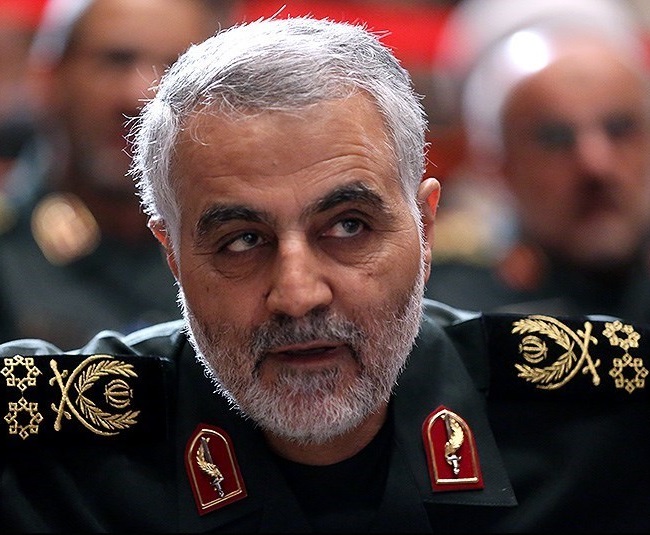
Qasem Soleimani, Commander of Quds Forces during National AGIR commanders conference, from Wikipedia
There is much to-do about President Trump’s veto (that was not overridden) of the Iran war powers resolution. On its face, a bill that says President Trump can’t just declare war on Iran seems to be a good thing, given the crazy number of places we have committed our Armed Forces to so far. I was curious what the bill actually said, so I did a bit of digging. At first, it was difficult to get the right bill because there have been multiple bills introduced by various members trying to restrict war with Iran. The one that was recently vetoed was S.J. Res. 68. You can read the PDF version here.
It’s a pretty short bill, so let’s dive into it! We’ll skip the fancy header stuff and get into the meat of it:
Congress makes the following findings: (1) Congress has the sole power to declare war under article I, section 8, clause 11 of the United States Constitution.
Well, no issue there. In case you only read the amendments to the Constitution, this is squarely in Article I.
(2) The President has a constitutional responsibility to take actions to defend the United States, its territories, possessions, citizens, service members, and diplomats from attack.
Sounds about right.
(3) Congress has not yet declared war upon, nor enacted a specific statutory authorization for use of military force against, the Islamic Republic of Iran. The 2001 Authorization for Use of Military Force (Public Law 107-40; 50 U.S.C. 1541 note) against the perpetrators of the 9/11 attack and the Authorization for Use of Military Force Against Iraq Resolution of 2002 (Public Law 107-243; 50 U.S.C. 1541 note) do not serve as a specific statutory authorization for the use of force against Iran.
Sure… but how does this apply if you’re a terrorist funded by Iran? Iran is running a proxy war against the United States, and the U.S. has responded in kind. Both nations are fighting each other in the shadows, but hesitating to attack each other directly, although there have been the occasionalassassination attempt. Essentially, this says you can’t use these two pieces of legislation to justify war with Iran.
(4) The conflict between the United States and the Islamic Republic of Iran constitutes, within the meaning of section 4(a) of the War Powers Resolution (50 U.S.C. 1543(a)), either hostilities or a situation where imminent involvement in hostilities is clearly indicated by the circumstances into which United States Armed Forces have been introduced.
That is correct, see the USC text here. Then again, you could say this applies every time we conduct a Freedom of Navigation transit. It’s pretty vague. A U.S. Carrier Strike Group would be always “equipped for combat,” so anytime it goes anywhere its meeting this criteria.
(5) Members of the United States Armed Forces and intelligence community, and all those involved in the planning of the January 2, 2020, strike on Qasem Soleimani, including President Donald J. Trump, should be commended for their efforts in a successful mission.
Yay, I guess? Did they just give a shout-out to the President? Who snuck that in?
Even Democrats give me credit!
(6) Section 5(c) of the War Powers Resolution (50 U.S.C. 1544(c)) states that “at any time that United States Armed Forces are engaged in hostilities outside the territory of the United States, its possessions and territories without a declaration of war or specific statutory authorization, such forces shall be removed by the President if the Congress so directs”.
True, but missing a section. The previous portion, 5(b), allows the President to essentially deploy the military for up to 60 days before he has to remove them. Kind of important. Should read the whole text, available here.
(7) More than 100 members of the United States Armed Forces sustained traumatic brain injuries in the Iranian retaliatory attack on the Ain al-Assad air base in Iraq despite initial reports that no casualties were sustained in the attack.
And initial reports are normally wrong, so the point here is what? Iran shot a bunch of missiles at us and nobody died? Some people get a Purple Heart and a VA disability bump? Sure, its just a statement of fact, but to what end?
I’m not downplaying the damage here, it sucks that people got injured. My bigger point is that it doesn’t matter to this bill in the slightest.
(8) Section 8(c) of the War Powers Resolution (50 U.S.C. 1547(c)) defines the introduction of the United States Armed Forces to include “the assignment of members of such armed forces to command, coordinate, participate in the movement of, or accompany the regular or irregular forces of any foreign country or government when such military forces are engaged, or there exists an imminent threat that such forces will become engaged in, hostilities”.
(9) The United States Armed Forces have been introduced into hostilities, as defined by the War Powers Resolution, against Iran.
Introduced? Against Iran? Here’s where you can lawyer-away. The troops were in IRAQ. They were attacked in IRAQ. President Trump authorized a strike on General Soleimani in IRAQ. Not Iranian soil, Iraqi soil. He even notified the Iraqis. The troops in Iraq are in no way sufficient to invade Iran. We’re not even shooting across the border…General Soleimani was killed in Baghdad, which is over 200 km from the Iranian border.
Maybe I’m wrong, but this simply sentence seems like its reaching a bit. Troops that were already there (not introduced) and are helping Iraq (not fighting Iran) are somehow now engaged in hostilities against Iran? Please, if a lawyer wants to drop a comment to explain this, I’m all ears. I just don’t see it.
(10) The question of whether United States forces should be engaged in hostilities against Iran should be answered following a full briefing to Congress and the American public of the issues at stake, a public debate in Congress, and a congressional vote as contemplated by the Constitution.
Sure, couldn’t agree more. Congress hasn’t lost the ability to declare war or turn off the military funding tap, neither of which it has decided to do. And, to be fair, President Trump hasn’t put military forces in Iran, nor is he massing troops on the border to do so.
(11) Section 1013 of the Department of State Authorization Act, Fiscal Years 1984 and 1985 (50 U.S.C. 1546a) provides that any joint resolution or bill to require the removal of United States Armed Forces engaged in hostilities without a declaration of war or specific statutory authorization shall be considered in accordance with the expedited procedures of section 601(b) of the International Security and Arms Export Control Act of 1976.
Yup, but again, the soldiers involved were all already in IRAQ, and there to help the Iraqi Army.
SEC. 2. TERMINATION OF THE USE OF UNITED STATES FORCES FOR HOSTILITIES AGAINST THE ISLAMIC REPUBLIC OF IRAN.
(a) Termination.–Pursuant to section 1013 of the Department of State Authorization Act, Fiscal Years 1984 and 1985 (50 U.S.C. 1546a), and in accordance with the provisions of section 601(b) of the International Security Assistance and Arms Export Control Act of 1976, Congress hereby directs the President to terminate the use of United States Armed Forces for hostilities against the Islamic Republic of Iran or any part of its government or military, unless explicitly authorized by a declaration of war or specific authorization for use of military force against Iran.
OK. So, pray tell, what hostilities? Did we shoot missiles into Iran? Did we invade some piece of Iranian territory? I’d like to know.
(b) Rule of Construction.–Nothing in this section shall be construed to prevent the United States from defending itself from imminent attack.
Well that’s good to know!
So I’m not seeing the big deal with this bill, besides that its a bunch of grandstanding. It’s a lot of fluff and it’s accusing the President of conducting operations against Iran, without saying WHAT operations he’s engaging in. It also is attempting to link soldiers that are already in IRAQ as somehow having something to do with IRAN. I get it, the countries are only one letter apart…but seriously.
How this piece of legislation feels
I’ve had a few people quote President Trump’s tweets about “raining fire down on Iran” if they attack our Navy vessels. OK, I’ll bite. For starters, imminent attack and self defense are still protected, so President Trump threatening to use them is a giant nothing-burger. Did he threaten to invade Qeshm Island? If so, I’d be all onboard saying that’s a really bad idea without a war declaration.
That’s not what is happening. Essentially, we have a President that is totally fine making bombastic claims when another country threatens him. It’s his personal style and likely part of his negotiating strategy. We can argue about whether this is effective, and I think there is plenty of room for debate on that. I personally think it isn’t always the best strategy to use with our allies, for example. I’m not the President, so I don’t get to make those choices, and for people that really don’t like that style, there is the voting box come November.
To accuse President Trump of engaging in hostile acts directly against Iran, but then not being able to name them, and trying to disguise it as an attempt to reign in a President that is trampling on Congressional rights is nothing more than stupid grand standing. We continue to be promised World War III with President Trump, and it continues to not happen.
This post represents the views of the author and not those of the Department of Defense, Department of the Navy, or any other government agency.









 Da Techguy's (no longer backup) Blog