Posts Tagged ‘navy’

While I don’t have a print subscription to the Military Times newspapers, I still get their morning email, and today’s headline featured the US Navy not accepting any religious exemptions for the COVID vaccine:

As the deadline for active-duty sailors to get the mandatory COVID-19 vaccine passed Monday, the sea service has yet to grant any vaccine exemptions on the basis of religious accommodation, according to figures released Tuesday.

As of Tuesday, 2,531 requests for exemption from the vaccine mandate had been filed by sailors on religious grounds, though officials could not say how many of those requests had been ruled upon.

Navy Times

I’m not surprised, because in my experience, the Navy (and most services) don’t really care about your religious beliefs. Never have, never will, because in today’s service, the service is the religion.

I noticed this trend when I first joined the Navy. I remember having to beg the Commanding Officer on my submarine to get a mere 45 minutes off on Sunday to hold Catholic services. Mind you, we weren’t on mission, at war, or even strapped for time, but he couldn’t be bothered, and it wasn’t until I talked with the squadron chaplain that I was grudgingly granted the time. This was despite the fact that there are plenty of instructions stating that time and space will be provided unless a submarine is on mission or executing critical duties. My Commanding Officer viewed my request as a nuisance, and he told me as much to my face.

It wasn’t just one CO though. At multiple duty stations, there would be this unwillingness to grant military members the time off to celebrate their faith, be it Christian, Jewish or anything else. In Bahrain, where Sunday is considered a workday, I essentially caused a small office revolt by going to noon Mass on Sunday and telling my boss I simply wasn’t going to work yet another 12 hour work day when we weren’t in crisis mode. I distinctly remember the Admiral there telling us at an all-hands call that he was expecting 6 day work weeks, and even most Saturday mornings, despite no apparent need to do so. It was like the Navy was his “god,” and he couldn’t pray enough while slogging through the mass of self-induced paperwork at his desk.

If the Navy can’t provide a simple hour for Mass once a week, its no surprise they won’t approve vaccine exemptions. Now, to be fair, I encourage people to vaccinate because I think its far better than catching COVID, but I also don’t really think its a hill worth dying on or kicking people out over, similar to why I don’t think we should be stopping everything to chase the extremely tiny number of extremists that might exist in the ranks.

Kicking people out over a COVID vaccine is just one more reason the Navy is going to be hurting for recruitment come 2024-2025. The lip service paid to everything from ship maintenance and strategy to human resources and bonuses is becoming more obvious every day. People are catching on that the Navy views itself as its own religion, and if you’re not willing to worship, then you’ll be shown the door.

This post represents the views of the author and not those of the Department of Defense, Department of the Navy, or any other government agency. If you liked this article, consider supporting the author by purchasing his book for either yourself or as a Christmas gift.
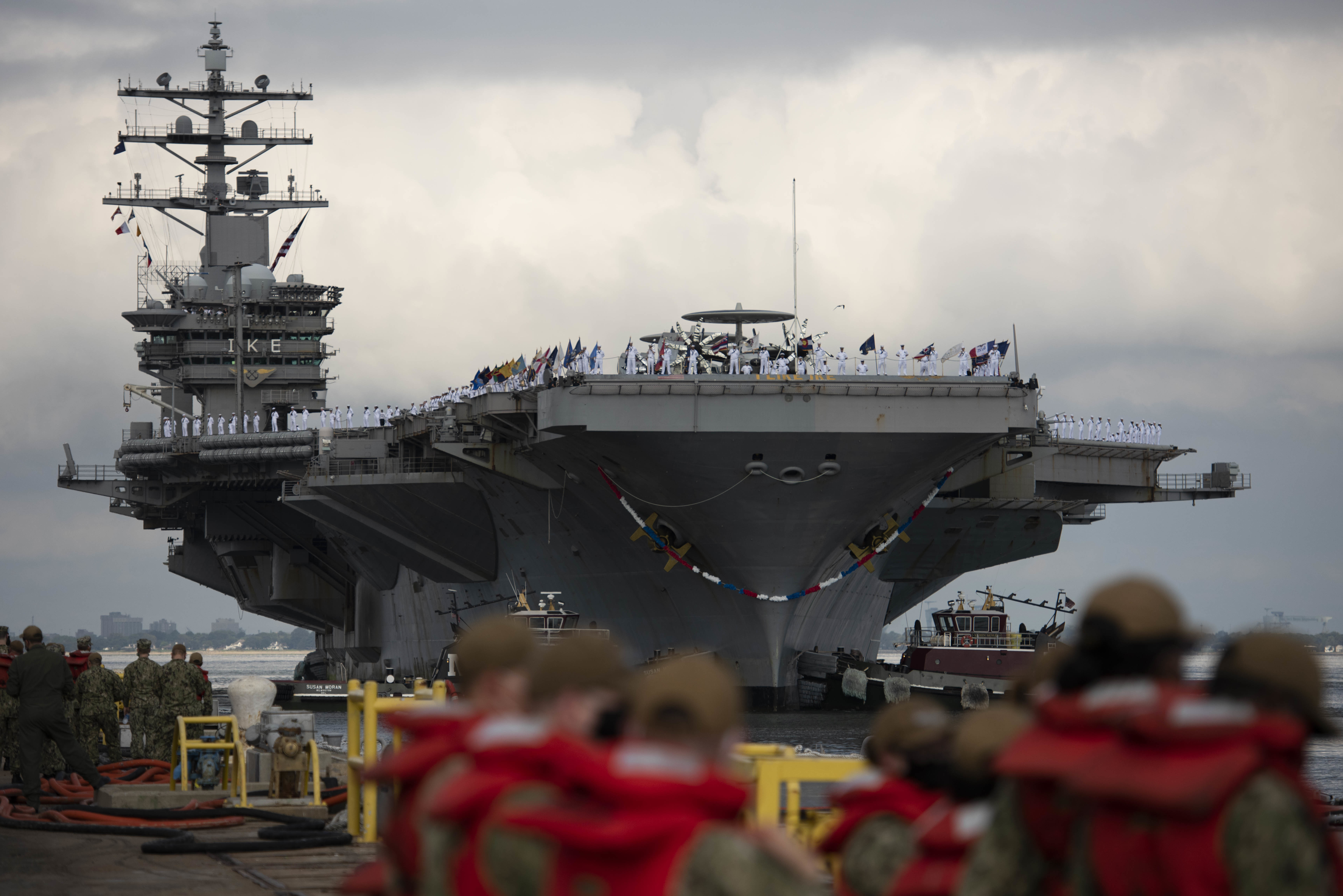
First Fleet? How about funding what you have?

Posted: November 21, 2020 by ng36b in war
Tags: , , ,
You know, these big ships break more when you can’t fix them right the first time.

Navy. We’ve been cool for a number of years now. We’ve endured lots of changes, everything from new uniforms to physical readiness exams to more uniforms. I’m sure yet more uniform changes are on the horizon. But we’ve gotta talk about this thing called expanding the bureaucracy.

‘Cause I gotta tell you, its not good.

We got issues, Navy. The shipyards can’t seem to ever fix a ship in time. Yeah, like 75% of the maintenance projects are overbudget and late! If Navy shipyards were a grocery store, it would be like ordering grocery delivery for Thanksgiving, but the delivery guy rolls up in a scooter to dump off bologna sandwiches at the end of your driveway instead of a turkey and stuffing on your porch.

Its not just shipyards. We’ve got a lot of bureaucracy. At the top, we’ve got more admirals than ships. Sure, we have to put someone in charge of important things like motorcycle safety, but come on man. More admirals than ships? Even when we count submarines? That seems a bit much.

So given those two really basic problems, why on earth would we want to build yet another numbered fleet? Are we lacking in 3-star admirals (hint: we’re not!)? Does a new fleet give us more capability?

No and no. Right now, we can’t man, train and equip the Navy we have. Ships are only manned to 92%. That sounds good, right? Its not. On a 4,000 Sailor crew of a carrier, that means we’re short 320 people. That’s almost a destroyer’s worth of people, which means we’re leaving lots of positions open. And shore commands? You’re doing well if you reach 85%.

Our response to get ships to sea seems to be to constantly take some “slackers” from shore duty, because heaven forbid we give people a break. Ships are constantly using ashore manpower “volunteers” to fill gaps. That works in the short term, but long term we simply aren’t bringing in enough people.

Even when we do, we give them no incentives to stay. I’ve had three crappy bosses in my short career, two of which were fired. I had people dress me down in public because it “suited them,” even when it was over minor offenses. If you’re not in the military, that sort of behavior makes HR scream. In the Navy, its just Tuesday, and you’re expected to simply take it. So guess what happens when we ask Sailors to reenlist, most of whom have nice job prospects in the civilian world that don’t involve getting screamed at over minor things or signing Page 13s that limit your right to eat in a restaurant? They don’t sign, and we resort to canceling failing PRT scores to try and keep enough people in.

So, while I applaud SECNAV’s efforts to find new niches for the Navy, I’d rather we get what we have to being well again. Get our manning to nearly 100%. Make the shipyards not suck again. Fill the billets we have now before we consider adding more. But please, don’t start up a new fleet until that part is done.

This post represents the views of the author and not those of the Department of Defense, Department of the Navy, or any other government agency. Obviously.

ATLANTIC OCEAN (Oct. 1, 2020) An F/A-18E Super Hornet attached to the “Wildcats” of Strike Fighter Squadron (VFA) 131 launches from the flight deck aboard the Nimitz-class aircraft carrier USS Dwight D. Eisenhower (CVN 69). Ike is operating in the Atlantic Ocean in support of naval operations to maintain maritime stability and security in order to ensure access, deter aggression and defend U.S., allied and partner interests. (U.S. Navy photo by Mass Communication Specialist 3rd Class Cameron Pinske)

News that Defense Secretary Esper is calling for a 500 ship Navy is good news. We’ve had a Navy too small trying to do too much for some time now, and its been ignored while we stayed focused on fighting terrorism. This resulted in a lot of extended deployments, poorly executed maintenance periods and burned out ships and Sailors.

But while a 500 ship Navy would help, we have a long way to go to get there. When policy makers discuss ships, it’s as if the numbers of ship is what matters. But there is a lot more to it:

  • Personnel. The last time we had 500 ships was in 1991. Since then, we’ve drawn down Navy personnel to about 330,000 to cover about 270 ships. Essentially, to get to 500, we’d have to double the number of Sailors. That would make the Navy larger than any of the other services, and a massive jump in personnel costs.
  • Shipyards. We can’t fix the ships we have now fast enough. Nearly doubling ships would mean we need more shipyards to build and maintain them. Given that American shipbuilding is almost exclusively government, we don’t have a great civilian infrastructure to turn to. So we’re either building new yards (expensive) or building in foreign countries (sending money overseas).
  • Support. Ships have to communicate, and rely extensively on satellite systems, which we don’t have enough of now. Combined with a variety of other support, and the price adds up quickly.

We can get away from personnel costs with more unmanned systems, but unmanned systems still require humans, and considerably smarter people to run them, which the military struggles to keep in, because other companies like Amazon will throw a lot of money at unmanned operators. This only gets worse as AI and unmanned systems spread in the commercial sector.

We’re getting to a tipping point with the Navy. We expect ships to be everywhere all the time, but we don’t have the ships, infrastructure or people to do that in peacetime, let alone war. We’re smart to recognize that, but its going to take a lot more than wishful thinking to get to a sustainable fleet level.

As a side note, the above picture was labeled “Rosy Outlook” on defense.gov. Most appropriate I think.

This post represents the views of the author and not those of the Department of Defense, Department of the Navy, or any other government agency.

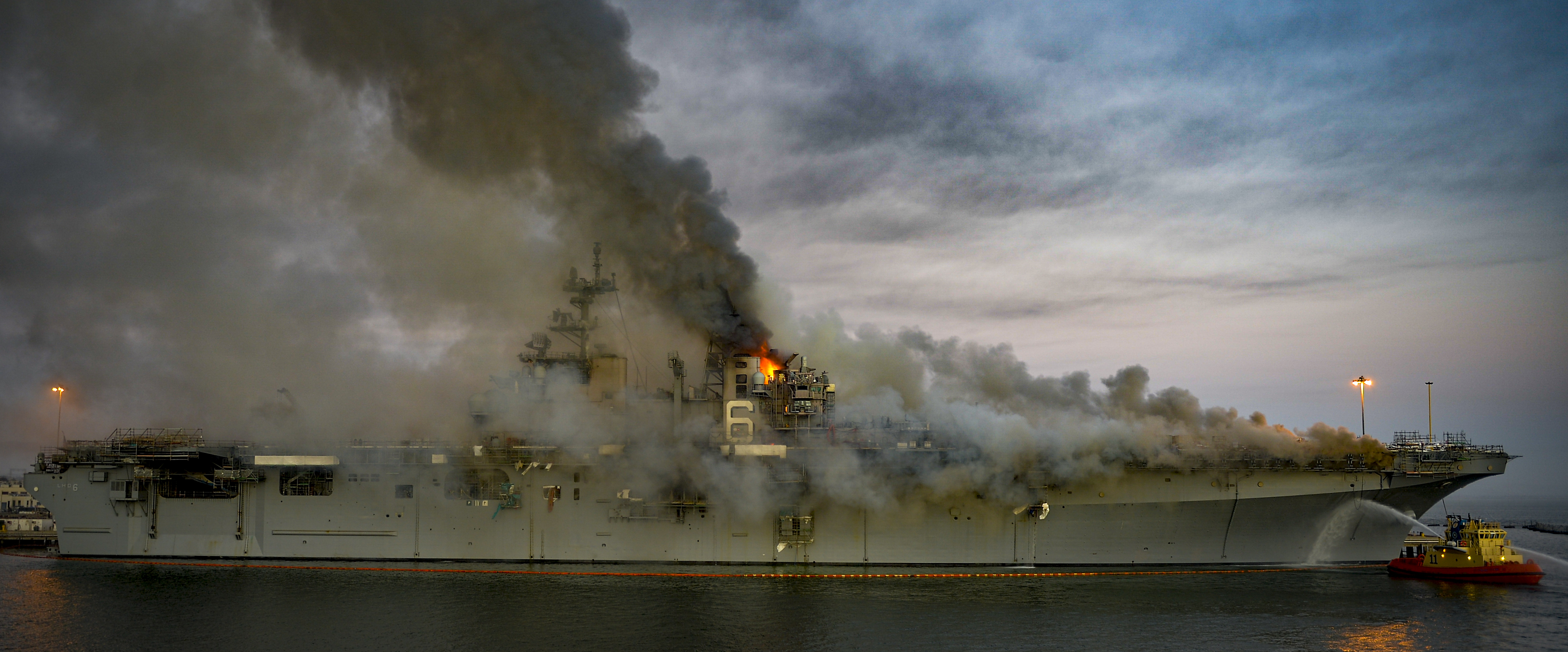
USS BONHOMME RICHARD on fire in San Diego, from Wikipedia

Starting on Sunday, there was fairly non-stop news about the USS BONHOMME RICHARD (LHD-6) on fire in San Diego. The fire was extensive, burning from the middle of the 844 foot long ship, burning in 11 of her 14 decks all around the ship. It’s caused significant damage, and there are already talks it may not be salvageable. To put a dollar amount on it, she cost about 750 million to make in 1998, but today it would cost more like $3.3 billion to build a replacement vessel.

Most people’s first question is, how in the heck can a fire rage through a ship like that? The answer is complicated. First, BONHOMME RICHARD was in a maintenance availability period. She had a large number of shipyard workers fixing a variety of systems onboard. Imagine if you hired contractors to replace your roof, drywall and paint two rooms, replace your kitchen sink, and rewire half your house all at the same time. My first ship was in a maintenance period, and I didn’t recognize the rooms I was in while walking around. It’s a confusing, crazy, dirty mess to try and fix complex systems.

Extra complexity means nothing is normal, with firefighting as no exception. Firefighting equipment gets moved around to support maintenance, and on an 844 foot ship, that might mean extensive portions where there isn’t much equipment. Holes get cut in decks, requiring extra ventilation equipment and rerouting of normal movement paths, which makes getting to and from places hard. All that extra equipment is an inviting target for a fire. Even small fires take way more time and effort to find, fight, isolate and eventually put out.

Fighting fires on a ship is scary business. I’ve gone through our basic firefighting trainers. They are difficult. Contrary to the movies, a firefight is almost pitch black due to the smoke. So imagine you’ve got on 40 pounds of extra gear, breathing through a mask, walking in pitch black conditions, dragging a hose with you while the guy behind you with an infrared sensor guides you towards hot spots that you can’t see. That’s the reality of firefighting. A friend of mine fought a large fire on a submarine and nearly drown when the deck gave out below him and dumped him in a large pool of water, the same water he had been spraying on the fire. He’s really in shape, and even he struggled to get out.

I’m not surprised BONHOMME RICHARD caught fire and that it was bad. What I want to know is whether it’ll cause changes in the future. The shipyard has always been a dirty place, and shipyard workers aren’t normally known for cleanliness. Navy Sailors, unfortunately, get used to this and develop just as bad of habits, which the senior enlisted try desperately to fix. When I visited Japan, I was shocked at just how clean the shipyard was. While you can’t always keep an area clean, going days and weeks without cleanup significantly increases the chance for fires, accidents and all sorts of problems. If this fire forces the Navy to work with shipyards to clean up their act, it would be something useful in an otherwise tragic circumstance.

This post represents the views of the author and not those of the Department of Defense, Department of the Navy, or any other government agency.