

Posts Tagged ‘NG36B’

It’s not secret that Jim Mattis and Donald Trump had issues working together. I was surprised to read that Mattis wanted to scrap Trump’s “America First” policy, and while I couldn’t get the full article from Foreign Affairs, the snippets I read said his main criticisms were:

  • Characterizing Afghanistan and Iraq as “forever wars”
  • Undermining our allies
  • Bad views on China

Let’s give the man his due and ask the question: is he right?

We’ve been in Afghanistan (officially) since 2001, and Iraq since 2003, although we withdrew all forces in 2011 per our Status of Forces agreement, and were invited back again in 2014. The Iraqi parliament has been working since early 2020 to get US troops to leave. In sum total, we’ve been in Afghanistan for 19 years (and counting), and Iraq for 8 plus 6 years, total of 14 years, assuming we leave this year.

In comparison, World War Two was from 1939-1945 (6 years), Vietnam was 1964-1975 (if you pick Gulf of Tonkin as the start, 11 years), Korea was 1950-1953 (3 years). The longest of these, Vietnam, has been characterized as a “forever war” before, so its no surprise that to the average American, Iraq and Afghanistan look like forever wars.

But are they investments in peace and stability? I’ve heard them compared to our time in Germany and Japan shortly after World War 2. We’re still technically stationing military in both countries. In Germany, our occupation started in 1945, but by 1949 we had already formed West Germany, and by 1955, West Germany was a member of NATO, and our forces were no longer “occupying” Germany. Japan was similar, with our occupation ending in the Treaty of San Francisco in 1952. While we are still in those countries today, we aren’t there to occupy or provide security. In fact, we expected significant insurgency issues (such as Germany’s Werwolf program), yet they never materialized.

Contrast that to Afghanistan and Iraq, where our troops are providing significant combat support and basic policing. That’s a massive difference between the two, and not dissimilar to Vietnam, where we still had to provide basic protection against an insurgency because of the host government’s inability to perform it themselves.

So to recap, if you militarily stay in country and have to fight an insurgency inside the borders, it feels like a forever war. If you stay and the country does its own policing, it doesn’t feel like a forever war. Or, from a military perspective, if you can’t bring your family to your new duty station, it might feel like a war zone.

What about undermining our allies? President Trump has been on record saying a lot of mean things. The Foreign Policy article argues that he is “undermining the foundations of an international order manifestly advantageous to U.S. interests, reflecting a basic ignorance of the extent to which both robust alliances and international institutions provide vital strategic depth.”

So the question is, has Trump undermined our alliances? Is the international order we have now worse off than before? The United States has mutual defense pacts with NATO, Australia, New Zealand, The Phillipines, Japan, Republic of Korea and the Rio Treaty with a smattering of South American nations. It also supports Taiwan, but the treaty is a bit vague as to whether we would respond to a PRC invasion.

Here we’re probably batting 500 at best. President Trump has worked to expand relationships with India and Japan, and has maintained a normal course with Australia and New Zealand. Trump’s push to pull out of Korea isn’t new, we’ve asked the Koreans to own their defense before. His attempts at directly negotiating with North Korea put us on a much better path to peace…I never thought I’d see a sitting President shake the North Korean dictator’s hands ever. Our relationship with South America hasn’t expanded much militarily or economically, and I’d call that a negative. The economic treaties throughout the world are mixed. In some cases, it got better (USMCA), in other cases, it stagnated (TPP).

NATO is a mixed bag. On one hand, he pushed for and got much needed investment by NATO nations in their own defense, something that nearly every previous Secretary of Defense and President has been asking for years. On the other hand, Europe wanted an Iranian deal so they could get back to buying oil, while Trump wanted to stop Iranian aggression in the Middle East. There’s no resolution to that short of Iran dropping its nuclear weapons program (it didn’t) or Europe or the US dropping their arguments (neither side has). Trump’s response of neutralizing the Israeli issue, first with the UAE and Bahrain and (maybe) with Saudi Arabia is some out of the box thinking. I would argue that NATO is stronger now than before, but some of the individual countries like Germany aren’t happy with the US.

Overall, point to Mattis on this one. Negotiating hard makes sense, but it could have been done with some more finesse, and creating hard feelings isn’t worth it in many cases.

Mattis’ comments on China are odd, given his time as Secretary of Defense and his shift towards Great Power Competition. From the Foreign Affairs article:

“Crucially, the United States should not press countries to choose outright between the two powers,” they said. “A ‘with us or against us’ approach plays to China’s advantage because the economic prosperity of U.S. allies and partners hinges on strong trade and investment relationships with Beijing.”

So, we should work with China? I’d be all about it, and so was William Cohen, opening up US military relations with the PLA in 1999. How did that work for us? China continued to steal technology, threaten its neighbors, build fake islands in the South China Sea, bury US industry with practices illegal to the WTO, and in general act in ways completely at odds of the US. The only difference between Russia and China is that China is happy to pay for this influence. When they needed a port in Sri Lanka, the Chinese invested their own money and worked with Sri Lanka, right up to the point the Sri Lankans couldn’t pay back a loan. China is happy to flex its muscles on every deal it makes, from the one-sided Vatican recognition to its territorial dispute with India. Unlike most other countries, there is no good faith in any of the past deals China made.

The Cohen Group has been happy to look the other way. Yes, there is a ton of money in China. Plenty of Americans are making money in China. Our hope in 1999 was that as China grew, it would naturally democratize. That wasn’t a bad call back then. It’s a terrible call now. The Cohen Group continues to look past this however. It’s founder, William Cohen, not only sided against Trump in 2016, he also has personal connections with the late John McCain and was his best man after he dumped his first wife.

Jim Mattis joining a group of academics that are already naturally anti-Trump and pro-China, and then coming out with a pro-China statement, isn’t that surprising. If we continue to view China like we did in 1999, then yes, everything Trump is doing is a terrible idea. But the last 20 years have shown that Afghanistan is not Germany, NATO wasn’t ready for high-end conflict, and China’s One Party system is happy to crush the United States if we let it do so. If the Cohen Group is happy to make money from this world view, good for them, but don’t be surprised when it doesn’t jive with the average American.

This post represents the views of the author and not those of the Department of Defense, Department of the Navy, or any other government agency.
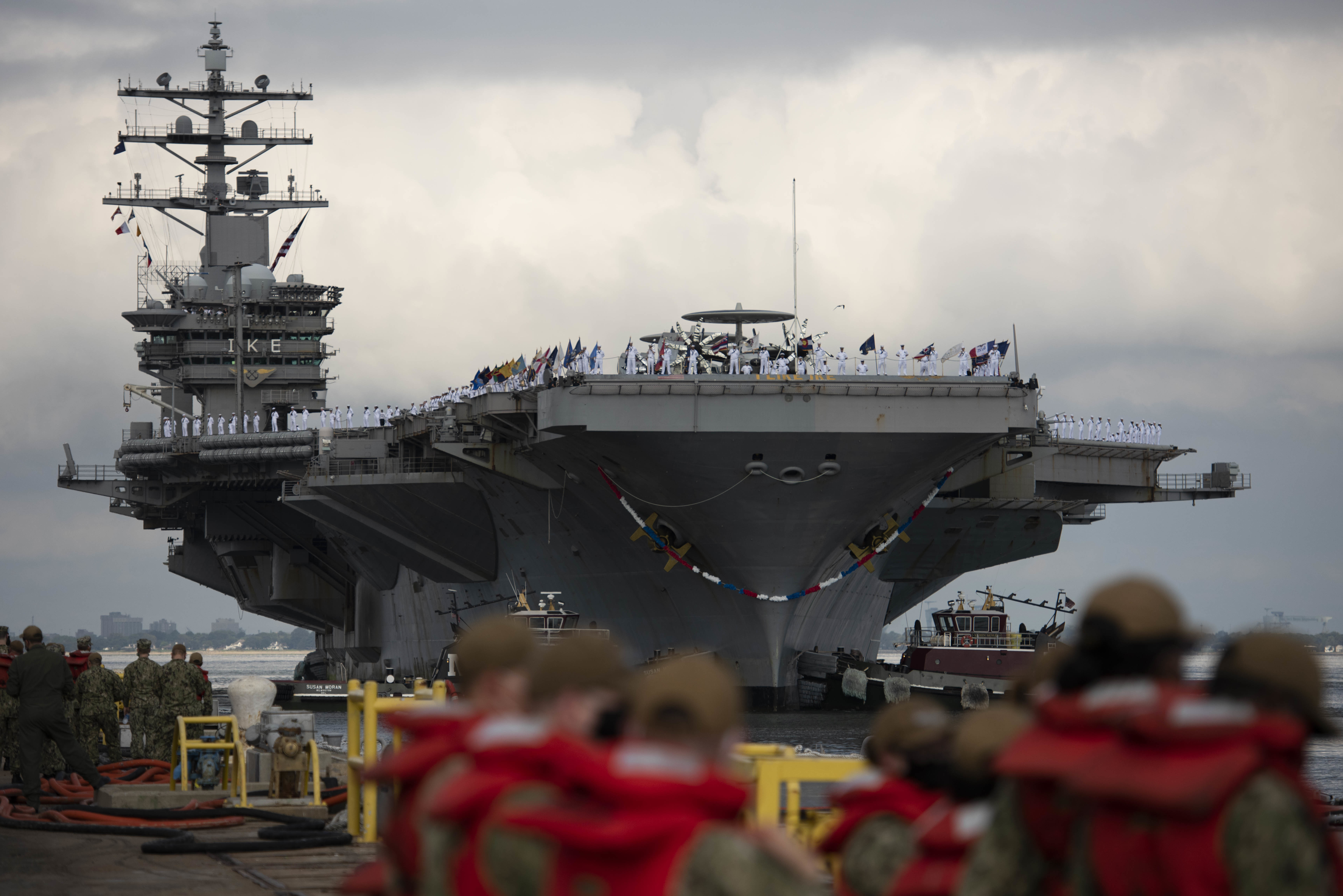
First Fleet? How about funding what you have?

Posted: November 21, 2020 by ng36b in war
Tags: , , ,
You know, these big ships break more when you can’t fix them right the first time.

Navy. We’ve been cool for a number of years now. We’ve endured lots of changes, everything from new uniforms to physical readiness exams to more uniforms. I’m sure yet more uniform changes are on the horizon. But we’ve gotta talk about this thing called expanding the bureaucracy.

‘Cause I gotta tell you, its not good.

We got issues, Navy. The shipyards can’t seem to ever fix a ship in time. Yeah, like 75% of the maintenance projects are overbudget and late! If Navy shipyards were a grocery store, it would be like ordering grocery delivery for Thanksgiving, but the delivery guy rolls up in a scooter to dump off bologna sandwiches at the end of your driveway instead of a turkey and stuffing on your porch.

Its not just shipyards. We’ve got a lot of bureaucracy. At the top, we’ve got more admirals than ships. Sure, we have to put someone in charge of important things like motorcycle safety, but come on man. More admirals than ships? Even when we count submarines? That seems a bit much.

So given those two really basic problems, why on earth would we want to build yet another numbered fleet? Are we lacking in 3-star admirals (hint: we’re not!)? Does a new fleet give us more capability?

No and no. Right now, we can’t man, train and equip the Navy we have. Ships are only manned to 92%. That sounds good, right? Its not. On a 4,000 Sailor crew of a carrier, that means we’re short 320 people. That’s almost a destroyer’s worth of people, which means we’re leaving lots of positions open. And shore commands? You’re doing well if you reach 85%.

Our response to get ships to sea seems to be to constantly take some “slackers” from shore duty, because heaven forbid we give people a break. Ships are constantly using ashore manpower “volunteers” to fill gaps. That works in the short term, but long term we simply aren’t bringing in enough people.

Even when we do, we give them no incentives to stay. I’ve had three crappy bosses in my short career, two of which were fired. I had people dress me down in public because it “suited them,” even when it was over minor offenses. If you’re not in the military, that sort of behavior makes HR scream. In the Navy, its just Tuesday, and you’re expected to simply take it. So guess what happens when we ask Sailors to reenlist, most of whom have nice job prospects in the civilian world that don’t involve getting screamed at over minor things or signing Page 13s that limit your right to eat in a restaurant? They don’t sign, and we resort to canceling failing PRT scores to try and keep enough people in.

So, while I applaud SECNAV’s efforts to find new niches for the Navy, I’d rather we get what we have to being well again. Get our manning to nearly 100%. Make the shipyards not suck again. Fill the billets we have now before we consider adding more. But please, don’t start up a new fleet until that part is done.

This post represents the views of the author and not those of the Department of Defense, Department of the Navy, or any other government agency. Obviously.

Granted, your average voting official doesn’t look as good as this dude, but he’s also wearing a camera that is NDAA-approved, without parts made in China

Technology was supposed to make our lives easier and safer, yet as we speak, we’re watching massive voter fraud on a scale not seen since the Soviet Union. It’s impossible to “trust the process” when voting machines magically gltich change votes from one candidate to another and vote counting happens at night without oversight. When the dust settles from this election, there is going to be a lack of trust on all sides for the process.

We need a way to start re-establishing that trust, and I think a smart move would be body cameras for voting officials. When body cameras first started appearing for police officers, there were mixed reviews and a lot of apprehension, but ultimately it was a good thing. My Cub Scout Pack visited the nearby police station, where one of the officers showed us her body camera system. I asked for her opinion, and she said she preferred them, because when people treated her poorly, spit at her and clawed at her face, it was captured on camera for a judge. Without body cameras, we wouldn’t be able to expose when police behave poorly, which helps weed out or correct poor performing officers and improves police performance overall.

So, why not for voting officials? Body cameras are significantly harder to change data. Police systems have encryption and protections to tag data if someone attempts to alter it. Time stamps would make it obvious if votes were counted after hours. Analytics on the camera system can identify and flag behaviors that would be suspicious.

Do we really want this again?

Instead of having officials board up windows, count in the night and treat voting like they’re some sort of mafia organization, let’s bring some transparency to the process with proven technology. If its good enough for the police, it should be good enough for voting officials.

This post represents the views of the author and not those of the Department of Defense, Department of the Navy, or any other government agency.

As the election counting, and soon to be recounting, rages on, there are plenty of people that tell me they just “couldn’t vote for Trump,” even though in theory they are conservatives. Personally, I vote based on what a candidate says they support, or has demonstrated they support, for policies that I care about, ranging from foreign policy and gun control to right to life and taxes, and then on a scale of how much I care about each. For example, I care more about foreign policy and abortion than taxes because I’m directly affected by foreign policy and I’ve seen first hand how pervasive abortion theory is in hospitals, but I’m not making enough money to care if the tax rate jumps significantly.

I also know that while I’m a policy voter, many people have an emotional connection to voting, and they have to “like” the candidate they are voting for. We can discuss whether that makes sense in another article, but we should recognize that candidate likeability does matter to many people. It’s likely what got Bill Clinton elected. But is likeability enough that it mattered to Trump’s election?

Although the data isn’t complete yet, I pulled Reuters election data and used Wikipedia for 2016 election data to try and answer the question: Did people not vote for Trump that would have voted for another Republican Presidential candidate that was more likeable? I sampled data by looking at states that had Senate races. My theory was that if someone was a “Never Trumper,” they would likely still vote for the Senate Republican in their state. I also looked at Libertarian votes to see if they made a difference. The states I ended up picking were Arizona, Michigan, North Carolina, New Mexico, Alabama, Georgia, Minnesota and Colorado, in what I think is a pretty decent spread.

First, was their a surge in Libertarian votes? Not at all.

Just looking at raw numbers, Libertarian votes went down, in many cases drastically. 2016 was a banner year for Libertarian and Green Party vote, but this year they just did not have the turnout, despite running Jo Jorgenson, a very likeable candidate.

Second, was there a noticeable Never Trump vote? I calculated the difference between Presidential votes and Senate votes between parties and then compared them. The numbers aren’t 100% aligned. I calculated a scaling factor to multiply the Senate votes by to balance numbers. Then I took the difference from Senate Republicans vs Trump votes to see if there were “Never Trumper” votes. If there were, I then calculated if the difference mattered.

The results are interesting. In Arizona and Alabama, the number was negative, meaning Trump had more votes than the Senate Republican. In the 6 states where there was Never Trump votes, only one, Georgia, would have mattered.

While not 100% scientific, we can reach a few conclusions:

  1. The Never Trump vote is real, but not everywhere.
  2. Where there is a Never Trump vote, it mostly doesn’t always matter, even in swing states.
  3. Libertarian vote didn’t appreciably go up this year.

For Republicans, this is good and bad news. It means that the Never Trump faction isn’t nearly as big as the media might make it out to be. Better still, when people had a choice between a more likeable candidate (Jo Jorgensen), they actively chose not to vote for her, far more than the 2016 election would have indicated.

The bad news is that Biden wins in key states can’t be attributed to candidate hatred. Democrats ran a relatively weak, bland candidate, and he is either coming out on top or close to it. That means that overall people are looking favorably on Democrat candidates. Whether its the biased news media, demographics, vote rigging or policies, Republicans are not in a good spot, because short of major changes, they don’t have a chance at capturing the Presidency in the future.

This post represents the views of the author and not those of the Department of Defense, Department of the Navy, or any other government agency.