

Posts Tagged ‘pat austin’

Photo by Joel Arbaje on Unsplash

By: Pat Austin

SHREVEPORT – There is a bill in the Louisiana House of Representatives that would “allocate up to 25,000 acres of Louisiana offshore waters to be leased from the State by private, green energy companies to manufacture and build windmill turbines as an alternative to coal and natural gas production.”

Restrictions have kept lease limits to 5,000 acres which apparently is scaring wind farm investors away. Proponents of HB 165 say that the 25,000-acre limit greatly expands potential for investors to come in and build wind farms in the Gulf of Mexico.

Wind turbines are huge structures. A single wind turbine requires a great deal of real estate, even in the Gulf.

Although most Gulf of Mexico wind energy projects will eventually be built in federal waters, HB 165 co-author Rep. Joseph Orgeron “says the exploratory pilot projects will be built in state waters closer to the coast. Louisiana’s less-populated coastline allows more development within the 3 nautical miles of state waters that extend from shore.”

Chris Alexander, an attorney and conservative activist in Baton Rouge writing for The Hayride calls HB 165 “a monstrosity.” Citing several red flags in the bill, he says:

It would allocate up to 25,000 acres of Louisiana offshore waters to be leased from the State by private, green energy companies to manufacture and build windmill turbines as an alternative to coal and natural gas production. The first red flag in the bill is that it removes all legislative oversight and places plenary authority in the State Mineral and Energy Board to award any lease if it deems, in its sole discretion, that the lease is in Louisiana’s best interest. Why would the bill vest this enormous power in any board while removing traditional legislative oversight and accountability? Any objective observer would necessarily be suspicious of such a provision.

The bill also removes the traditional requirement that a minimum dollar amount and minimum percentage of revenue to be produced be advertised by the board as a minimum requirement for granting the lease. No legislative oversight, and no requirement of minimal revenue creation. What could possibly go wrong here?

See his post for more.

My first thought when I read about this development was “what happens in a hurricane?” Apparently there is a plan for that in that the turbines “feather in” their blades and wait for the storm to pass. Uh, sure. There is even discussion of floating turbines that can be hauled in prior to a storm.

My second thought was about migratory birds. It is common knowledge that the Louisiana Gulf Coast is a critical stop for over half a million shorebirds from 28 species migrating back and forth each winter. With our wetlands already in danger and providing less and less territory for the birds to refuel, how many will also be lost to windmills?  Collateral damage, says Erik Johnson of the Audubon society:

There are worse threats to birds. House cats, for example, are blamed for killing about 2.4 billion birds each year. Automobiles knock out 200 million more, and pesticides poison at least 2.7 million birds each year in the U.S. “Wind energy will really be a drop in the bucket by comparison,” Johnson said.

My next thought was about the shrimpers and fishermen who have relied on the Gulf waters for generations to make a living.  Since the Cajuns began arriving in Louisiana in the late 1700s, they have been shrimping and fishing these waters to make a living. These are people devoted to the land, people who won’t leave it no matter the worst hurricane, people who survive and who have battled the elements and the oil companies and the diminishing coast just to keep their livelihood viable. And now these fishermen have to worry about wind farms:

But the Gulf is also the source of 70% of the country’s shrimp. Of the more than 200 million pounds of shrimp netted in the Gulf each year, much of it was caught in the waters off the Louisiana and Texas coasts. These prime fishing waters happen to overlap with the areas of the Gulf that have the greatest potential for wind energy development.

Between the transmission lines laying on the sea floor, the turbines destroying nets, and the narrow navigational paths between turbines, the fishermen are concerned.

The agency has promoted the idea that wind farms won’t be any worse for fishing than the 3,500 offshore oil and gas structures already in the Gulf, not to mention 27,000 miles of underwater pipelines, most of which are inactive or abandoned.

[Acy Cooper of the Louisiana Shrimp Association] agrees shrimpers are accustomed to the Gulf’s industrial obstacle courses, but it doesn’t mean they like it. The introduction of offshore wind infrastructure increases navigational challenges.

HB 165 was approved without objection in the House Committee on Natural Resources and Environment last month and was moved on to the Senate where it will first be considered by the Senate Committee on Natural Resources before moving on to a full Senate vote.

In his Hayride piece, Chris Alexander offers a final parting shot against the bill:

Finally, I would be remiss if I did not make known another fact that the proponents of HB 165 would surely rather you not know:  Roughly 70% of the rare earth elements that are essential to the construction of wind turbines will be produced and harvested in China. How many Louisiana voters believe that we should become even more dependent on a foreign country for our energy needs, particularly a sworn adversary?

If the environmental concerns don’t bother you, further dependence on China should.

Pat Austin blogs at And So it Goes in Shreveport and at Medium; she is the author of Cane River Bohemia: Cammie Henry and her Circle at Melrose Plantation. Follow her on Instagram @patbecker25 and Twitter @paustin110.

Palm Sunday

By:  Pat Austin

SHREVEPORT – As Christians around the world prepare for Holy Week, I’ve been thinking a lot about church attendance. Christmas and Easter are the two days of the year that you can well assume that the pews will be filled. Even the days leading up to those services start to see a slight uptick in attendance; yesterday we had our Palm Sunday service and had perhaps 25% more people in church than in past weeks.

We have a new Rector at our church which is also helping the attendance numbers; he’s been onsite for about five weeks, and people are showing up to see what the buzz is about. Whether or not they will continue to show is the question.

Church attendance across denominations is low. In March 2021 there was a Gallup poll conducted on this:

The proportion of Americans who consider themselves members of a church, synagogue or mosque has dropped below 50 percent, according to a poll from Gallup released Monday. It is the first time that has happened since Gallup first asked the question in 1937, when church membership was 73 percent.

That’s both sad and scary to me.

I’ve not always been the most faithful in attendance, but it seems the older I get, the more I realize how important it is, and how meaningful the liturgy is to me. We attend the Episcopal church that my parents took us to when I was a kid, so I have strong sentimental attachments and memories there. It felt rather like coming home when my husband and I started going back to church on Sunday.

Religious services are simply not a priority for so many these days. In our congregation our average age is easily in the 60s-70s range. We have some young families, but not in overwhelming numbers, and those that are actually members don’t attend because they have soccer games or softball tournaments for their kids, or some other such activity that is always more important.

I’m not judging anyone, but I do wonder why events like that are scheduled for Sunday morning? I don’t recall that always being the case.

And with most things, politics causes a divide in religious congregations sometimes. Congregations wrestle with issues like sexual orientation and abortion, and try to determine where as a congregation we stand on these things? Are we a big umbrella welcoming all? Why is our Rector teaching a book written by a gay priest? (gasp!). Do we allow gay marriage or not? When does life begin? When does it end? How does it end? Does it end?

So many issues can bog us down. Faith is such a personal thing but also something we find strengthens in fellowship with others.

It seems to me in an ever more complex and confusing world, the only place I find peace and stillness is in the church. My head clears, my heart listens, and I find hope and clarity. It is my hope that as Holy Week and Easter begins to fill the pews, if only for a short time, at least a few people will also find this same peace and will continue to come back.

It sure couldn’t hurt anything. With the state of society these days, it sure could not hurt.

Pat Austin blogs at And So it Goes in Shreveport and at Medium; she is the author of Cane River Bohemia: Cammie Henry and her Circle at Melrose Plantation. Follow her on Instagram @patbecker25 and Twitter @paustin110.

Photo by John Cameron on Unsplash

By: Pat Austin

SHREVEPORT – I miss the days when I could get my grocery list at one store.

I am one of those people who go to the grocery store several times a week; I plan a meal and then I go get what I need. I avoid canned vegetables when I can and buy fresh whenever possible. For the most part, I buy meat when it’s on sale and stock the freezer. I seldom keep milk (unless I’m on a rare cereal binge) but we always have eggs.

So, I’m in a grocery store several times a week depending on what is going on in my kitchen. As threats of food shortages loom, I am one of those people that will have to readjust my shopping habits.  And you know, the strangest things end up being absent from the shelves. There is no rhyme or reason to it, as a rule.

Is this regional? Nationwide? I mean, are saltines missing all over the country, or just where I am? A couple of weeks ago it was pasta; no egg noodles were to be found at any store in town. For the longest time I couldn’t get Powerade. It’s just weird. And not that I buy them, but my store is always out of Ramen noodles. Huge bare gaps in the shelves where Ramen used to be plentiful.

Now I am hearing about an egg shortage, and it makes me wish I kept chickens.

Not really.

I don’t want chickens.

But again: changing shopping habits. As this weird shortage thing continues, we may even have to change eating habits, too.

Food prices are also changing how we all shop. I’ve never been a coupon clipper; I tried it years ago. I would hear about women that saved 75% of their grocery bill using coupons and taking advantage of rebates, but I could never achieve that. I would forget my coupons, or I would resent having to purchase three bottles of ketchup to save twenty-five cents and so I’d just buy one bottle when I needed it. Coupon clipping never worked for me.

That being said, I do find myself checking the sale papers now and when things I actually use are on sale I will stock up and buy extra. I’ve never done that before and I don’t have a lot of storage room in my kitchen.

I say all of this not because anyone on the planet cares about my shopping habits, but I do have concern about where all of this shortage business will end, and I worry about how prices will go. Reportedly, food prices will rise at least another ten percent in coming days. I don’t know how struggling families will manage these higher fuel and food prices.

I’m no economist by any means but even I can see that it is the working middle class that is getting hammered. Those people who don’t qualify for SNAP benefits and who are working multiple jobs just to hang on – these are the people that are suffering.

Obviously.

I have set out a couple of tomato plants and I wish I had room for a full-blown garden. Maybe we all need to go back to neighborhood Victory gardens

Pat Austin blogs at And So it Goes in Shreveport and at Medium; she is the author of Cane River Bohemia: Cammie Henry and her Circle at Melrose Plantation. Follow her on Instagram @patbecker25 and Twitter @paustin110.
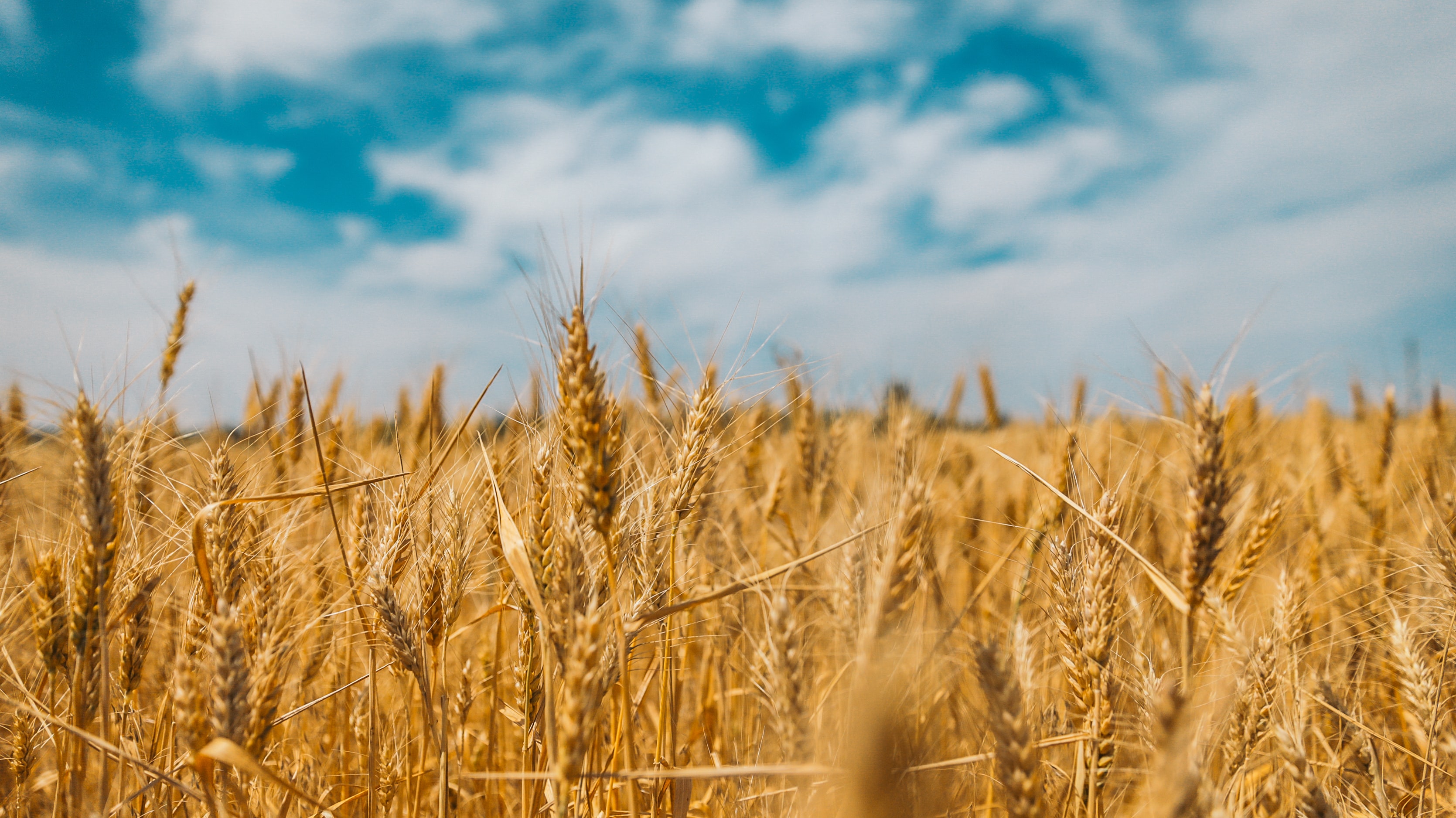
Photo by Polina Rytova on Unsplash

By: Pat Austin

SHREVEPORT – As President Biden warns of a “real” food shortage, my husband is on social media ranting about the CRP program and will certainly end up in the Facebook gulag again soon. It’s a matter of time.

The CRP, or Conservation Reserve Program, has been around since 1985, signed into law by President Reagan, and basically pays farmers not to grow certain crops on their land.

In exchange for a yearly rental payment, farmers enrolled in the program agree to remove environmentally sensitive land from agricultural production and plant species that will improve environmental health and quality. Contracts for land enrolled in CRP are from 10 to15 years in length. The long-term goal of the program is to re-establish valuable land cover to help improve water quality, prevent soil erosion, and reduce loss of wildlife habitat.

Besides conservation, it has the added benefit of stabilizing prices and keeping commodity prices from bottoming out.

As a native Iowan, he knows farmers who have prime agricultural land but grow nothing and instead collect a big check from the government each year to literally not grow crops. And then there are the occasional ones who collect their CRP check but also raise a crop and therefore double dip.

I’m not painting farmers as the bad guys; don’t mistake my point. In fact, recently farmers have been pleading with the Dept of Agriculture to open CRP lands:

“…Seven agriculture lobbying organizations fired off a letter to Ag Secretary Tom Vilsack this week asking the USDA for flexibility for farmers to plant crops on more than four million acres of “prime farmland” that’s currently enrolled in the Farm Service Agency’s CRP without penalty.

“It remains to be seen if Ukraine’s farmers will be able to safely plant crops,” the letter says. “Time is of the essence. The planting window in the United States is already open.”

While the CRP program does have certain conservation benefits, perhaps in the face of a worldwide food shortage, we need to take another look at this.

I have been hearing more and more people talking about planning gardens and stockpiling pantries in anticipation of rising food prices and shortages. Is this alarmist? Are we over-reacting? We all have seen shortages of various items since the Great Toilet Paper Shortage during Covid. The latest hard-to-come-by thing around here has been saltine crackers. So odd.

All of this does make one thing seriously about a self-sustaining lifestyle though; growing your own food, getting back to the very basics. We are currently in south Louisiana where the Cajun people know all about being self-reliant. I don’t see a lot of concern around here except in the few transplants that have moved in.

But, the more Biden warns of shortages, the more alarm will rise, and perhaps that is also the point because the Democrats believe only they can save us from ourselves.

Maybe we all need to plant a garden this spring and stockpile some rice and flour.