
Posts Tagged ‘report from louisiana’

Photo by Tim Mossholder on Unsplash

By:  Pat Austin

SHREVEPORT – A few days ago on this blog, datechguy wrote about a favorite local business that was a casualty of the Biden economy:

In the grand scheme of things it’s just one more business that has gone under thanks to the Biden Administration Economy and the steal of the last election. It’s just a few more jobs lost by people who worked there for decades, it’s just one more person whose decades of hard work building a business has gone for naught. Nobody in Washington will note it, it will not make the NY Time or the Washington Post or the TV news nor will those in the administration which insists we have a booming economy notice that it is gone.

Y’all. I could have written this myself because the same thing happened to me this week and I know it’s happening all over the country. I know it is.

One of my favorite local businesses is Champagne’s Bakery located in Henderson, Louisiana on the edge of the Atchafalaya Basin. The business began 134 years ago in Breaux Bridge and is known for their French bread which they sell wholesale to a large percentage of restaurants in the Acadiana region. At the bakery in Henderson, when the bread is fresh and hot, a flashing light like a siren will spin wildly on their sign. It’s a landmark!

Champagne’s (pronounced SHAM-pines)  is known for their trademark “pink cookies.” They are about the size of a quarter and are little sandwich cookies with icing as the filling. They are just the right size to pop into your mouth whole. During Mardi Gras they make them in purple and green; during football season you can get them in LSU purple and gold or Ragin’ Cajuns red. But always there are pink ones. They are delicious!

When the bakery announced on social media last week that they were closing, a large number of shocked commentors lamented the loss of the pink cookie.

A local radio station reached out to the owner for an explanation:

Paul said that, like most places, the bakery took a hit during the COVID-19 pandemic. Business slowed, but Paul said it wasn’t terrible.

The bakery was still recovering from the pandemic and things were looking pretty good until, he says,  the economy began to turn.

When I pressed him for more, he said that inflation is killing the business.

3 years ago, Paul was paying around $15 for a case of eggs. Today, he is paying around $60. A few years ago, shortening for the baker cost Paul about $28 for shortening. Today, that same package of shortening sets him back $90.

Who can survive increases like that?!

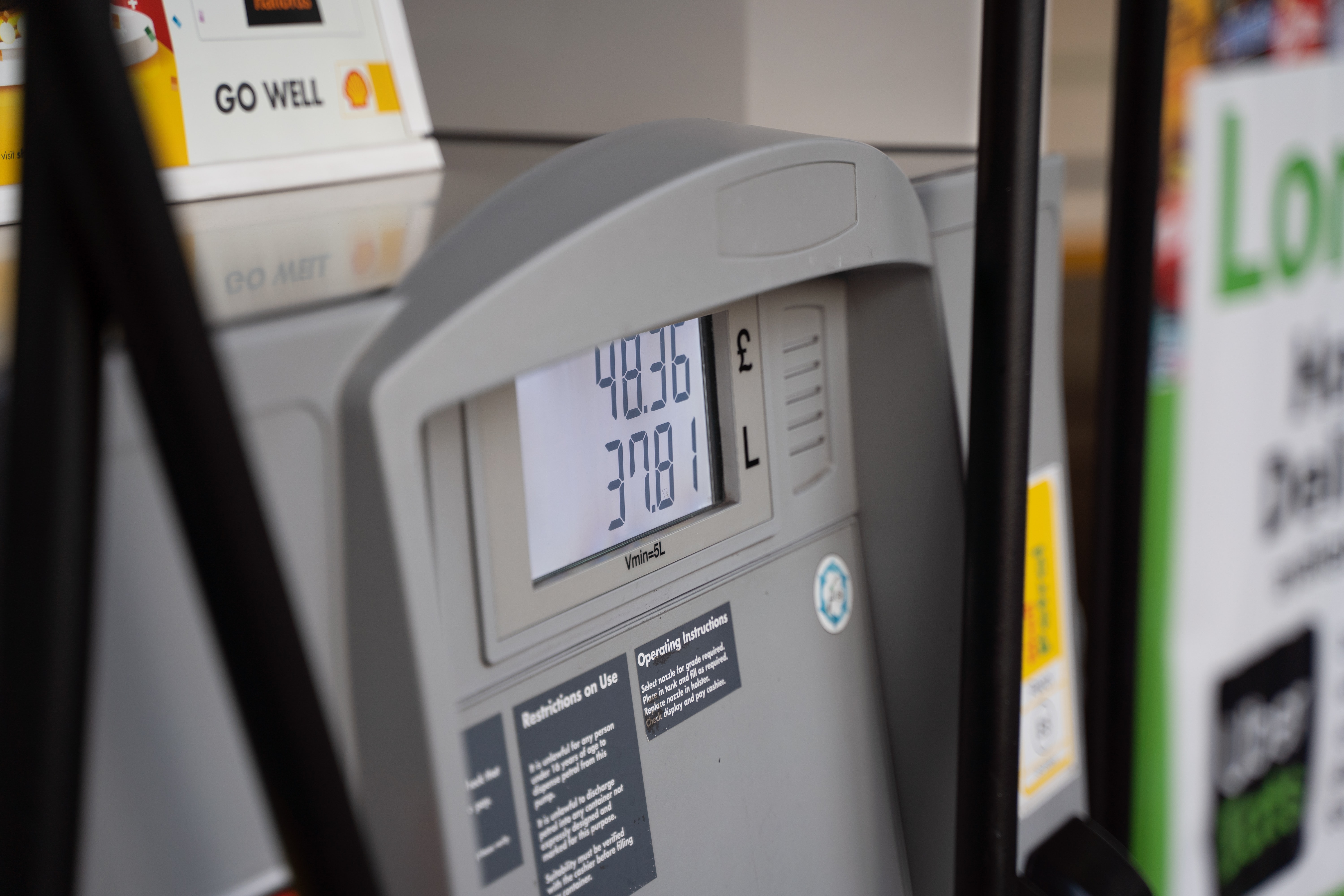
Not to mention that when we were there two weeks ago, they were having trouble getting supplies in because of trucking woes. Their suppliers couldn’t get their goods to them. Smaller trucking companies are having to lay people off and make adjustments of their own; look at the diesel prices to figure that one out.

So, yes, I’m mad that I’m losing my favorite bakery. I’m even more mad that another, yet ANOTHER, local mom ‘n pop business is going under, a casualty of the Biden economy. But what really bothers me is where this is going to end. The WalMarts are going to survive. They’ll be here forever. Most of your chain restaurants are going to survive too. But soon you’re going to lose the local flavor, and even part of the culture, of what makes your area unique.

You’ll have to participate in hyper-capitalism to get anything done, to buy goods and materials, to eat.

Our local diners, those that are left, are struggling. They’re raising prices, they’re closing a couple of days a week, they’re struggling to find employees. They have to take what they can get from the labor force and it’s often lackluster.

I diverge from my point a bit, but really, where is this going to end?

In The Advocate this morning was an article about struggling shrimpers; fishing is a major source of livelihood for people in south Louisiana but rising fuel prices are contributing to the demise of that for a lot of fishermen.

Where does it all end? What will out economy and our culture look like at the end of this?

The loss of our local bakeries, restaurants, diners, and shops will soon mean our country is generic from one end to the other. You won’t be able to tell New Orleans from San Francisco.

Maybe I exaggerate, but not by much.

Pat Austin blogs at And So it Goes in Shreveport and at Medium; she is the author of Cane River Bohemia: Cammie Henry and her Circle at Melrose Plantation. Follow her on Instagram @patbecker25 and Twitter @paustin110.

By: Pat Austin

SHREVEPORT – I think I’m going to give up eating out for a while.

Working under the same theory I used when I stepped back from social media to avoid general aggravation and blood pressure spikes, avoiding the restaurants and fast-food joints in my area for a while will serve two benefits: 1) I’ll save a few bucks, and 2) I’ll be less aggravated when my order is screwed up, if I ever get to place an order at all, that is.

My husband is blaming the low level of quality service on the stimulus and extended unemployment checks that were doled out during the pandemic. He’s probably not wrong, but may not 100% right, either.

It just seems that lately, service sucks. Period. There’s no pride in a job well done and so many people won’t do one iota more than what is in their job description.

Example: we went to Sonic for a quick hamburger for lunch on the way home from church. The place is busy, but not overwhelmed. We pull into the parking slot, push the button to order, and wait. And wait, And wait. “Reb button is activated! We’ll be with you soon!”  Waiting. Eventually we see a carhop stroll out to drop off drinks to the car next to us. My husband gets her attention, with some effort, as she walks back by us and asks if the call button is working properly and explains we’ve been waiting ten minutes to place our order. She shrugs and says “We shorthanded. They’ll get to you.” And she strolls away.

We left and went to Whataburger, a regional hamburger franchise we like. Again, business is steady but not overwhelming. But we waited literally 35 minutes after placing our order to get our hamburgers and fries. Husband walked up to the counter to inquire, and our food was sitting in the back; nobody had thought to bring it out. It was cold, but we took it and left.

This happens in restaurants too; it’s not just fast-food places. I took my son out for a steak dinner the other night and the steak was not cooked to order (not even close). Inedible.

The cake in my picture above? “Holy Eucharisp” was written on a cake my church ordered to celebrate Baptism and First Communion on Pentecost. WHAT is a Eucharisp?  The bakery thought this was acceptable. And sent this product out to us. #fail.

I’m not a picky customer. Not by a long shot. But quality of service is declining. Am I the only one seeing this? Labor shortages are bringing us the lowest levels of productivity. Are we really to the point where any warm body behind the counter will do? It’s one thing when we are talking about hamburgers but what about when it’s happening in your pharmacy or your auto mechanics or your other service areas? For the record, my pharmacy used to be open seven days a week but now it closes on weekends.

These are scary times. Our society and our levels of acceptance for poor performance have changed. We’re so grateful to finally get that cold hamburger we just take it and move on. Obviously it’s not just hamburgers we’re talking about here. Think of all the things that metaphor could apply to.

We’re in trouble.

Photo by 2y.kang on Unsplash

By: Pat Austin

SHREVEPORT – In shocking, absolutely SHOCKING news, the Baton Rouge Advocate reports that “Only 43% of kindergarten students read on grade level, 54% of first graders, 56% of second graders and 53% of third graders.”

(Insert sarcasm).

Seriously, who didn’t see that one coming?

After teaching ELA at the high school level for twenty-five years, I am not at all shocked by these numbers; in fact, I’m surprised they aren’t worse.

One of the main reasons I left the classroom when I did, rather than get my thirty years in, was because of the terrible Louisiana Believes ELA curriculum. When the program rolled out, I ranted and raved and went into fits of depression. There were tears shed over this curriculum at the time by gifted ELA teachers I worked with who knew this program was terrible yet were powerless to change anything. All reading for pleasure was removed from the curriculum. Most fiction was stripped out. And while I’m a nonfiction fan, the nonfiction pieces my 10th graders had to read were the dullest, driest, most soul crushing texts you can imagine.

I’m all for challenging a student. That wasn’t what was happening.

The word “rigor” became code for all we loathed about the reading materials. Teachers were expected to embrace the new “rigorous texts” and lead students through multiple, yes, multiple readings of them; and students were expected to read these eight page speeches or scientific articles multiple times while annotating, highlighting, examining, discussing, and writing.

No tenth grader I’ve ever met is going to get excited about reading Carrie Chapman Catt’s speech on women’s suffrage.

Teachers were given this curriculum and the accompanying prepared slides, and a script, and we were expected to follow it “with fidelity.”

Meanwhile, students mentally checked out.

When I tell you that there was ZERO fiction, I’m not kidding. And the ELA supervisor at the time told me that if kids want to read for pleasure, they will do it on their own.

That was about six years ago. Each year since then the curriculum has been loosened a bit, and a bit more each year. Teachers were given a little more flexibility but not much.

To combat the growing apathy toward English from my students, I brought in a classroom library and man was the excitement back in the classroom! Kids clamored for books they wanted to read.

But by then, my own future was sealed. I had to leave the classroom because I had lost faith in the program. Trust was broken. Teachers lost all voice, all input, all creativity and freedom over their classes. I could not in good conscience lead students through material that crushed their desire to read and learn; and for the record, the great test scores the admins were looking for never happened. They started to rise a bit once the bonds loosened, but this new curriculum did not solve the ills of literacy.

And, based on what I’m reading today, it still hasn’t.

Pat Austin blogs at And So it Goes in Shreveport and at Medium; she is the author of Cane River Bohemia: Cammie Henry and her Circle at Melrose Plantation. Follow her on Instagram @patbecker25 and Twitter @paustin110.

Photo by Krzysztof Hepner on Unsplash

By: Pat Austin

SHREVEPORT – When I read an article about rising food costs and see something like “Milk is 13% more expensive than last spring, and beef prices are up 16% over last year,” those numbers are vague to me. They don’t process. I can look at 13% and 16% and know those are pretty good price jumps, but the impact of rising food prices is much more obvious when you look at individual items.

For example, one of the things we purchase is cat litter. Six months ago, we were paying $3.56 for a 5 lb. bag; now, the same bag is just over $5.  I sometimes purchase these little individual cups of Del Monte grapefruit for grab and go breakfast. Six months ago, it was right at $1 for one of these; now it’s $1.53. I guess that is still a low cost for breakfast, but it’s indicative of a much larger problem.

These rising prices are affecting everything you put in your shopping cart. A store manager recently told me that the rising costs stem from having to pay more for materials, for inks to print labels, to the higher cost of producing the product you are actually buying, and the transportation to get it to your store. Even labor shortages contribute to higher costs.

Part of the problem is all of that stimulus money which has to be reabsorbed back into the system; more money floating around means rising prices. Another factor is soaring fertilizer prices, the effects of which will continue to make food costs rise worldwide.

Bottom line is that even to a non-economist person like me, we can see that prices of literally everything we buy are soaring and there seems to be no end to it.

More than once lately I have wished for a big vegetable garden; sadly, I don’t have enough sun in my yard to even grow a tomato plant.

Because my husband is retired military, we have access to the commissary which has traditionally offered lower prices for many items, but now this is one area where shortages are quite evident, and shelves are bare. Prices seem to be about in line with prices everywhere else now. While there is still some savings to be had on certain items there, the bottom line is that comparison shopping is becoming an art form.

We have been watching sale flyers for the grocery stores and stocking up on shelf-stable items when we can. If coffee is on sale, we stock up. I find I’m buying fewer snack items (not a bad thing!) that before and I’m stretching leftovers and being more mindful about waste.

It makes me worry about the working poor – and maybe I’m in that group! – who don’t qualify for government assistance but who isn’t wealthy either. Between rising gas prices, rising food prices, and overall inflation, we will all be on tighter budgets for some time to come.

Clipping coupons has never been my thing; I either forget them or resent having to by a dozen of something just to save a quarter, but maybe I need to take another look!

Pat Austin blogs at And So it Goes in Shreveport and at Medium; she is the author of Cane River Bohemia: Cammie Henry and her Circle at Melrose Plantation. Follow her on Instagram @patbecker25 and Twitter @paustin110.