Posts Tagged ‘revisionist history’

I have been a very outspoken critic of progressive indoctrination and progressive revisionist history.  Both have done tremendous harm to college students since the mid 1960s, when they were unleashed like a plague.  Progressives used these two destructive strategies as tools to brainwash impressionable youth, of college and school age, into believing collectivism is superior to individualism.

Individualism is one of the most important founding principle of the United States.  In order to destroy our national love of individual liberty, progressives knew they must first destroy our history.

I knew that progressives have been effective at their schemes to condition the last two generations based on conversations I’ve had with large numbers of individuals, news coverage on conservative libertarian sites, and the past couple of elections.  It wasn’t until I saw this article, Poll: Support for Traditional American Values, Patriotism Declines (breitbart.com), that I knew how exceedingly effective their brainwashing has been.

Beginning with patriotism, only 38 percent of Americans say it is “very important” to them, down from 61 percent in 2019 and 70 percent in 1998. Thirty-five percent say patriotism is “somewhat important,” and 27 percent say it is “not that important (16 percent) and “not at all important” (11 percent).

Broken down by political affiliation, Republicans (59 percent) are more likely than Democrats (23 percent) and independents (29 percent) to rank patriotism as a “very important” value. Older adults are also more likely to place more importance on patriotism than young adults. Twenty-three percent of adults under 30 say patriotism is “very important” compared to 59 percent of seniors ages 65 and older.

Respondents were also asked about how they view the United States. Twenty-one percent say the United States “stands above all countries in the world,” 50 percent say it is “one of the greatest countries in the world, along with some others,” and 27 percent say “there are other countries better than the United States.” The percentage of Americans who believe other countries are better than the U.S. rose to 27 percent from 19 percent in 2016.

Have we reached the point of no return?  Is there any hope of regaining control over our institutions of learning?   I think it very well may be no hope, but we must immediately try, and our effort must be a Herculean effort.

I have been a huge fan of Thomas Sowell for more than a decade.  I consider him to be a teacher and a mentor, even though I have never met him.  No author was more responsible for my philosophical awakening, which transformed me from a radical leftists to a hardcore Libertarian.

My expectations were tremendously high before I opened the cover of this book, which is a collection of essays.  This great work greatly exceeded my expectations because all of the essays, particularly the title essay, were full of knowledge that completely redefined how I saw the world.  I am an extremely well read history fanatic.  This book contained a wealth of knowledge that was new to me.

For this review I will concentrate on two of the six essays and let quotes from these two essays form the bulk of this article.

Thomas Sowell’s explanation for the cause of the economic, academic, and social disparities between blacks and whites was something most of us, including me, never considered.

The following quotes are from the article Black Rednecks and White Liberals.

External explanations of black-white differences — discrimination or poverty, for example—seem to many to be more amenable to public policy than internal explanations such as culture. Those with this point of view tend to resist cultural explanations but there is yet another reason why some resist understanding the counterproductive effects of an anachronistic culture: Alternative explanations of economic and social lags provide a more satisfying ability to blame all such lags on the sins of others, such as racism or discrimination. Equally important, such external explanations require no painful internal changes in the black population but leave all changes to whites, who are seen as needing to be harangued, threatened, or otherwise forced to change.  In short, prevailing explanations provide an alibi for those who lag—and an alibi is for many an enormously valuable asset that they are unlikely to give up easily

With blacks as with whites, the redneck culture has been a less achieving culture. Moreover, that culture has affected a higher proportion of the black population than of the white population, since only about one-third of all whites lived in the antebellum South, while nine-tenths of all blacks did.”

The burgeoning of the American welfare state in the second half of the twentieth century and the declining effectiveness of the American criminal justice system at the same time allowed borrowed and counterproductive cultural traits to continue and flourish among those blacks who had not yet moved beyond that culture, thereby prolonging the life of a chaotic, counterproductive, dangerous, and self-destructive subculture in many urban ghettos.

White liberals, instead of comparing what has happened to the black family since the liberal welfare state policies of the 1960s were put into practice, compare black families to white families and conclude that the higher rates of broken homes and unwed motherhood among blacks are due to “a legacy of slavery.” But why the large-scale disintegration of the black family should have begun a hundred years after slavery is left unexplained. Whatever the situation of the black family relative to the white family, in the past or the present, it is clear that broken homes were far more common among blacks at the end of the twentieth century than they were in the middle of that century or at the beginning of that century —even though blacks at the beginning of the twentieth century were just one generation out of slavery. The widespread and casual abandonment of their children, and of the women who bore them, by black fathers in the ghettos of the late twentieth century was in fact a painfully ironic contrast with what had happened in the immediate aftermath of slavery a hundred years earlier, when observers in the South reported desperate efforts of freed blacks to find family members who had been separated from them during the era of slavery.

These lengthy quotes are just a tiny fraction of this well documented article.  Sowell traces the history of the Redneck culture from the wild areas of Northern England and Scotland, which was transported by white immigrants to the Southern United States.  He documents the extreme negative effects this culture had on whites and blacks.  Also documented in great detail are the drastic improvements blacks experienced when escaping this destructive culture and how white liberals have made it difficult for blacks to escape.

The next series of quotes are from the article The Real History of Slavery.

It takes no more research than a trip to almost any public library or college to show the incredibly lopsided coverage of slavery in the United States or in the Western Hemisphere, as compared to the meager writings on even larger number of Africans enslaved in the Islamic countries of the Middle East and North Africa, not to mention the vast numbers of Europeans also enslaved in centuries past in the Islamic world and within Europe itself. At least a million Europeans were enslaved by North African pirates alone from 1500 to 1800, and some Europeans slaves were still being sold on the auction blocks in the Egypt, years after the Emancipation Proclamation freed blacks in the United States.

From a narrow perspective, the lesson that some draw from the history of slavery, automatically conceived of as the enslavement of blacks by whites, is that white people were or are uniquely evil. Against the broader background of world history, however, a very different lesson might be that no people of any color can be trusted with unbridled power over any other people, for such power has been grossly abused by whatever race, class, or political authority has held that power, whether under ancient despotism or modern totalitarianism, as well as under serfdom, slavery, or other forms of oppression

What was peculiar about the West was not that it participated in the worldwide evil of slavery, but that it later abolished that evil, not only in Western societies but also in other societies subject to Western control or influence. This was possible only because the anti-slavery movement coincided with an era in which Western power and hegemony were at their zenith, so that it was essentially European imperialism which ended slavery. This idea might seem shocking, not because it does not fit the facts, but because it does not fit the prevailing vision of our time

For most of human history, and for nearly all of the non-Western world prior to Western contact, freedom was, and for many still remains, anything but an obvious or desirable goal. Other values and ideals were, or are, of far greater importance to them—values such as the pursuit of glory, honor, and power for oneself or one’s family and clan, nationalism and imperial grandeur, militarism and valor in warfare, filial piety, the harmony of heaven and earth, the spreading of the “true faith,” nirvana, hedonism, altruism, justice, equality, material progress—the list is endless. But almost never, outside the context of Western culture and its influence, has it included freedom. Indeed, non-Western peoples have thought so little about freedom that most human languages did not even possess a word for the concept before contact with the West

I most highly recommend this book to everyone.  It is extremely informative and also a very entertaining read. All quotes are copied directly from this webpage: Black Rednecks and White Liberals Quotes by Thomas Sowell (goodreads.com)
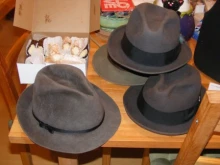

Shreveport’s Confederate Monument

By:  Pat Austin

SHREVEPORT – In an ongoing effort to erase history, the Louisiana House has passed without objection a bill that would remove Robert E. Lee Day and Confederate Memorial Day from the calendar of state holidays:

Democratic New Orleans Rep. Matthew Willard, who is Black, said he was shocked to learn the Confederate holidays remain on the state books when it was brought to his attention by a constituent.

“I had no clue,” Willard said. “I actually didn’t believe it. I couldn’t in good conscience sit by and not try to change it.”

Williard said he is compelled to carry the bill to honor his late grandfather Elliott “Doc” Willard, a well-known New Orleans educator and Civil Rights leader who died in 2012.

Not that this will make one iota of difference to anyone. No state offices closed on these days and only groups like the United Daughters of the Confederacy and Sons of Confederate Veterans paid any attention to them, and I can guarantee you that these groups will still quietly observe these days just as they always have. The local UDC chapter and the SCV chapter get together on these days and have a small ceremony at the cemetery and clean headstones of Confederate dead.

Meanwhile, in New Orleans, the City Council has officially renamed Lee Circle. After removing the Lee monument from the circle in 2017, and two years of discussion, the space will now be called “Harmony Circle.” 

Don’t you feel more politically correct now?

Since the monuments were removed across the south, I am unaware of any decline in violence or injustice. As far as I know, the Civil War is still part of our country’s history and you can still purchase Shelby Foote’s brilliant three-volume history of the war at Amazon and in bookstores.

Here in Caddo Parish, in northwest Louisiana, our huge Confederate monument has been enclosed in a giant plywood box in front of the courthouse for a couple of years now as local politicians attempt to find someone to move it without destroying it to a “less offensive” site. The monument belongs to the United Daughters of the Confederacy and therefore can not be just destroyed. After years of litigation and debate, the city is on the hook to pay for moving it and they must do so without damaging it.

The final cost for this process is about $800,000.

Now, what better way could we spend that money around here, in a city that is short over one hundred police officers, where we have daily shootings, and our murder rate is record breaking each year? In a city where restaurants can’t open because workers don’t show up? Where potholes are large enough to plant trees and downtown is a wasteland inhabited only by the homeless?

Perhaps moving the monument will finally solve all this. You think?

Lincoln and Douglas at Freeport, Illinois

By John Ruberry

While we’re not–yet–at the French Revolution level of destroying then recreating society, the Angry Left is focused on defacing and toppling statues of men deemed racist. Or by having sympathetic politicians remove them, such as what happened last week with Jefferson Davis’ statue at the Kentucky state capitol. So far women in bronze and marble, to my knowledge, have been spared, but one of Illinois’ representatives at National Statuary Hall at the US Capitol just might be inflicted with induced restless legs syndrome. I’ll get to her later.

Monuments of Confederate generals and of course Jefferson Davis have been the hit the hardest by the vandals. But the rage is now world wide. Winston Churchill’s statue at Parliament Square in London had “was a racist” spray painted on its pedestal. There’s an Abraham Lincoln statue there too, Black Lives Matter activists defaced that one. Up in Scotland, a statue of medieval monarch Robert the Bruce, whose views on black people are unknown, had “BLM” and “was a racist king” spray painted on it.

Because I’m from Illinois, I’d like to zoom in on my state. Let’s return to Lincoln. While Honest Abe was always anti-slavery, his views on black people prior to the Civil War would be classified as racist today. Lincoln’s stance on slavery in the 1860 election was to confine it to states where it already existed. By 1863 he was an abolitionist, at least in areas held by Confederate forces. Two years later the Great Emancipator enthusiastically backed the 13th Amendment that finally ended slavery in America. Oh, Lincoln saved the union too. That’s why he is considered the United States’ greatest president by most historians.

Lincoln gained national prominence in 1858 during his campaign for the US Senate against Stephen A. Douglas. Other than his connection to Lincoln, Douglas, “the Little Giant,” is largely forgotten now. His Kansas-Nebraska Act, which eliminated the Missouri Compromise in determining which states would be slave or free, ignited Bleeding Kansas, a brutal warmup to the Civil War. But Douglas was a political dynamo in the 1850s and he was the nominee for president for the northern Democrats in 1860.

Douglas and Lincoln agreed to a series of seven debates throughout Illinois during the 1858 campaign, the famous, or make that formerly famous, Lincoln-Douglas Debates. Late in the 20th century bronze statues of both men were placed at each of those sites.

Hmmm.

Douglas’ views on slavery were purposely murky, he believed in “popular sovereignty,” that is the voters, who comprised only of white males in the 19th century, should decide where slavery should exist. The Little Giant owned a plantation in Mississippi with slaves. Well, not exactly, but it was in his wife’s name.

How long will it be before those Douglas statues in Illinois will be vandalized? When will the call for their removal begin? And those seven plazas with Lincoln and Douglas will look unbalanced with just one man. Will Lincoln, who at one time of course was a racist, albeit most whites were bigots in the 1800s, get yanked too from those spots too?

Nancy Pelosi is calling for the removal of eleven statues honoring Confederates at Statuary Hall. Each state gets two statues, some of these honorees are well-known, Andrew Jackson represents Tennessee, George Washington is one of Virginia’s statues. Both men of course owned slaves. Some of the honorees are virtually unknown. Frances Willard, the longtime president of the Women’s Christian Temperance Union, a group that assisted in establishing Prohibition in America, represents Illinois in the hall. Like Douglas, she was a big deal in her day. But Willard held racist views and she feuded with African American civil rights leader Ida B. Wells.

When you remove the Confederates, the slave holders, and the racists, how many statues will be left in Statuary Hall?

How many statues in front of libraries, village squares, or county courthouses will be removed?

Where does is it all end?

And if all of the statues are gone, then what?

John Ruberry regularly blogs at Marathon Pundit.