
Archive for 2022

I like Ike!

Posted: April 26, 2022 by chrisharper in politics
Tags: ,

By Christopher Harper

By many accounts, Dwight Eisenhower was a lazy caretaker of the U.S. presidency.

Again, these analysts missed the boat by a wide margin.

In my continuing deep drive in the presidency, I found that Eisenhower was one of the best presidents ever.

In his 2013 analysis of Eisenhower’s efforts as a general and president, the late Jean Edward Smith dismisses many of the criticisms of Ike’s time in the White House. See https://www.goodreads.com/book/show/11958983-eisenhower-in-war-and-peace

Moreover, other historians are taking a more positive stance toward the 34th president, who served from 1953 to 1961. C-SPAN’s 2021 ratings of American presidents show that Eisenhower has moved up the ranks from 2000 to No. 5 in the 2021 survey.

In Eisenhower in War and Peace, Smith writes, “With the exception of Franklin Roosevelt, Dwight Eisenhower was the most successful president of the 20th century,” citing his avoidance of several military actions, creation of the interstate highway system, and the restoration of “the nation’s sanity” after McCarthyism.

In my opinion, FDR and cousin Teddy, who rank No. 3 and 4, should be put way down the list; Eisenhower should stand just behind Abraham Lincoln and George Washington, the top two on the C-SPAN list.

In 1952, Eisenhower entered the presidential race as a Republican to block the isolationist foreign policies of Senator Robert A. Taft, who opposed NATO and wanted no foreign entanglements. Eisenhower won that election and the 1956 election in landslides, both times defeating Adlai Stevenson II. 

Domestically, Eisenhower balanced the budget, lowered taxes, and reduced the country’s debt. He signed the Civil Rights Act of 1957 and sent the 101st Airborne to enforce federal court orders to integrate schools in Little Rock, Arkansas. 

His lasting legacies include the Interstate Highway System and his warning about the “military-industrial complex,” which had become a dominant force in increasing defense spending for power and profit.

Internationally, Eisenhower, the soldier, knew the human price of war and kept the United States at peace for eight years. 

Ike got the United States out of the Korean War. He vetoed his adviser’s suggestions of using nuclear weapons to help the French in Vietnam and Chiang Kai-shek in Taiwan. He forced the Israelis, French, and British out of the Suez Canal in 1956 when the three countries seized control of the critical transit route from Egypt. 

Unfortunately, he chose Earl Warren as chief justice of the U.S. Supreme Court. He also allowed the CIA to expand its reach by overthrowing the leadership of Iran and Guatemala and agreed to the U-2 overflights of Russia, which soured the relationship with the Soviet Union.

Since I was only nine when Eisenhower left office, I didn’t realize what an exceptional president he was. I now understand why so many liked Ike.  
I’m old enough to remember when this kind of sentiment was normal among Americans. The fact that this is extraordinary enough for me to post on is actually a rather sad thing indeed.

Shreveport’s Confederate Monument

By:  Pat Austin

SHREVEPORT – In an ongoing effort to erase history, the Louisiana House has passed without objection a bill that would remove Robert E. Lee Day and Confederate Memorial Day from the calendar of state holidays:

Democratic New Orleans Rep. Matthew Willard, who is Black, said he was shocked to learn the Confederate holidays remain on the state books when it was brought to his attention by a constituent.

“I had no clue,” Willard said. “I actually didn’t believe it. I couldn’t in good conscience sit by and not try to change it.”

Williard said he is compelled to carry the bill to honor his late grandfather Elliott “Doc” Willard, a well-known New Orleans educator and Civil Rights leader who died in 2012.

Not that this will make one iota of difference to anyone. No state offices closed on these days and only groups like the United Daughters of the Confederacy and Sons of Confederate Veterans paid any attention to them, and I can guarantee you that these groups will still quietly observe these days just as they always have. The local UDC chapter and the SCV chapter get together on these days and have a small ceremony at the cemetery and clean headstones of Confederate dead.

Meanwhile, in New Orleans, the City Council has officially renamed Lee Circle. After removing the Lee monument from the circle in 2017, and two years of discussion, the space will now be called “Harmony Circle.” 

Don’t you feel more politically correct now?

Since the monuments were removed across the south, I am unaware of any decline in violence or injustice. As far as I know, the Civil War is still part of our country’s history and you can still purchase Shelby Foote’s brilliant three-volume history of the war at Amazon and in bookstores.

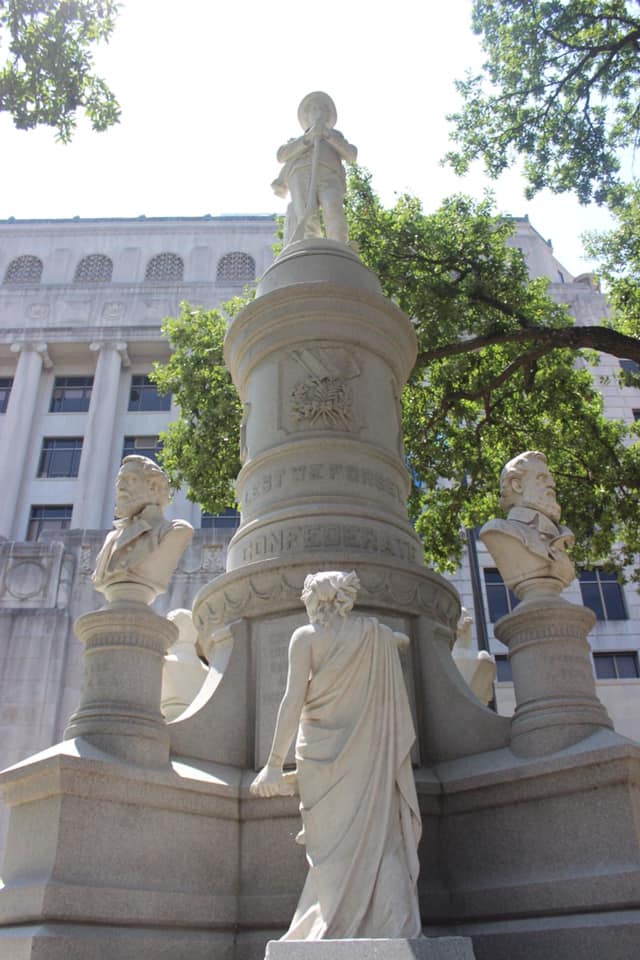
Here in Caddo Parish, in northwest Louisiana, our huge Confederate monument has been enclosed in a giant plywood box in front of the courthouse for a couple of years now as local politicians attempt to find someone to move it without destroying it to a “less offensive” site. The monument belongs to the United Daughters of the Confederacy and therefore can not be just destroyed. After years of litigation and debate, the city is on the hook to pay for moving it and they must do so without damaging it.

The final cost for this process is about $800,000.

Now, what better way could we spend that money around here, in a city that is short over one hundred police officers, where we have daily shootings, and our murder rate is record breaking each year? In a city where restaurants can’t open because workers don’t show up? Where potholes are large enough to plant trees and downtown is a wasteland inhabited only by the homeless?

Perhaps moving the monument will finally solve all this. You think?

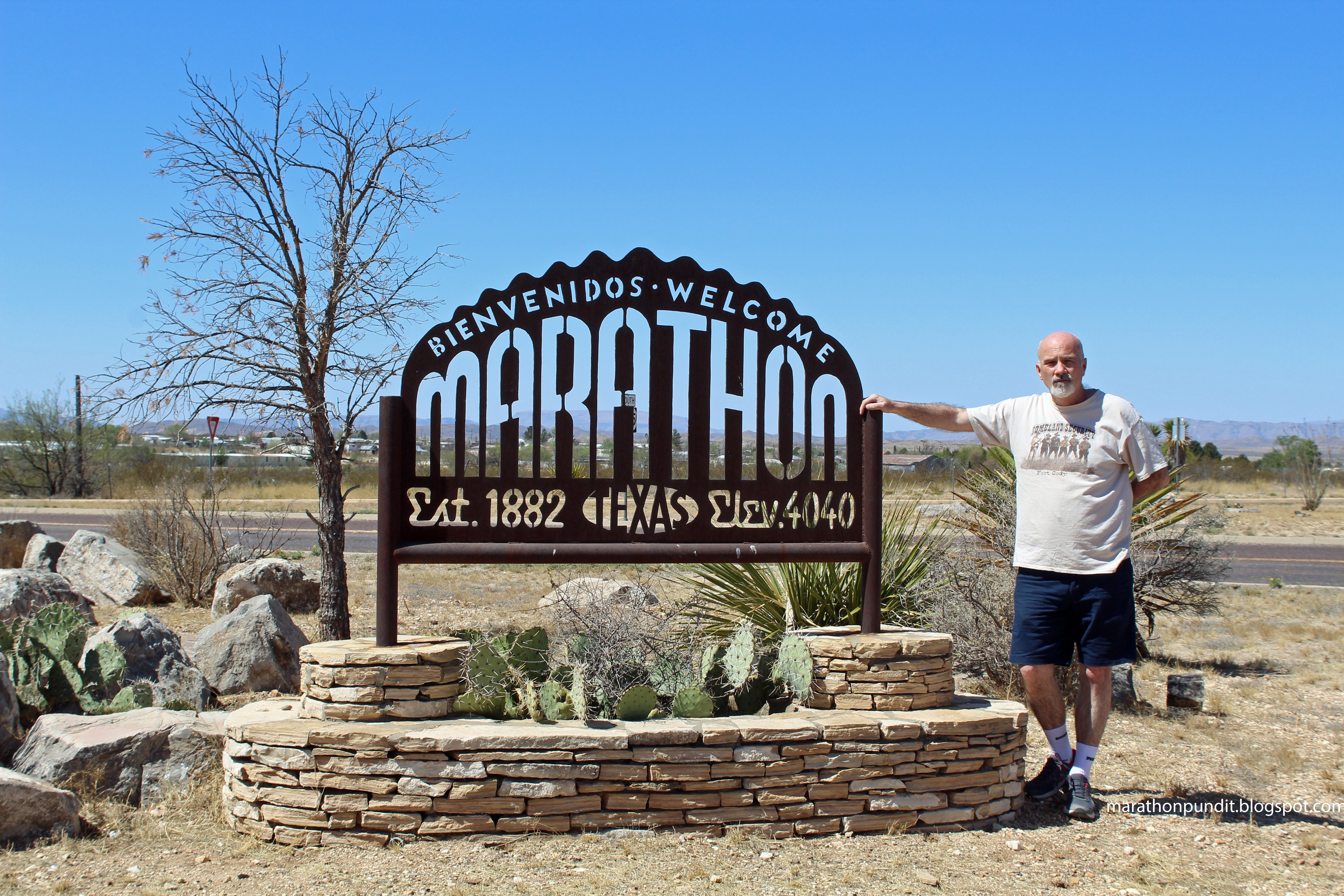
Blogger in Marathon, Texas.

By John Ruberry

“There’s no law west of Dodge and no God west of the Pecos.”
James Pepper (Ben Johnson) in Chisum.

“The devil in hell, we’re told was chained
A thousand years he there remained
He neither complain nor did he groan
But was determined to start a hell of his own

Where he could torment the souls of men
Without being chained in a prison pen
So he asked the Lord if he had on hand
Anything left when he made this land

The Lord said yes, there’s a plenty on hand
But I left it down by the Rio Grande
The fact is ol’ boy, the stuff is so poor I don’t think you could use it as the hell anymore

But the devil went down to look at the truck
For after lookin’ that over carefully and well
He said this place is too dry for hell
But in order to get it off his hands

The Lord promised the devil to water the land
So trade was closed and deed was given
And the Lord went back to his home in heaven.”
Johnny Cash, Mean As Hell.

Earlier this month Mrs. Marathon Pundit and I spent ten days in Texas, mostly West Texas. And yes, there is law there and there is a God west of the Pecos too.

I covered my economic and political observations of our Texas trip, including what I noticed in the boom towns on the Permian Basin, Midland and Odessa, in a post at Da Tech Guy that is available here. 

Our first stop on note was on the oil producing basin, Monahans Sandhills State Park, where we found the type of dunes you’ll encounter on the Sahara. 

Our first West Texas overnight stop was west of the Pecos, in Fort Stockton, home of what was once the World’s Largest Roadrunner, Paisano Pete.

Then of course we had to visit Marathon, after all, I am the Marathon Pundit. Parts of a sadly overlooked movie, Paris, Texas, were filmed there.

Then it was on to Terlingua, a former mercury mining settlement, turned ghost town, which is now the closest thing to a tourist gateway town to our main destination, Big Bend National Park, where you will discover desert, mountains, and lots of thorns, Cash discusses “thorns” later in his spoken word Mean As Hell piece that I excerpted above.

Big Bend was our main destination for this trip, a gorgeous but little-visited national park because of its isolation. Perched on the border with Mexico on the Rio Grande, it is a seven-hour drive from Dallas and a five-hour drive from San Antonio.

To the west of the national park is Big Bend Ranch State Park, Texas’ largest state park, where we kayaked and spent our last day in the Big Bend region. It’s a beautiful park too and well worth at least a day of your time.

The biggest dud of the trip was our attempt to witness the Marfa Lights. Well, we were in Marfa, where much of the George Stevens’ classic Giant was filmed, and the lights, which some people compare to the will o’ the wisp, were not to be found, as is usually the situation every night, despite a viewing stand. Marfa is a leftist outpost where we encountered a human thorn. When picking up a pizza, Mrs. Marathon Pundit was scolded by a cashier in because she was not wearing a mask. In Texas! But my wife held her sandy ground. 

On Easter Sunday it was on to pentagon-shaped Jeff Davis County; yes, it’s named for Jefferson Davis, the president of the confederacy, where we toured historic Fort Davis, a frontier fort that seems to be a time capsule from a John Ford western movie. And we drove on the Davis Mountains Scenic Loop, among the sites of worth there is the McDonald Observatory.

On our way back to Dallas-Fort Worth, we met a Facebook friend in Sweetwater. 

The next day we were back in the Chicago area, the home of grifters, high taxes, and high crime. 

And many human thorns.

Related post:

Texas is success and Illinois is failure.

John Ruberry regularly blogs at Marathon Pundit.