

Posts Tagged ‘john ruberry’

By John Ruberry

For the second straight post at Da Tech Guy, I’m writing about crime in Chicago.

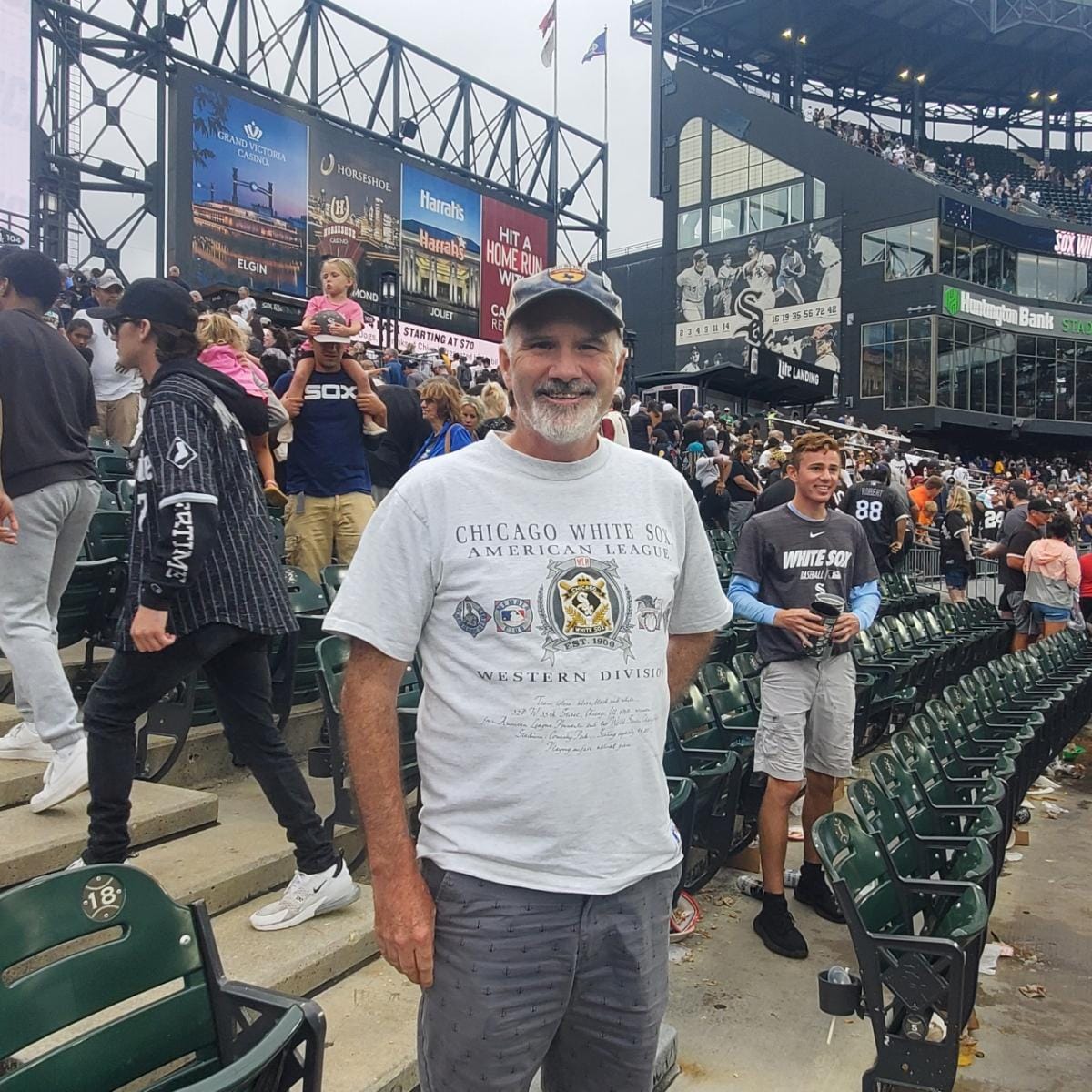
Outside of the Oakland Athletics, who are on pace to lose over 110 games and may be headed to Las Vegas next season, no MLB team has had a worse season than the Chicago White Sox. 

Predicted to finish around the .500 mark–which is where they finished up, exactly, in 2022–the South Siders never recovered from an April 10-game losing streak. 

The Sox on are pace to lose 100 game this year, which is how many they lost in 2018. That season, the White Sox unloaded several veteran players, kicking off a rebuild project with the goal of bringing the World Series championship back to the South Side for the first time since 2005. That rebuild brought the Sox to the playoffs in 2020 and 2021, but they won only two playoff games–losing five.

Another teardown occurred this July, the White Sox are in rebuild mode again.

August has been even worse for the Sox. Longtime team owner, Jerry Reinsdorf, known to be loyal to a fault with the front office staff of the White Sox and the Chicago Bulls–Reinsdorf owns that team too–uncharacteristically fired the top two men in the White Sox front office, Rick Hahn and Kenny Williams. A couple of days later, news broke that the White Sox, a charter member of the American League, might move out of its current stadium, the state-owned Guaranteed Rate Field, its home since 1991, to elsewhere in Chicago, or perhaps to the suburbs or even Nashville. The Sox have six years left on their lease at Guaranteed Rate Field. 

On Friday night, in a game where the Sox were punished 12-4 against those otherwise awful Athletics, a female fan in the left field bleachers was shot in the abdomen, another woman was grazed by a bullet. 

A move to the suburbs–perhaps joining the Chicago Bears in Arlington Heights–or to Tennessee, probably is more attractive now more than ever for Reinsdorf.

The woman who was shot Friday night is in fair condition, the fan who was grazed by the bullet declined medical care.

According to the quite reliable CWB Chicago, police officials are exploring the possibility that the bullet that wounded the woman may have been fired from a mile away. A gunshot detection system detected gunfire a mile southeast of Guaranteed Rate Field–in the Bronzeville neighborhood. The White Sox and the CPD, in several statements, have said that the shooting was not part of any altercation inside the ballpark.

If CWB Chicago is correct, the Sox and the city of Chicago still have a big problem. And there is an historic precedent that bodes poorly for professional baseball on Chicago’s South Side.

The rise in criminality since 2020 has been the dominant news story in Chicago, despite subtle attempts by the mainstream media to minimize it. Headlines routinely speak of people “injured” in shootings, rather than using the correct verb, which is “wounded.” The first Chicago Police Department statement on the Guaranteed Rate gunshots spoke of a “shooting incident,” rather than a “shooting.”

Another MLB “shooting incident,” actually a homicide, took place during batting practice before a July 4 doubleheader between the host New York Giants and the Brooklyn Dodgers at the Polo Grounds–in the Coogan’s Bluff area of upper Manhattan in 1950. The post World War II decline of New York was underway, although the city was years away from bottoming out. The way NYC’s fictional doppelganger, Gotham City, was portrayed in the Joker movie is a pretty accurate portrayal of what New York was destined to become.

A teenager, in a twisted way to celebrate the Fourth of July, fired a gun from the roof of an apartment building a half-mile away from the Polo Grounds. A fan sitting in the upper deck, Bernard “Barney” Doyle, was instantly killed by the stray bullet. A horrifying photograph of Doyle slumped over, dead of course, was on the front page of the New York Daily News the next day. That pic probably gave New Yorkers nightmares for years.

The Giants struggled at the gate in the 1950s. Despite winning the World Series in 1954, only 1.1 million fans crossed the Polo Grounds turnstiles that season. In their last two seasons at the Polo Grounds, only the pathetic Washington Senator’s had worse attendance. City Journal’s Clark Whelton, writing about the Doyle killing in 2018, claims the crime was “quickly forgotten.” I’m not so sure. But Whelton did add of the team’s owner, Horace Stoneham, that he was “said to have brooded for years about Doyle’s strange demise and the run-down buildings on Coogan’s Bluff.”

In 1958, the Giants and Dodgers abandoned New York for California. When they arrived, there were plenty of Giants and Dodgers fans who had moved out to the Golden State before them.

As our day jobs wind down, Mrs. Marathon Pundit and I are eyeing our exit from crime-ridden, crumbling, corrupt, and tax-greedy Illinois. Tennesse is at the top of our list for our next, and likely last, home. Both of us watched Joker for the first time this month. We compared Gotham City to today’s Chicago.

Why should we stay here?

Wouldn’t it be great if we, as Tennessee residents, were there to welcome the White Sox to Nashville?

UPDATE August 28, 2023, 7:15pm EDT:

Thank you to Dan Proft of WIND-AM Chicago. He, along with Amy Jacobson, co-host Chicago’s Morning Answer–a show I Iisten to, either over the air, or by way of the podcast, nearly every weekday–for mentioning this post on the air today. Look for Proft’s take around the 9 minute mark.

Also, here’s an update, and I have a strong feeling there will be more than one for this blog entry. Chicago’s interim police superintendant, Fred Waller, in a press conference this afternoon, discussed what his public affairs callously called a “a shooting incident” on Friday night. It was a shooting. “We’re dispelling a lot of things,” Waller said. As for where the bullets originated, he added that “coming from outside [Guaranteed Rate Field] is something we’ve almost completely dispelled.”

Still, fans who have bought tickets to a Sox game, or are considering doing so, probably have a lot on their minds now, to say the least.

UPDATE August 29, 2023 4:20pm EDT:

This story keeps getting stranger. There was online chatter that one of the women who was shot had sneaked the gun inside Guaranteed Rate Field beneath her belly rolls. I mean, what kind of people make up stuff like that?

Well, they may not have to do so.

Here’s what longtime Chicago sports reporter, Peggy Kusinski just tweeted:

“As I reported on @ESPN1000 just now… the shooting at Guaranteed Rate Field during a #WhiteSox game was indeed an accidental discharge by one of the women “grazed” by the bullet. She reportedly snuck the gun in past metal detectors hiding it in the folds of her belly fat.”

ESPN 1000 AM is the White Sox flagship radio station. It’s a credible source and Kusinski is a solid journalist.

If true, this news is a black mark for the White Sox fan base. What type of person brings a handgun to a baseball game? On the other hand, after the game, in a heavily hyped promotion, Vanilla Ice was to be the headliner of a “90s Night” concert. Were the women there for the Sox-Athletics game or for the postgame show? The White Sox cancelled the gig due to what they called “technical difficulties.” They lied. Shame on the White Sox. Police officers wanted to keep stadium lights on to look for evidence.

And how does a gun detection system miss a firearm hidden in belly rolls?

And what about the Chicago Police Department? Interim superintendent Waller said in a Monday press conference, “At one point in time it was requested as a precaution” to cancel the game. But the game played on. Who made that call to continue? The White Sox? The police? Mayor Brandon Johnson? The women who were shot are said to be teachers. Johnson is a product of the Chicago Teachers Union, for whom he was a longtime organizer, and Johnson is a former CPS teacher. Johnson’s political career is a creation of the CTU.

Without a doubt, I’ll have at least one more update.

Update August 29, 2023, 9:15pm EDT:

Second City Cop is hinting about the “graze wound” woman, that the injury may have been a power burn, is a Chicago Public Schools teacher.

UPDATE: A CPS teacher had the gun?

UPDATE: A CPS teacher with a suburban home address?

John Ruberry, a lifetime Chicago White Sox fan, blogs five miles north of Chicago at Marathon Pundit.

By John Ruberry

Imagine if instead of serving as the governor of Illinois, Democrat J.B. Pritzker is an Uber driver. And Pritzker’s car is loaded with problems. The check engine, oil pressure, ABS, and TPMS warning lights are on. 

What would be Pritzker’s fix? 

Uber J.B. would simply ignore the problems by having his car professionally detailed, so his vehicle looks good, then he’d place electrical tape over the locations on the dashboard where each warning light is flashing. 

Pritzker governs America’s sixth most populous state the same way–by ignoring the metaphorical warning lights facing the Land of Lincoln. Here at Da Tech Guy for years I’ve been railing Illinois’ big three problems–which are intertwined–and they are a massively underfunded public pension system, widespread government corruption, and declining population

Now there is a fourth one, rampant theft and violent crime. Illinois’ largest city, Chicago, is still suffering from the highest murder rates since the 1990s. Carjackings are skyrocketing–in 2013 there were 344 reporting carjackings, last year the total was 1,674. Because so many shoplifting incidents aren’t reported, I don’t trust any theft figures. But the anecdotal evidence is alarming–shoplifting is soaring. 

For years, liberals have, often blaming “corporate greed,” decried the many food deserts in big cities–and rural areas too. A food desert, if you are unfamiliar with the term, is an area without a nearby supermarket selling inexpensive groceries. Chicago, after some pushback from left-wing alderman because it is non-union, didn’t see its first Walmart open until 2006. Eventually there were eight Walmarts in Chicago, but shortly after the election of a far-left Democrat, Brandon Johnson, as mayor, Walmart announced it was closing four of those big box stores. In the press release explaining the reason for the shuttering of those Chicago stores, Walmart revealed “that collectively our Chicago stores have not been profitable since we opened the first one nearly 17 years ago – these stores lose tens of millions of dollars a year, and their annual losses nearly doubled in just the last five years.” 

Back to Pritzker.

Last week, the governor announced the $20 million Illinois Grocery Initiative to reverse the growth of food deserts, which includes tax rebates and unnamed incentives. 

Also last week, multiple media outlets reported that Home Depot, Target, and yes, Walmart, have decried the drastic rise of “shrink,” that is, shoplifting, at its stores. Walmart’s CEO, John Furner, pointed his finger in the right direction about “shrink.” 

“It’ll take communities stepping up and enforcing the law to be able to – to bring this issue under control,” Furner said.

While local law enforcement is not the responsibility of Illinois’ governor, Pritzker has never condemned Kim Foxx, the Soros-funded so-called prosecutor in Cook County. Her social worker approach to law enforcement–which Brandon Johnson also favors–is partly responsible for Chicago’s crime wave.

As for Pritzker, thru his ridiculously misnamed SAFE-T Act, the abolishment of cash bail–little or no bail is the current de facto practice of Foxx–will take effect statewide in less than a month. 

Here’s my fix for the food desert problem: Hire more cops, have them arrest shoplifters and the criminals who fence their swag, prosecute them in a fair trial, and imprison them if found guilty for a few years. Such a surefire strategy will not only to protect the public and retailers, but it will serve as a deterrent to people considering a life of crime. 

Simple and easy.

Illinois’ mainstream media needs to get on board and accurately report on food deserts. In a New York Times-length study by the Chicago Sun-Times and Chicago’s NPR affiliate from earlier this month, only one sentence mentioned the real problem, albeit gently. “Grocery operators have pointed to crime and homelessness as reasons they’ve needed to invest more in security, driving up costs,” they reported, “according to Amanda Lai, a Chicago director of food industry practice for the consulting firm McMillan Doolittle.”

Yep, one sentence.

Meanwhile, with the warning lights flashing, J.B. Pritzker continues to drive Illinois into the ground, while pissing away $20 million to fight food deserts. In the short term there is no hope for a repeal of the SAFE-T Act, but that’s part of the cure that Illinois needs.

As Ronald Reagan said, “Government does not solve problems; it subsidizes them.”

John Ruberry regularly blogs at Marathon Pundit.

By John Ruberry

Last week one of music’s giants, Robbie Robertson, the lead guitarist and the principle songwriter for The Band, died at the age of 80.

In this post I’ll rank their studio albums.

Much like Fleetwood Mac, The Band, when you reach back to their beginnings in Toronto, is one of the few musical acts that, like a nation, have a historical narrative.

Arkansas rockabilly singer Ronnie Hawkins found success with his backup band, the Hawks, in Canada in the lat 1950s. But one by one, each Hawk, except for drummer Levon Helm, got homesick and returned to America. The first Canadian to join the Hawks was Robertson, who was quickly supplemented by bassist Rick Danko, pianist Richard Manuel, and organist Garth Hudson, but all of the members of the band were multi-instrumentalists, particularly Hudson. The Band had three vocalists, Helm, Danko, and Manuel. Often, particularly on their first two albums, they would interchange leads—and beautifully harmonize.

The Hawks split from Hawkins in 1963, and under different names, performed as a first-rate bar band until becoming Bob Dylan’s concert backing band. Helm left during that tour. 

After Dylan was injured in a motorcycle accident in 1966, with the Hawks, he recorded new material that was released in 1975 as The Basement Tapes. Helm rejoined in 1967, after the newly-dubbed The Band was signed Capitol Records. 

After many ups and a few downs, The Band split after their final concert–with many guest performers–which was lovingly documented in the Martin Scorsese-directed movie, The Last Waltz. The soundtrack album is also an essential work of art.

In the 1980s, without Robertson, The Band reformed, went on tour, with the intention of returning to the recording studio. But Manuel committed suicide in 1986. The remaining Band members eventually recorded three albums in the 1990s, consisting mostly of covers, but the rump Band broke up for good after Danko’s death in 1999. Helm, who had been feuding with Robertson for years over songwriting credits and money in general, died in 2012. Hawkins passed away last year.

Hudson is the only surviving member of The Band.

And now let’s start the rundown of The Band’s albums. Yes, the ones with the original lineup.

Islands (1977): There are some great outtakes albums, The Who’s Odds and Sods and Elvis Costello’s Taking Liberties come to mind. Islands is like most of the others, where listeners can say to themselves, “I can see why these songs were left off of previous albums.” Because The Last Waltz soundtrack was promised to another label, Islands was compiled to satisfy The Band’s contractual obligation to Capitol Records.  It contains a curiosity, “Knockin’ Lost John,” the only Band song where Roberston sings lead. Next…

Cahoots (1971): Drugs had taken their toll on The Band by this time, and Robertson’s songs weren’t very good here. Cahoots starts off well enough, with “Life Is a Carnival,” but immediately sinks into them mud. Not even one of my favorites, Van Morrison, who co-wrote with Robertson “4% Pantomime,” which is about two drunk musicians in a bar complaining about life on the road, could save Cahoots. Listening to this album is about as enjoyable as sitting next to two drunk musicians in a bar as they…well, you get it. On the upside, the album artwork is gorgeous, and one of Morrison’s nicknames, the Belfast Cowboy, comes from “4% Pantomime.”

Moondog Matinee (1973): Two paragraphs ago Costello, who counts The Band as one of his major influences, received a compliment, now I’m evening the score. In 1995, Costello recorded an album of mostly obscure R&B covers, Kojak Variety. It’s a terrible record. Moondog Matinee, which also contains many lesser-known R&B tunes, is better than that. Predictably, it’s the better-known songs that The Band chose, including “I’m Ready,” “Mystery Train,” and “Promised Land,” which click. 

Yes, I do love The Band. Really, I do.

Now comes the good stuff.

Stage Fright (1970): While Cahoots understandably opens with its best song, on Stage Fright, the collection’s worst two songs, “Strawberry Wine” and “Sleeping” are the opening tracks. The first song was co-written by Helm with Robertson, and Manuel co-wrote the second one with Robbie. With the exception of one other tune, all of the rest of the songs were written solely by Robertson, including these Band standards, the title track, as well as “The Shape I’m In,” and “The W.S. Walcott Medicine Show.” More rock and R&B oriented than The Band’s first two albums, Stage Fright is also remembered for Todd Rundgren’s role as engineer.

Northern Lights-Southern Cross (1975): The Band, with their first studio album in four years, came back in a big way here. “Acadian Driftwood,” a musical cousin of sorts of “The Night They Drove Old Dixie Down,” recounts the ethnic cleansing of French speakers in the 1750s from Nova Scotia by the British. At the time, Robertson was married to a French-Canadian, tensions between Anglophone and Francophone Canada were at a peak then. Like the early days of The Band, Helm, Manuel, and Danko harmonize and swap lead verses. “Ophelia,” “Jupiter Hollow,” and “It Makes No Difference” are the other great tracks on this collection. Every song on Northern Lights-Southern Cross is a Robertson composition.

Music from Big Pink (1968): One of the best debut albums ever, and not just because of the great songs, such as “Chest Fever,” “The Weight,” and the Dylan-penned “I Shall Be Released.” No one knew it at the time, but Music from Big Pink was the first album of the Americana genre, or if you prefer, roots music. The album artwork featured a Dylan painting. “The Weight” is the ultimate Band song, Helm and Danko share lead vocals and Manuel adds perfect harmonies. Dylan cowrote, with Manuel and Danko respectively, “Tears of Rage” and “This Wheel’s on Fire.”

The Band (1969): Most bands with a great debut album effort suffer from a sophomore jinx. Not The Band, with their self-titled follow-up, also known as the Brown Album. There are no Dylan songs this time, but Robertson filled that vacuum with works that are now Americana classics, such as aforementioned “The Night They Drove Old Dixie Down,” as well as “Rag Mama Rag,” and “Up on Cripple Creek.” Sometimes it’s hard to ascertain why The Band was so great and so unique. “Jawbone,” a Robertson and Manuel collaboration, offers a clue. It was written in a 6/4 time signature, a rarity in popular music.

And so was Robbie Robertson, a rarity. Rest in peace.

John Ruberry regularly blogs at Marathon Pundit.

By John Ruberry

“There it is, dear,” I whispered to Mrs. Marathon Pundit last Sunday during the seemingly endless parade of movie trailers as we awaited Oppenheimer (great film, by the way), at AMC Village Crossing in Skokie, Illinois last Sunday, “that is Disney’s next flop.” 

“That” was Haunted Mansion, which is yet another movie based on a Disney theme park attraction. Disneyland, Walt Disney World, and Tokyo Disneyland all have Haunted Mansions. The last time I was visited Disney World, Little Marathon Pundit and I went on the Haunted Mansion ride, way back in 2001, neither of us were impressed. 

And do you know what? Barring an unexpected flocking to the Haunted Mansion movie turnstiles, I have already been proven right about the film, which stars LaKeith Stanfield Tiffany Haddish, and Owen Wilson, and it includes appearances by Jamie Lee Curtis and Danny DeVito.

Disclosure: Other than the below trailer, I haven’t seen Haunted Mansion, nor the 2003 Disney film, The Haunted Mansion, which starred Eddie Murphy. Nor do I ever intend to see either. However, I might take a look at Muppets Haunted Mansion, a Disney Halloween television special which first aired in 2021.

You know when a movie is in trouble when a two-minute-long trailer can’t make it look appealing.

The Murphy vehicle made money, but it was critically panned. The new Haunted Mansion is currently receiving a 41 percent Tomatometer at Rotten Tomatoes. 

Here is the opening sentence of Manohla Dargis’ New York Times review: “There is a mansion, it is haunted, boo, blah, the end.”

Disney’s woke remake of Hans Christian Andersen’s The Little Mermaid, which featured an African American Ariel, at best will make a modest profit for the studio. Other recent House of Mouse family-oriented flops include Elemental, Strange World, and Lightyear. The latter includes a same-sex kissing scene.

Back to the new Haunted Mansion: Its director, Justin Simien, who is African American makes note of the setting of the movie, New Orleans. “I felt it was really important for the lead to be Black, because this is set in New Orleans and it’s an 85% Black town,” Simien told Yahoo Entertainment. Adding, “I wanted to make [the movie] as Black as I can because that’s New Orleans.” Oh, while New Orleans has been a majority African American town for decades, it is currently has roughly a sixty-percent Black population. 

Okay, Simien and Disney can make any kind of movie it wants. But instead of focusing on a movie that is “as Black as I can,” why not, instead produce a movie with a compelling storyline and great performances from actors, regardless of their race? While it’s impossible for any entertainment endeavor to please everyone, even with family-oriented projects, why not try to attract as many people as possible?

In defense of New Orleans, it is widely considered to be the most haunted city in America–again, regardless of race, so it is a good choice for the setting of Haunted Mansion.

Does Disney want to keep making bombs? It appears that it does.

Next year, in yet another remake, a live action version of Snow White will hit theaters. In the Grimm Brothers tale, the authors make it clear that Snow White had “skin white as snow, lips red as blood, and hair black as ebony.” A Hispanic woman will play the lead in the 2024 film. As for her seven dwarves, they’ve been recast with a multi-racial group of six men of average height–with just one dwarf to aid her in her struggles, which presumably will include battling the patriarchy, represented by the Huntsman, and maybe every once in a while, the Evil Queen. And in the new Snow White, will we learn why the Queen turned evil? I’m predicting the patriarchy will be at fault. Oh, don’t forget that Huntsman.

Walt Disney had many gifts, and a crucial one that made his studio a success is that he knew time-tested stories were also solid material for movies, which is why Walt made animated versions of classic fairy tales, including Sleeping Beauty, Cinderella, and of course, Snow White and the Seven Dwarves. And Walt didn’t rehash the same movies.

Contemporary Disney movies are diverse in casting, but not diverse in regard to imagination.

What’s next, besides a new Snow White, for Disney’s movie wing?

Back to Dargis’ New York Times review:

She looked back to NY Times critic Elvis Mitchell’s rundown of the Murphy Haunted Mansion, where he wrote that it was “only a matter of time before Parking Lot: The Movie and People-Mover: The Motion Picture” would hit the local cineplex. Well, that hasn’t happened. Yet.

On the other hand, there are over 150 Grimm Brothers tales, most of which haven’t been made into feature films.

Oh, one more idiotic thing about the new Haunted Mansion. Why was it released in July, instead of October? You know, when Halloween is? I know what stupid looks like–it has big mouse ears.

Meanwhile, the Sound of Freedom, made with a modest budget, is a financial success.

John Ruberry regularly blogs at Marathon Pundit.