Another company, this time the CMT Network, finds itself in trouble by angering its base by going woke. Now both are facing boycotts. The Bud Light one has been devastating for what until recently was America’s best-selling beer.
Last week, CMT, whose core audience comprises of country music listeners, pulled the video for Jason Aldean’s “Try That in a Small Town.” The song, which was released in May with no controversy, decries the pro-criminal sentiments celebrated in big cities, like New York City, where CMT is headquartered, and it shows BLM and Antifa riot news clips as Aldean croons.
That was too much for CMT.
Country music fans lean right. I am one of them, although I favor the Americana genre over mainstream country. Country listeners are likely to be the men and women who repair your car, service your air conditioner, or build your home. They may not have Ivy League degrees like Bud Light’s vice president of marketing, the on-leave Alissa Heinerscheid, but these “deplorables” are not dopes. And they aren’t Manhattan-style know-it-alls.
I imagine, until the Heinerschied-led marketing debacle with trans influencer Dylan Mulvaney, many country music fans drank Bud Light.
As of this writing on the evening of July 23, Aldean’s “Try That in a Small Town” is the number one song on iTunes and it has been viewed 15 million times on YouTube.
For Friday’s CMT Music 12 Pack Countdown, Aldean’s massive hit was not among the dozens of songs nominated for the final cut.
Clearly, CMT is as out of touch with its consumers as much as Anheuser-Busch and Bud Light are.
CMT has Nashville offices but as I mentioned earlier, it is based in New York. Anheuser-Busch has its headquarters where it was founded 171 years ago, in St. Louis, although it is now owned by Belgian firm InBev.
Would things be different now for Anheuser-Busch if Heinerscheid and her marketing geniuses were instead based in St. Louis? And while no one is coming forward from CMT claiming credit for pushing the “kill” button on Aldean’s video, my guess is that the decision came from someone at their New York headquarters.
The anger that brought forth the Bud Light and CMT boycotts are byproducts of elites who are isolated from the consumers they are supposed to be experts on.
Can these brilliant minds do their jobs from places like St. Louis? Nashville? Of course, they can. As they can in Cincinnati, Billings, and Oklahoma City. You know, medium-sized cities. To be sure, they’re not Aldean-favored small towns, but these other cities are filled with less sophisticated types than the “betters” that you find in New York City.
Oh, there are telephones, computer lines in those smaller cities. And there is this thing called Zoom.
However, Bud Light did farm out the Mulvaney campaign to an advertising agency thousands of miles from Manhattan.
John Ruberry, who regularly blogs at Marathon Pundit, was a bachelor’s degree in advertising from the University of Illinois at Urbana-Champaign. He’s pictured here at Penn Station (correction Grand Central Station) in New York.
Three days ago, the Marathon Pundit family saw the revival of The Who’s Tommy at Chicago’s Goodman Theatre.
The original The Who’s Tommy was directed by Des McAnuff, who collaborated with Pete Townshend for the musical. Townshend, the Who’s lead guitarist wrote most of the songs for the Tommy rock opera. The original theatrical production was first performed in 1993, and that was directed, as is the Goodman Theatre production, by McAnuff.
While not the first rock opera, most rock scholars give that honor to Pretty Things’ S.F. Sorrow,Tommy was a commercial and critical success for the Who; they had struggled to gain attention in America, as did some of the other bands who emerged at the tail end of the British Invasion, such as Small Faces and the Move.
The plot of Tommy, the rock opera, is quite clunky. The atmosphere of Tommy is of the late 1960s, and it is a reaction to the guru culture of that strange time, which was filled with charlatans such as Timothy Leary, the Maharishi Mahesh Yogi, and much more darkly, Charles Manson. A better guru was Meher Baba–Pete Townshend remains a follower of his teachings.
However, inexplicably, Townshend set the story of Tommy to begin shortly after the end of World War I.
Tommy Walker becomes deaf and blind at around age four after he witnesses his father, who his mother believed was killed in the Great War, shooting her lover to death. Tommy’s parents look for a cure for their son, those attempts include bringing him to a “gypsy,” the Acid Queen, who fails to cure Tommy with LSD. Two relatives abuse him, Uncle Ernie, sexually, and Cousin Kevin, who tortures him. Tommy, despite his deafness and blindness, becomes a pinball champion and a celebrity. Tommy’s mother notices that her son often stares intently at mirrors. She smashes a mirror during one such gaze, which cures Tommy. He then becomes a cult leader, but eventually his followers reject him. Finally, Tommy realizes that he isn’t special, but everyone else is, as he sings in “We’re Not Gonna Take It.”
Listening to you I get the music Gazing at you, I get the heat Following you I climb the mountains I get excitement at your feet.
But it was the songs, despite some dull filler such as “Underature,” that made the Tommy rock opera a smash. And the Goodman Theatre makes the most of the best-known numbers–along with some stupendous dancing–including “I’m Free” and of course “Pinball Wizard,” but also lesser-known tunes, such as “Amazing Journey” and “Sensation.” With a church backdrop, “Christmas” shines.
For those Who purists out there, beware, some of the lyrics of the songs have been altered to fit the adapted narrative of the musical.
There are many stand-out performances, foremost by Ali Louis Bourzgui as an adult Tommy, Alison Luff as Mrs. Walker, and Adam Jacobs as Captain Walker. The supporting cast is also superb, particularly Christina Sajous as the Acid Queen and Bobby Conte as Cousin Kevin. There are no casting mistakes here, unlike Ken Russell’s over-the-top Tommy film from 1975, which, like The Who’s Tommy, begins the story right after World War II. While Russell got it right with Who lead singer Roger Daltrey as Tommy, Tina Turner as the Acid Queen, Elton John as the Pinball Wizard, and Ann-Margaret as Mrs. Walker, there were some serious casting disasters in that move, including Eric Clapton (not an actor), Jack Nicholson (not a singer), and Oliver Reed, a drunk who played a drunk, but on the flipside, Reed couldn’t sing either.
Back to The Who’s Tommy at the Goodman: Not to be overlooked, the lighting, the costumes, the sparse but effective scenery, and the computer graphics are dazzling.
The play ends in an undefined, presumably fascist, future, with Cousin Kevin looking a bit like Joseph Goebbels. And with an attack, somewhat understated, on today’s celebrity and social media influencer culture.
Last week, Bourzgui explained to the New York Times his interpretation of his Tommy portrayal, “He gets filled up by his followers,” adding “He keeps feeding off that, getting more gluttonous with power, until he realizes they’re following him because they want to feed off his trauma.”
The key word, in the 21st century context, is “followers.”
On the downside, a couple of songs, both penned by Who bassist John Entwistle and performed in succession, fall flat, “Cousin Kevin” and “Fiddle About.” In the latter, Uncle Ernie [John Ambrosino], sings about, well, I said what it is earlier. Both tunes are perfect times for a bathroom break, assuming you will be let back in before the end of first act. Mrs. Marathon Pundit dozed off during these tunes.
Townshend, since the release of the Tommy LP, said he was molested as a child. He was not charged after logging in a few times to a for-pay website that was advertising child pornography, stating at the time his motive to visit the site was “purely to see what was there” and that he was researching sexual abuse. In 2003, Townshend was placed on a sexual offenders registry for five years and he received a caution from the London Police. Townshend strongly denies every possessing child pornography. Citing those two sadistic Entwistle songs, Townshend said that he is too traumatized to ever perform Tommy again.
None of the other reviews of The Who’s Tommy I’ve read mentioned Townshend’s legal issues, but on the other hand, I paid for our tickets to this show.
Although not seen, the nine-piece band, led by Rick Fox, has some big shoes to fill by performing these songs–particularly those of Who drummer Keith Moon–is spectacular. I saw The Who in concert twice, in 1979 and 1980, with Kenney Jones on drums, Moon passed away in 1978. Entwistle died in 2002. Both of concerts were fantastic–and loud. My ears were ringing for days afterwards both times.
Yes, it was a Sunday matinee performance, but it was a geriatric audience, reminiscent of the crowd on the Lawrence Welk Show, in attendance for the Goodman of The Who’s Tommy that day. Earplugs were available for the “loud” music at the Goodman–which wasn’t that loud. Oh, have times ever changed.
The Who’s Tommy has been extended twice at the Goodman, some upcoming shows are sold out, the final Chicago performance is scheduled to be on August 6. The production is believed to be a dry-run for a return to Broadway, and presumably, a whole bunch of well-deserved Tony Award nominations.
“Most times you can’t hear ’em talk, other times you can All the same old clichés, is it woman, is it man? And you always seem outnumbered, so you don’t dare make a stand.” Bob Seger, “Turn the Page.”
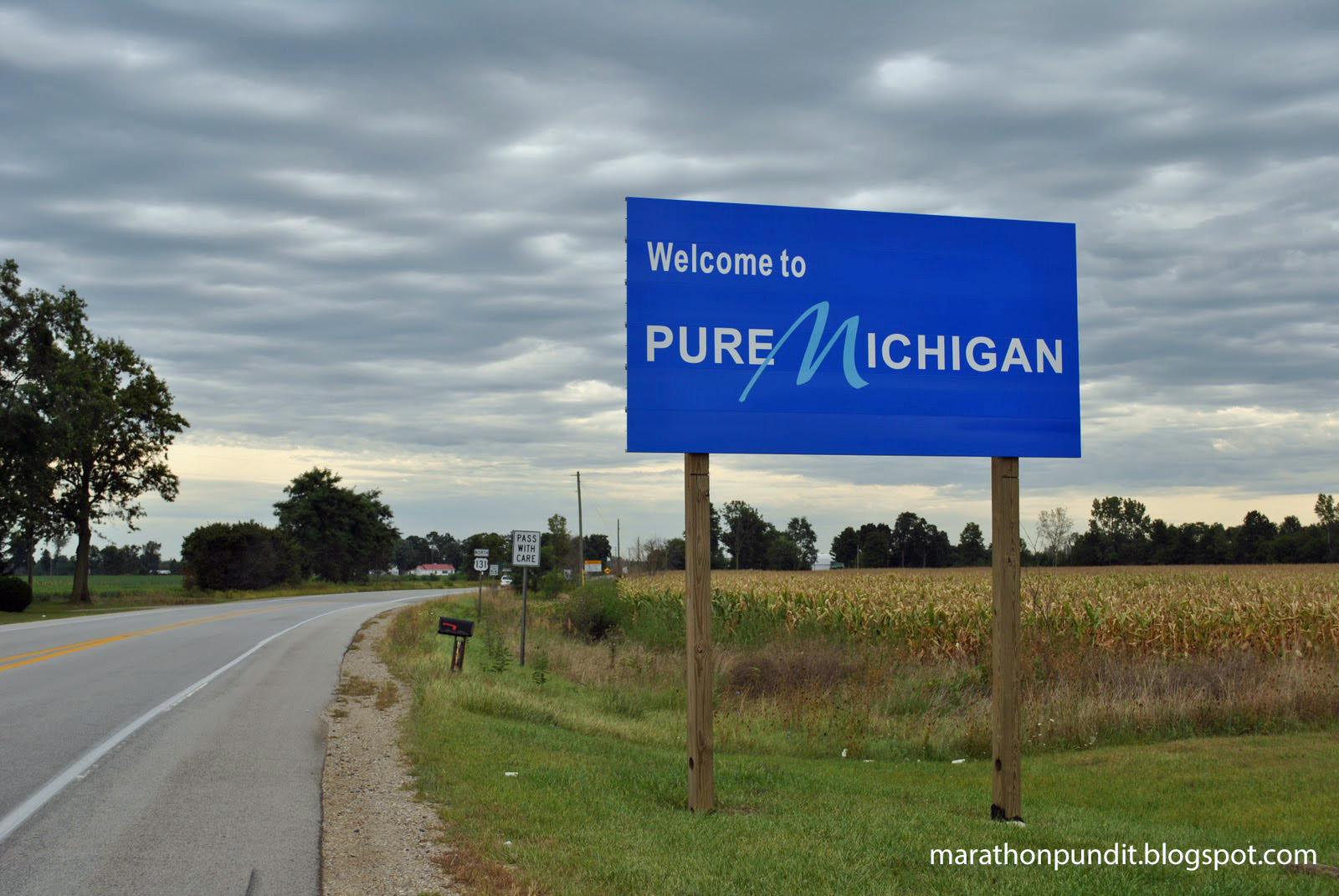
Those lyrics, from legendary Michigan rocker Bob Seger, may turn out to be prescient, because the Michigan House of Representatives, which has a Democrat majority, passed a bill in June that, among other things, will impose a hefty fine or imprisonment, if a person maliciously refuses to use another person’s preferred pronoun.
The bill, HB 4474, expands on a Michigan law that covers religion, race, ethnicity, and sexual orientation.
Newsweek noted that Dylan Mulvaney, a man who claims to be woman, said in a video a while back about people like me who misgender him, “I feel like that should be illegal, I don’t know. That’s just bad journalism.”
No, it’s not. Mulaney, an internet influencer who has done to Bud Light what Eric Idle’s S. Frog character did to Monty Python’s fictional Conquistador Coffee, is wrong, as he is on so many things, What I wrote in the previous paragraph is good journalism because it’s the truth. Sorry, wokesters, but men who “transition” into women do not have ovaries, do not have menstrual periods, and do not undergo menopause. Women who do the opposite do not have testicles, a prostate gland, or Y chromosomes. I could go on, but I don’t have to.
Some people need to simply follow the science.
Except, maybe soon in Michigan, if its Senate passes HB 4474 and Gov. Gretchen Whitmer, a Democrat, signs it into law, following the science and speaking out about it might get someone like me fined or worse.
In her Senate confirmation hearing, Justice Ketanji Brown Jackson could not–or in my opinion, would not–define what a woman is. But according to HealthyChildren.org, at around age two, toddlers know the difference between the two genders. Again, follow the science.
The headline of this blog post is colored red. How do I know? Because when I was at the age when I figured out what males and females are, my mother probably said something along these lines to me, “That color is red.” And that information was confirmed to me when I attended kindergarten.
Some things are that simple.
Well, it should be that simple. Transgendered people complain about being bullied. Well, bullying is wrong. I suppose Mulvaney considers it bullying when internet trolls visit his Instagram page and comments, “You’re a man.” Oh, a word for you trolls. Don’t you have anything better to do? Surely there is trash on a roadside near your home that needs to be collected.
On the flip side, in regard to gender, we are at a stage in America when someone says, “Dylan Mulvaney is a man” in mixed company–especially at work–it has to be spoken in whispered tones, sotto voce as the French say.
Being labeled a transphobe–phobe, by the way means irrational fear–can get many people in trouble on the job. Or maybe soon in Michigan, getting fined or being imprisoned. And it’s not an irrational fear to lose out on a promotion or getting fired for being deemed a transphobe.
I call that bullying.
As regular readers know, my wife was born in the Soviet Union, in Latvia. At school a number of decades ago, repeatedly, her teachers told her that Latvia, along with Estonia and Lithuania, voluntarily joined the USSR in 1940. Of course, that was a lie. Her parents knew it–and so did every adult in the Baltic States at that time. Yes, that includes the teachers. But my wife didn’t discover what really happened in 1940, beginning with learning of the Molotov-Ribbentrop Pact, until she reached adulthood.
During my wife’s childhood, adults in the Soviet Union were afraid of the repercussions of telling the truth. So my wife’s parents never discussed the USSR seizing the Baltic States with her until Mikhael Gorbachev was the Soviet leader.
In the New York Sun,Dean Karayanis, reminded me that Soviet citizens faced prison if they were caught spilling coffee on a picture of Joseph Stalin. Aleksandr Solzhenitsyn, the author of the Gulag Archipelago, spent eight years in the Gulags for criticizing Stalin in private letters, even though he took the precaution of using a codename for the dictator.
American society isn’t at that more frightening point yet. But Michigan just took a baby step in that direction.
Or maybe we are there. Remember that Seger song? “And you always seem outnumbered, so you don’t dare make a stand.” Well, I’m making one. Is anyone else with me?
Fortunately, the new Michigan “pronouns” bill will almost certainly be challenged in court on First Amendment grounds.
Which is another reason why I’m grateful for the 6-3 conservative majority on the US Supreme Court.
Blogger with a Soviet-made Volga sedan in Sece, Latvia. Behind the car is a newly-built tractor barn.
By John Ruberry
Late last month I traveled to Latvia, where Mrs. Marathon Pundit was born and raised, for the first time in 25 years. I had also visited with her in 1994.
I expected a different Latvia, and indeed that was the case.
First, a little history. A series of nations ruled Latvia, the last being czarist Russia, until 1918. The Bolsheviks recognized Latvian independence in 1920.
But along with neighboring Estonia and Lithuania, while most of the world was focused on Nazi Germany’s aggression in western Europe, Latvia was forcibly annexed by the Soviet Union in 1940. The Nazis attacked the USSR a year later, but the Soviets recaptured the Baltic States later in the war.
Three months before the collapse of the Soviet Union, the Evil Empire recognized the independence of the Baltic States.
When Latvia regained its independence, the population as just 52 percent Latvian. Russians, many of them brought to Latvia to replace Latvians deported to Siberia in the 1940s, made up about a third of the population in the last days of the Latvian SSR. Many of them quickly left after independence, but Russians still make about one-quarter of the population of Latvia. Riga, Latvia’s capital and largest city, has a Russian population of about 35 percent. Russians are a clear majority in Daugavpils, Latvia’s second city.
The Latvia I saw in the 1990s was poor, my guess is, without the abject poverty, economically speaking it was on the level of Mexico.
But in 2004, the Baltic States joined the European Union, also that year they became members of NATO.
Since then, it’s been full steam ahead for Latvia, notwithstanding the 2008-09 recession.
What I saw in Latvia in June was a prosperous European nation. Gone are the gray–literally, they were gray–retail stores. They have been replaced by colorful and brightly lit retail outlets. Many of these stores, as well as hotels, utilize English-language names. Instruction in English began in Latvian schools after independence was achieved. All Latvians under 35 speak pretty good English.
I’m a runner, and I was one of the few when I hit the roads for a workout. Now there are many running, or if you prefer, cycling trails.
During my first visits I saw many Russian-made cars on the Latvian streets and highways. My wife and I traveled hundreds of miles during my nine days there–she will be in Latvia for another week—and I saw just two Russian-made cars, both Ladas. I’m pictured with an old Volga above. That make was discontinued in 2010. Volkswagen, Audi, and BMW are the most popular cars in Latvia.
Mrs. Marathon Pundit and I spent a lot of time in rural communities. She grew up on a collective farm in Sece, which is pretty much at the center of Latvia. They grew an assortment of crops, mostly potatoes, beets, and cucumbers, and while driving thru Latvia in the 1990s, the look of the land betrayed that odd lot cultivation. While Latvia doesn’t look like Iowa–there are few cornfields and about half of Latvia is forested–it’s becoming a nation of mega-farms. Wheat, canola, oats, are the major crops. And potato growing is hanging on.
My wife attended her high school reunion in Sece, she was one of three in attendance from her graduating class of seventeen. One our hosts was another, and the third, almost certainly the wealthiest man in Sece, has been buying, one by one, parcels of land that were part of those old collective farms that were divided up after independence, in Sece, from people to old to tend to the soil, or who have no interest to do so.
The prosperous farmer is the owner of that Volga in the photograph.
The graduating class sizes of my wife’s old school is now roughly 10 students per year. Rural Latvia, just like rural America, is shrinking.
Only rubble remains of the farmhouse where my wife grew up. Thousands of Latvians can attest to the same situation.
Scattered throughout Latvia are the ugly white-brick buildings, poorly built, that are long-abandoned. “That used to the community creamery in Sece,” Mrs. Marathon Pundit said to me. “That used to be the tractor motor pool, the tractors parked next to them haven’t moved in years.” She could have said the same to me every dozen miles or so when we drove past similar structures. Nearly every one of these collective farm buildings have been long abandoned. They are miniature Pompeiis that were never buried, sad monuments to the failure of communism, an economic and political system that never should have been implemented. Sadly, after over a century of proven failure, there are still people falling for Marxist nonsense.
In the cities and the small towns, khrushchevka apartment buildings, known in the West as “commieblock” structures, are still omnipresent. Most of them utilize those same unpleasant white bricks.
And in the cities, especially Riga, you’ll find many abandoned buildings that were Soviet-era factories.
Yes, I know, we have abandoned buildings in our American cities. But Riga has many new buildings–beautiful ones. I’m particularly fond of the National Library of Latvia.
Yes, but what about Donald Trump?
Okay, that was an abrupt transition, but most Latvians don’t like him. With the war in Ukraine showing no sign of ending, and when I was in Latvia when the apparent Wagner Group attempted coup occurred, his name, and that of Vladimir Putin, was brought up many times.
Oh, Joe Biden is viewed in Lativa as an ineffective old man.
But wait, what about Trump?
To a person, Latvians are pissed off about Trump’s compliments of Putin. For instance, shortly after Russia invaded Ukraine, he called Putin’s move “genius” and “savvy.” I explained that Trump is running to regain the White House, and the former president, dating back to his career as a real estate mogul, is the consummate negotiator, Trump, in my opinion, could be simply playing mind games with Putin. He used a similar strategy with Kim Jong Un. Trump’s flattery is analogous, I tried to reason, to entering a store and being complimented on the shirt I am wearing by a flirtatious saleswoman. Suddenly, my guard is dropped. True, Putin is likely made of tougher stuff than I am. I think.
Only the Latvians I spoke to weren’t buying my explanation. Don’t forget, Russia borders Latvia on the east, and Putin’s puppet state of Belarus is on Latvia’s southeast. In spite of their nation’s membership in NATO, it’s understandable that Latvians are quite nervous about Russia. Dual invasions from Russia’s Kaliningrad exclave and from Belarus into Lithuania could quickly isolate all three Baltic nations.
Latvia faces challenges, a declining population is the biggest one. While life is better now in Latvia, it’s even better in Scandinavia and Germany. European Union membership presents a dilemma for Latvia.




 Da Techguy's (no longer backup) Blog