

Posts Tagged ‘mythology’

By John Ruberry

Moving to a new town, particularly after a tragedy–the death of your father–is a painful experience. Which is what high school student Magne Seier (David Stakston) and his younger brother, Laurits (Jonas Strand Gravli), confront when they move to the small Norwegian town of Edda in the Netflix series Ragnarok

And Edda isn’t just any town. The largest employer there is Jutul Industries where their kindly but weak-willed mother, Turid (Henriette Steenstrup), finds a job. More on Jutul in a bit.

How does Magne cope? By becoming a reincarnation of the Norse god Thor. And if “jutul” sounds familiar, they are the enemies of the Norse gods. 

Over the first two seasons, Magne, for the most part reluctantly, puts together a new gathering of the gods, including assisted care home resident Wotan Wagner (Bjørn Sundquist) as the new Odin, another high schooler, Iman Reza (Danu Sunth), as the new Freyja, and Harry (Benjamin Helstad), a mechanic and a boxer, as the new Týr. 

While Wotan/Odin wears an eye patch–the mythological Odin was one-eyed–he doesn’t ride a an eight-legged horse. The contemporary Odin travels around Edda in a motorized scooter. But he does look into the future with rune stones. There is also a tip of the hat to the importance of dwarfs in Norse mythology. A minor character, Halvor Lange (Espen Sigurdsen), a doctor at Wotan’s nursing home, is a dwarf.

Magne of course has Thor’s hammer.

Laurits is the reincarnation of the devious trickster god, Loki, and it’s difficult to ascertain whose side he is on. As it is with his “child,” his onetime tapeworm, the Midgard Serpent, who Laurits calls “Little O.”

In the third and final season of Ragnarok, the gods expand their crew, adding Kiwi (Ruben Rosbach), as Heimdall, and Laurits’ love interest, Jens (Vebjørn Enger), as Baldr.

Ragnarök, according to the Norse mythology, is the end time of the world, when the jutul or jötunn, often sloppily translated into English–as it is for this show–as giants, battle each other. In the first season, we are introduced to the Jutul family, led by Vidar (Gísli Örn Garðarsson), his wife Ran (Gísli Örn Garðarsson) ,and their high school age children, Fjor (Herman Tømmeraas), and Saxa (Theresa Frostad Eggesbø). Vidar is the CEO of Jutul Industries, which is poisoning the fjord off of Edda, and Ran is the principal of Edda High School. All of this is quite awkward, to say the least, for Magne.

The following paragraph contains Season Two spoilers.

A battle between Magne and Vidar at the end of the first season in inconclusive, which is not that case with their second confrontation; Magne kills Vidar with and ancient axe. That is one of the few ways gods and jutuls can be slain. That leads to a power struggle between Saxa and Fjor for control of Jutul Industries. Ran withdraws into depression, and Laurits, who we learn is Vidar’s son, plays both sides of the conflict. 

As Season Three begins, Turid is planning her wedding, inevitable conflict is coming, and oh yeah, final exams and graduation at Edda High School loom. As for that battle, the two sides line up, as in a western movie, or more accurately, as with the final showdown in Akiro Kurosawa’s Yojimbo.

While I enjoyed the first two seasons, I see Season Three as a big letdown. The performances are still compelling, the cinematography still great, and an enjoyable presence who was largely absent in Season Two, the radio announcer (Jeppe Beck Laursen), briefly returns. Ragnarok’s unseen announcer is reminiscent of the one in the M*A*S*H television series. 

And I have to say it, the Laurits and Jens romance is very in-your-face one–as if the writers are yelling out, “Look, they’re gay! Gay! Gay! Gay!” Much more is left to our imaginations with Magne and his female love interests. The creepy romantic encounter at a party with Ran and two male students from her high school in the first season is mostly off-screen. Are the writers and directors trying to compensate for the decades of absence of gay characters in movies and in television series? Oh, one more failing: the CG to create the Midgard Serpent, is unconvincing.

As a whole, Ragnarok is still worth your time, particularly if you enjoy coming-of-age dramas and ancient mythology, but don’t expect so much in this final season.

As of this writing, it is the seventh-most popular offering on Netflix.

Ragnarok is rated TV-MA for violence, sexual situations, marijuana use, and underage drinking. It is available in Norwegian with English subtitles as well as dubbed English. Besides Norwegian, there are smatterings of Old Norse and English throughout Ragnarok.

John Ruberry regularly blogs at Marathon Pundit.
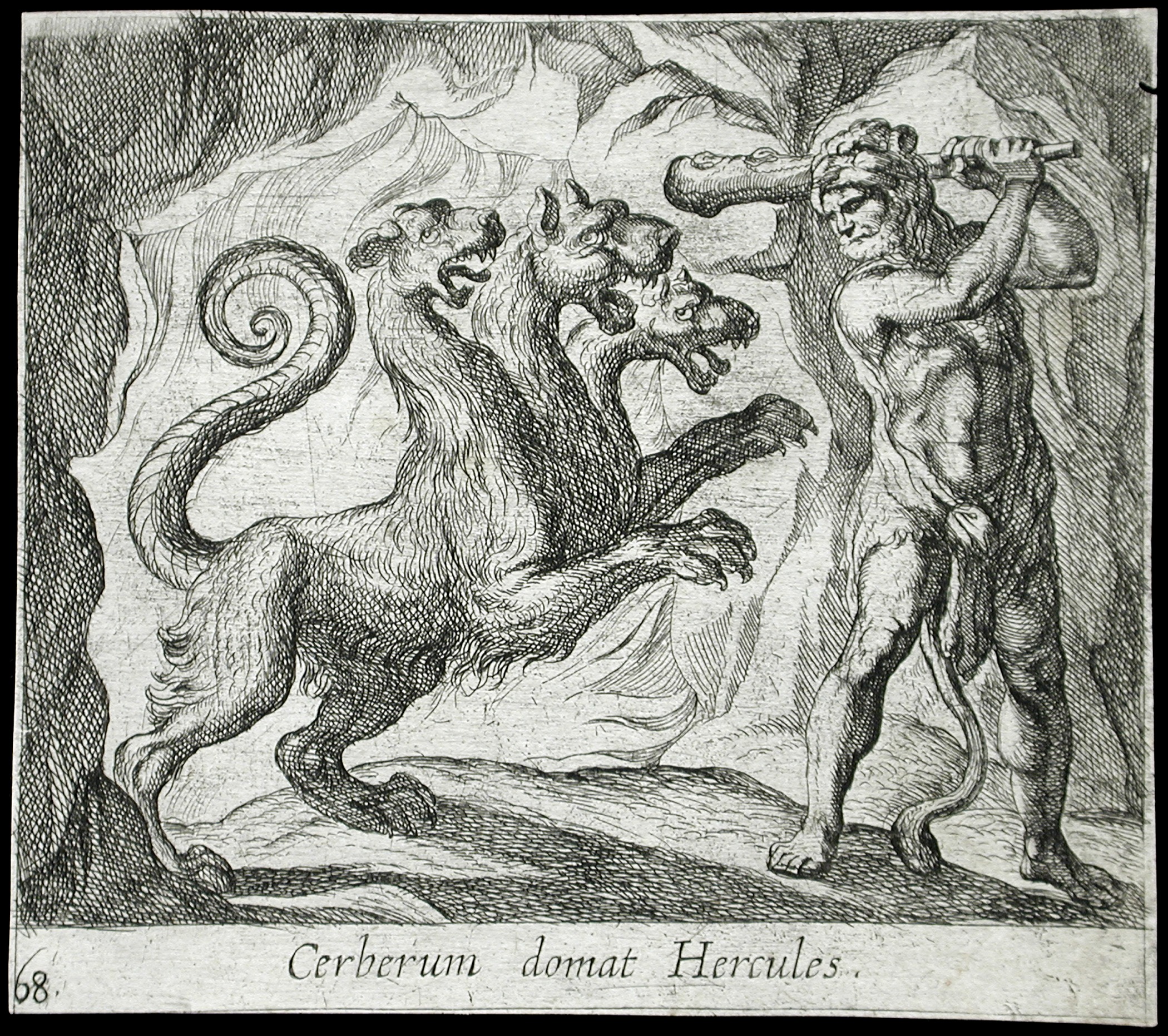
Cerberus and Heracles. Etching by Antonio Tempesta (Italy, Florence, 1555–1630). The Los Angeles County Museum of Art. Graphic courtesy of Wikipedia.

By John Ruberry

A theme coming out of Elon Musk’s release of the Twitter Files is that there is a three headed beast that seeks to be an overlord of us all, who I am dubbing Cerberus. 

Why that name? According to Greek mythology, he was a vicious three-headed dog who guarded the underworld, the realm of the dead. Sometimes he was called the Hound of Hades. “Heads of snakes grew from his back, and he had a serpent’s tail,” Encyclopedia Brittanica tells us about Cerberus. If you are thinking of the hosts of The View now, then we are kindred spirits. 

There is a nexus between the federal government, most ominously the FBI, the mainstream media, and Big Tech. Information is of course power, and the Modern Cerberus used that power to suppress and censor the Hunter Biden laptop story, as well as dissenting opinions on the COVID-19 pandemic. And probably many more topics.

In regard to second one, I regularly see CDC public service TV ads that tells us that COVID is a serious health threat if you suffer from other ailments, not so much everyone else. Earlier this year, self-appointed COVID expert Bill Gates said of the virus, “We didn’t understand that it’s a fairly low fatality rate and that it’s a disease mainly in the elderly, kind of like flu is, although a bit different than that.” Expressing such opinions on Twitter of Facebook would lead those social media giants to suspend or ban users from their platforms in 2020 and 2021. 

The mythological Cerberus would devour and dead souls who tried to escape Hades. Let me rephrase it for our troubled times: the beast permanently banned them with no hope of appeal.

Moving from a prominent top federal government job to the media, and sometimes back again, is an old phenomenon, but it has accelerated lately–cable news is the culprit, and most of the participants in this transfer portal are Democrats. Jen Psaki comes to mind, as she has gone from working in the Barack Obama White House, to being a CNN contributor, then back to government as the White House press secretary under Joe Biden, then back to the media as an MSNBC contributor. 

As for Big Tech, Andy Stone, the communications director at Meta, the parent of Facebook, declared on Twitter in 2020 that FB, in regard to New York Post’s Hunter Biden laptop story, would be “reducing its distribution on our platform” until it was fact-checked. I call that suppression. Prior to joining Meta, Stone was a longtime congressional staffer, working exclusively for Democrats.

Last week Musk fired Twitter’s deputy general counsel, Jim Baker, who may have withheld damaging details involving the FBI and its alleged role in suppressing the Hunter Biden laptop reports. Baker, when he was an FBI attorney, played a part in the Donald Trump-Russiagate collusion red herring. Before he joined, Twitter, Baker was a CNN analyst. 

Benjamin Weingarten has more on what he calls the “revolving door between Democrat Deep State and Big Tech.”

Stifling the free flow of information is the stuff of totalitarian states. My wife was raised in the Soviet Union, she emigrated to the USA in 1991. An extreme example yes, but I was the one who told her that not only did the United States send men to the moon and safely return them to Earth–but did so six times. 

There was an incarnation of Cerberus in the USSR.

John Ruberry regularly blogs at Marathon Pundit.

By John Ruberry

Late last week Season Two of Ragnarok began streaming on Netflix. The Norwegian series presents a modern telling of the ultimate battle, Ragnarök, between the Norse gods and their enemies, the jötunn, evil deities who are usually called giants in English. It is set in the fictional small fjord town of Edda, which is being poisoned by the town’s largest employer, Jutul Industries. The company is run by Vidar Jutul (Gísli Örn Garðarsson), the head of the jötunn quasi-family. His wife, Ran (Synnøve Macody Lund), is the principal of Edda High School, which Magne Seier (David Stakson) and his brother, Laurits (Jonas Strand Gravli), attend. Also students there are two other Jutuls, Saxa (Theresa Frostad Eggesbø) and Fjor (Herman Tømmeraas).

In Season One, my DTG review is here, teenager Magne suspects he is the rebirth of Thor. Yes, he’s another “chosen one.” In the final episode of that season, while Laurits humiliates Ran in a public address, Magne confronts Vidar in a battle. 

The second season picks up where the first ends. Somewhat diminished this season is the teen love anxiety–while the Norse mythology is elevated. There are few scenes at the high school. So there is a bit less of a Twilight feel this time around.

Laurits is a prankster so if you know a little bit about the Norse gods, you should have suspected in the first season that he is a modern representation of Loki, the mischievous god. Reluctantly and by happenstance, as Jake and Elwood did in The Blues Brothers, Magne is “putting the back back together,” and that includes Wotan Wagner (Bjørn Sundquist), Edda’s Odin, and Harry (Benjamin Helstad) as the militaristic god Týr. Edda is multicultural, so it’s not surprising that an immigrant from Sri Lanka, Iman (Danu Sunth), achieves goddess status as Frigg, a clairvoyant.

The powers–and the alliances–of the gods and the jötunn as told in Norse mythology are complicated–as they are here. So are the romances, particularly the one with Fjor and a human, Gry (Emma Bones).

According to the myths Loki was a shape shifter–that is not shown here–and some of those tales of the trickster god involve gender fluidity. Laurits is unsure of his gender–but more certain of his sexuality. Oh, there is also a brief sensual scene with two women.

All through Season Two the government is investigating the environmental devestatation Jutul Industries brings to Edda–as well as the company’s financial improprieties. 

Magne and Laurits’ mother, Turid (Henriette Steenstrup), does her best in keeping the family together while struggling with poverty and of course, raising two teen sons who are conflicted gods. 

The final episode, the sixth–Season One is also consists just six entries–brings forth another climactic confrontation. The door is open for a third season of Ragnarok and I’ll be back if there is. Although to be honest I probably would have lost interest during Season One has their not been a mythological foundation for the series. As of this writing Ragnarok is a Top Ten series on Netflix.

The streaming service gives viewers the option of watching Ragnarok in dubbed English or in Norwegian with English subtitles. There are also some passages, dubbed of course, in Old Norse. 

Season Two of Ragnarok is rated TV-MA because of foul language (and gasp!) smoking. In reality the series is more like a PG-13 movie in regards to possibly objectionable content. 

John Ruberry regularly blogs at Marathon Pundit.