

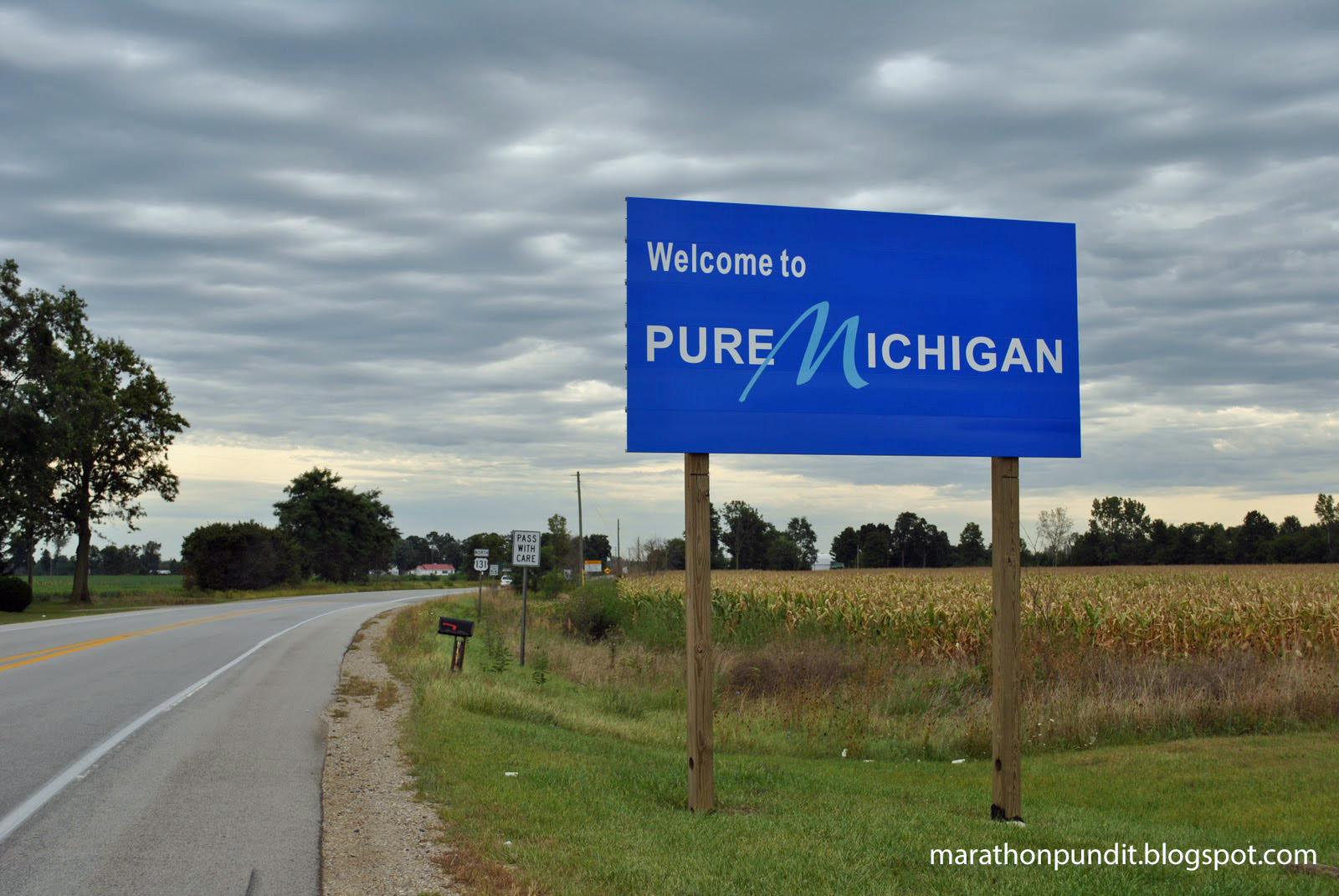
Posts Tagged ‘history’

By John Ruberry

“Most times you can’t hear ’em talk, other times you can
 All the same old clichés, is it woman, is it man?
 And you always seem outnumbered, so you don’t dare make a stand.”
 Bob Seger, “Turn the Page.” 

Those lyrics, from legendary Michigan rocker Bob Seger, may turn out to be prescient, because the Michigan House of Representatives, which has a Democrat majority, passed a bill in June that, among other things, will impose a hefty fine or imprisonment, if a person maliciously refuses to use another person’s preferred pronoun. 

The bill, HB 4474, expands on a Michigan law that covers religion, race, ethnicity, and sexual orientation.

Newsweek noted that Dylan Mulvaney, a man who claims to be woman, said in a video a while back about people like me who misgender him, “I feel like that should be illegal, I don’t know. That’s just bad journalism.”

No, it’s not. Mulaney, an internet influencer who has done to Bud Light what Eric Idle’s S. Frog character did to Monty Python’s fictional Conquistador Coffee, is wrong, as he is on so many things, What I wrote in the previous paragraph is good journalism because it’s the truth. Sorry, wokesters, but men who “transition” into women do not have ovaries, do not have menstrual periods, and do not undergo menopause. Women who do the opposite do not have testicles, a prostate gland, or Y chromosomes. I could go on, but I don’t have to.

Some people need to simply follow the science. 

Except, maybe soon in Michigan, if its Senate passes HB 4474 and Gov. Gretchen Whitmer, a Democrat, signs it into law, following the science and speaking out about it might get someone like me fined or worse. 

In her Senate confirmation hearing, Justice Ketanji Brown Jackson could not–or in my opinion, would not–define what a woman is. But according to HealthyChildren.org, at around age two, toddlers know the difference between the two genders. Again, follow the science.

The headline of this blog post is colored red. How do I know? Because when I was at the age when I figured out what males and females are, my mother probably said something along these lines to me, “That color is red.” And that information was confirmed to me when I attended kindergarten.

Some things are that simple.

Well, it should be that simple. Transgendered people complain about being bullied. Well, bullying is wrong. I suppose Mulvaney considers it bullying when internet trolls visit his Instagram page and comments, “You’re a man.” Oh, a word for you trolls. Don’t you have anything better to do? Surely there is trash on a roadside near your home that needs to be collected.

On the flip side, in regard to gender, we are at a stage in America when someone says, “Dylan Mulvaney is a man” in mixed company–especially at work–it has to be spoken in whispered tones, sotto voce as the French say. 

Being labeled a transphobe–phobe, by the way means irrational fear–can get many people in trouble on the job. Or maybe soon in Michigan, getting fined or being imprisoned. And it’s not an irrational fear to lose out on a promotion or getting fired for being deemed a transphobe.

I call that bullying. 

As regular readers know, my wife was born in the Soviet Union, in Latvia. At school a number of decades ago, repeatedly, her teachers told her that Latvia, along with Estonia and Lithuania, voluntarily joined the USSR in 1940. Of course, that was a lie. Her parents knew it–and so did every adult in the Baltic States at that time. Yes, that includes the teachers. But my wife didn’t discover what really happened in 1940, beginning with learning of the Molotov-Ribbentrop Pact, until she reached adulthood.

During my wife’s childhood, adults in the Soviet Union were afraid of the repercussions of telling the truth. So my wife’s parents never discussed the USSR seizing the Baltic States with her until Mikhael Gorbachev was the Soviet leader.

In the New York Sun, Dean Karayanis, reminded me that Soviet citizens faced prison if they were caught spilling coffee on a picture of Joseph Stalin. Aleksandr Solzhenitsyn, the author of the Gulag Archipelago, spent eight years in the Gulags for criticizing Stalin in private letters, even though he took the precaution of using a codename for the dictator.

American society isn’t at that more frightening point yet. But Michigan just took a baby step in that direction. 

Or maybe we are there. Remember that Seger song? “And you always seem outnumbered, so you don’t dare make a stand.” Well, I’m making one. Is anyone else with me?

Fortunately, the new Michigan “pronouns” bill will almost certainly be challenged in court on First Amendment grounds. 

Which is another reason why I’m grateful for the 6-3 conservative majority on the US Supreme Court.

John Ruberry regularly blogs at Marathon Pundit.

Blogger with a Soviet-made Volga sedan in Sece, Latvia. Behind the car is a newly-built tractor barn.

By John Ruberry

Late last month I traveled to Latvia, where Mrs. Marathon Pundit was born and raised, for the first time in 25 years. I had also visited with her in 1994.

I expected a different Latvia, and indeed that was the case.

First, a little history. A series of nations ruled Latvia, the last being czarist Russia, until 1918. The Bolsheviks recognized Latvian independence in 1920.

But along with neighboring Estonia and Lithuania, while most of the world was focused on Nazi Germany’s aggression in western Europe, Latvia was forcibly annexed by the Soviet Union in 1940. The Nazis attacked the USSR a year later, but the Soviets recaptured the Baltic States later in the war. 

Three months before the collapse of the Soviet Union, the Evil Empire recognized the independence of the Baltic States. 

When Latvia regained its independence, the population as just 52 percent Latvian. Russians, many of them brought to Latvia to replace Latvians deported to Siberia in the 1940s, made up about a third of the population in the last days of the Latvian SSR. Many of them quickly left after independence, but Russians still make about one-quarter of the population of Latvia. Riga, Latvia’s capital and largest city, has a Russian population of about 35 percent. Russians are a clear majority in Daugavpils, Latvia’s second city. 

The Latvia I saw in the 1990s was poor, my guess is, without the abject poverty, economically speaking it was on the level of Mexico. 

But in 2004, the Baltic States joined the European Union, also that year they became members of NATO. 

Since then, it’s been full steam ahead for Latvia, notwithstanding the 2008-09 recession. 

What I saw in Latvia in June was a prosperous European nation. Gone are the gray–literally, they were gray–retail stores. They have been replaced by colorful and brightly lit retail outlets. Many of these stores, as well as hotels, utilize English-language names. Instruction in English began in Latvian schools after independence was achieved. All Latvians under 35 speak pretty good English.

I’m a runner, and I was one of the few when I hit the roads for a workout. Now there are many running, or if you prefer, cycling trails. 

During my first visits I saw many Russian-made cars on the Latvian streets and highways. My wife and I traveled hundreds of miles during my nine days there–she will be in Latvia for another week—and I saw just two Russian-made cars, both Ladas. I’m pictured with an old Volga above. That make was discontinued in 2010. Volkswagen, Audi, and BMW are the most popular cars in Latvia.

Mrs. Marathon Pundit and I spent a lot of time in rural communities. She grew up on a collective farm in Sece, which is pretty much at the center of Latvia. They grew an assortment of crops, mostly potatoes, beets, and cucumbers, and while driving thru Latvia in the 1990s, the look of the land betrayed that odd lot cultivation. While Latvia doesn’t look like Iowa–there are few cornfields and about half of Latvia is forested–it’s becoming a nation of mega-farms. Wheat, canola, oats, are the major crops. And potato growing is hanging on. 

My wife attended her high school reunion in Sece, she was one of three in attendance from her graduating class of seventeen. One our hosts was another, and the third, almost certainly the wealthiest man in Sece, has been buying, one by one, parcels of land that were part of those old collective farms that were divided up after independence, in Sece, from people to old to tend to the soil, or who have no interest to do so. 

The prosperous farmer is the owner of that Volga in the photograph.

The graduating class sizes of my wife’s old school is now roughly 10 students per year. Rural Latvia, just like rural America, is shrinking.

Only rubble remains of the farmhouse where my wife grew up. Thousands of Latvians can attest to the same situation.

Scattered throughout Latvia are the ugly white-brick buildings, poorly built, that are long-abandoned. “That used to the community creamery in Sece,” Mrs. Marathon Pundit said to me. “That used to be the tractor motor pool, the tractors parked next to them haven’t moved in years.” She could have said the same to me every dozen miles or so when we drove past similar structures. Nearly every one of these collective farm buildings have been long abandoned. They are miniature Pompeiis that were never buried, sad monuments to the failure of communism, an economic and political system that never should have been implemented. Sadly, after over a century of proven failure, there are still people falling for Marxist nonsense.

In the cities and the small towns, khrushchevka apartment buildings, known in the West as “commieblock” structures, are still omnipresent. Most of them utilize those same unpleasant white bricks.

And in the cities, especially Riga, you’ll find many abandoned buildings that were Soviet-era factories. 

Yes, I know, we have abandoned buildings in our American cities. But Riga has many new buildings–beautiful ones. I’m particularly fond of the National Library of Latvia.

Yes, but what about Donald Trump?

Okay, that was an abrupt transition, but most Latvians don’t like him. With the war in Ukraine showing no sign of ending, and when I was in Latvia when the apparent Wagner Group attempted coup occurred, his name, and that of Vladimir Putin, was brought up many times. 

Oh, Joe Biden is viewed in Lativa as an ineffective old man. 

But wait, what about Trump?

To a person, Latvians are pissed off about Trump’s compliments of Putin. For instance, shortly after Russia invaded Ukraine, he called Putin’s move “genius” and “savvy.” I explained that Trump is running to regain the White House, and the former president, dating back to his career as a real estate mogul, is the consummate negotiator, Trump, in my opinion, could be simply playing mind games with Putin. He used a similar strategy with Kim Jong Un. Trump’s flattery is analogous, I tried to reason, to entering a store and being complimented on the shirt I am wearing by a flirtatious saleswoman. Suddenly, my guard is dropped. True, Putin is likely made of tougher stuff than I am. I think.

Only the Latvians I spoke to weren’t buying my explanation. Don’t forget, Russia borders Latvia on the east, and Putin’s puppet state of Belarus is on Latvia’s southeast. In spite of their nation’s membership in NATO, it’s understandable that Latvians are quite nervous about Russia. Dual invasions from Russia’s Kaliningrad exclave and from Belarus into Lithuania could quickly isolate all three Baltic nations.

Latvia faces challenges, a declining population is the biggest one. While life is better now in Latvia, it’s even better in Scandinavia and Germany. European Union membership presents a dilemma for Latvia. 

But I am confident that Latvia will succeed. 

John Ruberry regularly blogs at Marathon Pundit.
It would be superfluous in me to point out to your Lordship that this is war 

US Minister Charles Francis Adams to British Foreign Minister Lord John Russell on the construction of Confederate Ships in England 1863

This story leaped out at me:

The Kremlin is saying this was a drone strike to hit Putin and are apparently yelling “Terrorism”. If this was a drone strike by the Ukraine there are plenty of important implications that should scare the hell out of everyone:

  1. While 200 years ago this might have been considered bad form when two countries are at war it is a legitimate target so the cry of “terrorism” is BS.
  2. If the Kremlin in general and Putin in particular are legitimate targets of war then by definition if the Russians launch drones vs the Ukrainian parliament in general and Volodymyr Zelenskyy in particular those would also be considered legitimate attacks on legitimate targets of war.
  3. Given that both Europe and the US are supplying Ukraine with arms any of those shipments would become legitimate targets of Drone or any other type of strikes by Russia as soon as they enter the war zone, that is Ukraine.
  4. This suggests that any US or European pol who enters Ukraine does so at their own risk and may in fact be considered legitimate targets of a drone strike by Russia if they are from a country supplying arms to Ukraine.
  5. What is to stop Russia from “outsourcing” such attacks by commissioning individuals to conduct such attacks in the name of Russia basically “privateering”.

And if that doesn’t scare you let’s take the next logical step:

  1. What is to stop Russia from declaring a “blockade” of Ukraine and thus making shipments of war materials legitimate targets of war?
  2. If a ship is transporting arms to the Ukraine, what is to stop Russia from claiming the contents of that ship contraband of war and either seizing it on the high seas or sinking it as a legitimate target of war?
  3. What is to stop Russia from either directly or using the “Privateering” example to target
    • arms shipments to Ukraine
    • infastructure used to transport arms shipments to Ukraine
    • leaders or parliaments of nations that vote to provide arms shipments to Ukraine

Nobody seems to be considering these possibilities all of which have the potential to not just drag us into war with Russia but to begin World War 3.

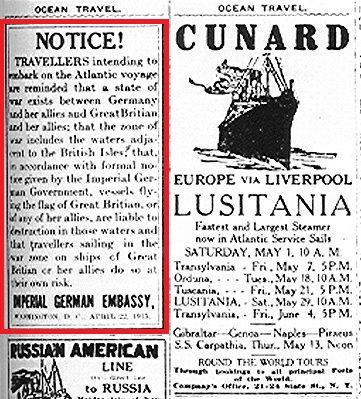
And for those fools who have not bothered to study history let’s remind everyone of what was going on for months before Japan Bombed Pearl Harbor.

All of this is not only very possible but becomes more so by the day and if it does come then no amount of clever remarks or tut tuts by folks on Twitter are going to stop it.

Given that our nation is bleeding recruits faster than Bud Light is bleeding customers the only logical and sensible move is for us to do all we can to stop this war and broker a peace because the longer it goes on the more likely those who are making a buck off the fighting will end up dragging us into a shooting war that we are not equipped nor motivated to win and against a nuclear power no less and believe me this administration and those who are getting their 10% will continue to move in that direction as long as they see cash coming their way without worrying about the cost.

By John Ruberry

A societal seismic shift, a black swan moment, occurred for the American elite, our “betters,” on April 1. Yep, April Fools Day, but the joke was on the elites. It was April 1 when on his–yes his–Instragram page, the transgendered influencer, Dylan Muvlaney, announced his sponsorhip deal with Bud Light, a beer brewed by Anheuser-Busch that is, or was, favored mainly by macho types.

The backlash was immediate. A boycott of the brew–with conservative celebrities leading the charge began–and Anheuser-Busch has since lost $5 billion in value.

Receiving the blame for this debacle is Alissa Heinerscheid, Bud Light’s vice president of marketing, who went on a leave of absence last week.

It’s likely that Bud Light triggered a tripwire, likely, to use Bill Maher’s words, Americans are angry because “they’ve had an agenda shoved down their throat.” Like the dimwitted sheep in George Orwell’s Animal Farm, many elites, particularly in the media, believe transgendered women are women. Most Americans disagree. 

And most Americans, unless they are woke, aren’t dopes. They know that males have an inherent physical advantage over women in most sports. If they decide to think about it–they know that the annual physical for Rachel Levine, the Biden administration’s assistant secretary for health who is transgendered, consists of a prostate exam. They are aware that after “gender-affirming” surgeries, some trans people want to switch back.

These same people are horrified of reports that some school officials, without knowledge of their parents, are encouraging minors to “transition.”

And these same folks are fed up with being called a bigot or some sort of “phobe” when they raise their objections to the transgender ideological movement.

And they are sick of transgendered women appearing in clothing ads wearing garments designed for females. 

Unlike Supreme Court Justice Ketanji Brown Jackson, most Americans are able define what a woman is. And they know that men cannot give birth to babies.

As for the elites, many of whom like Heinerscheid have an Ivy League education, they’re the types of folks who don’t interact with smelly people who drink Bud Light. These smug know-it-alls are stupefied that the Mulvaney sponsorship has damaged the brand. 

The elites live in their bubble, which makes them quite vulnerable to a black swan moment.

What has happened to Bud Light takes me back to 1979 and the Disco Demolition stunt that was part of a Chicago White Sox Teen Night promotion during a twi-night doubleheader with the Detroit Tigers. Oh, “Disco Sucks” wasn’t just a Chicago thing, I saw my first “Disco Sucks” T-shirt a year earlier on sale on the boardwalk at Ocean City, Maryland.

I was a 17-year-old when Steve Dahl, a morning disc jockey for rock station WLUP-FM, began humorously “blowing up” disco records during his show. He’d play some crappy–aren’t they all?–disco tune for thirty-seconds or so, and then blow them up, not for real, but with sound effects. Dahl also took his act on the road, including a mock “takeover” of a suburban disco club, and the same thing happened at each event. Crowd control was an issue–too many people in too small of a space.

Surely, Mike Veeck, the son of White Sox owner Bill Veeck, thought that Comiskey Park, the home of the White Sox, could comfortably host Dahl and his minions, known as the Insane Coho Lips. The ballpark had a capacity of 45,000. 

But the doubleheader sold out and there were an estimated thirty thousand others outside Comiskey Park clamoring to get in. Teens who deposited disco records at the turnstiles were admitted for 98 cents, which was dirt cheap even in 1979. 

Dahl, in faux military garb, as you’ll see in the YouTube clip, exploded the records in spectacular fashion as the Insane Coho Lips chanted “disco sucks” following the conclusion of the first game of the doubleheader, a White Sox defeat. Immediately afterwards, about 7,000 of the rockers stormed the field and a riot broke out, one that included destroying the batting cage and igniting the crate from where the records were exploded. It was rock and roll’s first saturnalia. Police in riot gear promptly ended Disco Demolition 90 minutes later, and because the field was deemed by the umpires as unsafe for play, the second game was forfeited to the Tigers.

I watched the game at home on television with my parents and my brother. I hated disco and loved rock and roll, so I looked on with mixed emotions because I was also a Sox fan. I didn’t object when my brother pointed at me and said, “Hey, mom and dad, there are thousands of them on the TV, who are just like your son, tearing up the field.” Hey, don’t forget, I was 17 at the time.

Retro historians, often people who were born years after Disco Demolition, have tried to turn that night into a racist or anti-gay thing. Wrong. The people I knew who listened to disco were shallow and vapid–just like the music. It was love at first sight for them.

Here’s the disco black swan moment. 

The Disco Demolition coverage from the media, particularly the national media, was one of shock. Even more so than now, the elite media was based in New York, and they were the people who hung out at disco’s hallowed temple, Studio 54 in Manhattan. They lived in their ’70s bubble, one that didn’t include people who loved rock music and wore “Disco Sucks” T-shirts.

Up until Steve Dahl blew up those records, disco was seemingly everywhere–on TV shows, in commercials, and in the movies, most notably, with John Travolta dancing in Saturday Night Fever. Rock acts, including the Rolling Stones, the Kinks (sadly, one of my favorite bands), and Rod Stewart, recorded songs with a disco beat.

But post-Disco Demolition Night, the media, as well as the advertising and marketing “experts,” realized, after the totality of the riot, that more people hated disco than liked it. Disco didn’t die that night–even a freight train experiencing engine problems can’t be stopped on a dime, but disco went into a fatal tailspin. A month after Disco Demolition, Michael Jackson’s Off the Wall, a disco album, was released. It enjoyed brisk sales and a lot of airplay. But Jacko’s next album, Thriller, was more of an R&B album, it even included the King of Pop’s only hard rock song, “Beat It,” which was graced by guitar work from Eddie Van Halen.

Rockers had stopped cutting disco tracks well before Thriller was released.

A couple of weeks before Off the Wall arrived in record stores, principal photography began on a movie starring the Village People, Discoland . . . Where the Music Never Stops. Sensing trouble because of the anti-disco backlash, the film’s producer, Allan Carr, changed the name of his project to Can’t Stop the Music. It’s remembered as a legendary Hollywood box office bomb.

As the saying goes, “History doesn’t repeat itself but it rhymes.” One of supporting actors in Can’t Stop the Music was Bruce Jenner, who now goes by Caitlyn. 

By the early 1980s, the expression “As dead as disco” was common. 

Transgenderism isn’t going away. Over my life I’ve known a few men who have gone thru procedures that allows them, sort of, to live as women. Fine, it’s their life. If, as an adult, men and women want to transform themselves into something different, well, no one should stop them. The same goes for people who want to obliterate their faces with tattoos.

On the other hand, don’t shove your choice down our throats and demand us to celebrate you.

In the advertising and marketing world, using transgendered spokespeople to promote mainstream products just might be as dead as disco.

No one wants to be the next Alissa Heinerscheid. Her job was to sell Bud Light, not to drive people to avoid it.

There was never a Can’t Stop the Music sequel.

Marketing people must not be good at math. One percent of the population identifies as transgendered. Which means of course means 99 percent doesn’t.

John Ruberry regularly blogs at Marathon Pundit.